
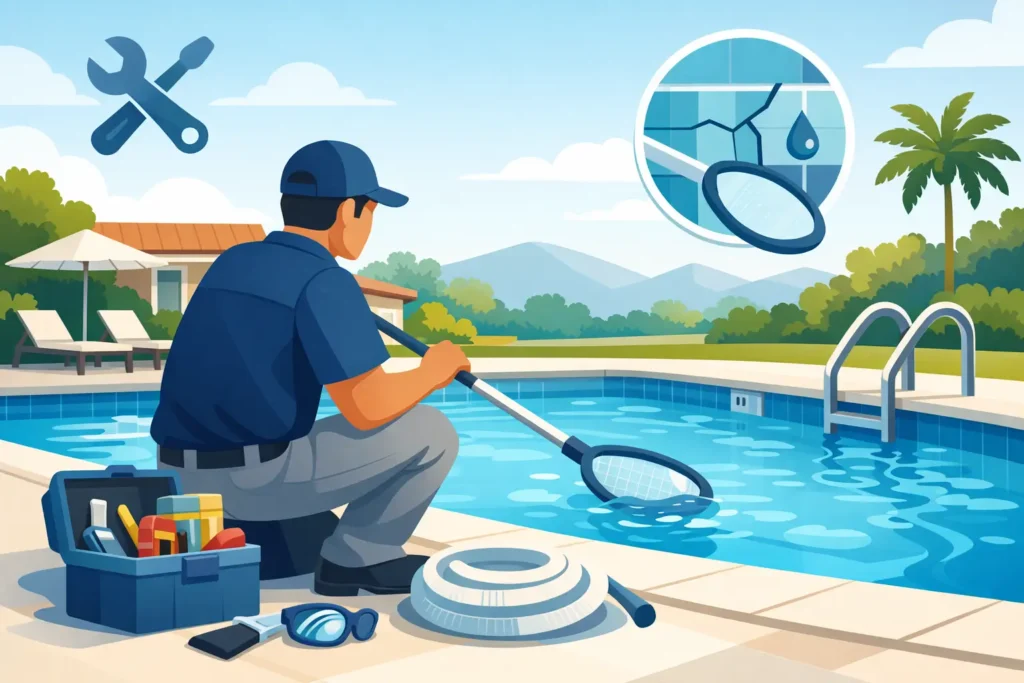
A pool problem rarely waits for a convenient time. A pump can begin humming louder on Friday, a heater can stop working before guests arrive, or a small wet spot near the equipment pad can turn into wasted water and a higher bill. For dependable pool repair San Fernando Valley property owners can rely on, the goal is not just getting equipment running again. It is finding the real cause, explaining the options clearly, and completing quality work that protects the pool for the long term.
San Fernando Valley pools work hard. Long warm seasons, frequent use, direct sun, and aging equipment can all put stress on circulation systems, plumbing, finishes, and electrical components. Homeowners need a repair company that respects their property and arrives ready to diagnose the issue. HOA boards and commercial managers need that same responsiveness, plus a contractor who understands the consequences of a pool closure, a safety concern, or an unresolved maintenance issue.
Pool Repair San Fernando Valley: Address the Right Problem First
Many pool issues share the same visible symptoms. Cloudy water may look like a chemistry problem, but it can be caused by poor circulation, a clogged filter, a failing pump, or a valve that is not operating correctly. Water loss may suggest evaporation, yet a leak in the plumbing, shell, skimmer, or equipment can produce the same concern.
That is why a proper inspection matters. Replacing a part without confirming the source of the problem can create unnecessary cost and leave the original issue behind. An experienced pool technician looks at the full system: water level, pump performance, filter pressure, valves, plumbing connections, electrical controls, heater operation, and the condition of the pool itself.
Pump and circulation repairs
The pump is the center of the circulation system. When it loses prime, makes grinding or screeching sounds, trips a breaker, leaks, or runs without moving enough water, the pool can quickly become difficult to maintain. Sometimes the fix is straightforward, such as replacing a worn seal, lid O-ring, capacitor, or damaged fitting. In other cases, a failing motor or outdated pump may make replacement the better value.
The right choice depends on the age of the equipment, the condition of the rest of the system, and the cost of continued repairs. A quality contractor should explain whether a repair makes sense before recommending new equipment. If replacement is needed, the system should be properly sized for the pool rather than treated as a one-size-fits-all installation.
Filter, heater, and automation issues
A filter that is overdue for cleaning, has damaged internal components, or has a cracked tank can affect water clarity and circulation. Cartridge, sand, and DE filters each have different service needs, and the repair should match the type of equipment on site. Simply lowering the water flow or adding more chemicals is not a reliable answer when the filter is the actual bottleneck.
Heater problems also deserve timely attention. A heater that will not ignite, shuts off during operation, displays an error code, or leaks water may have an issue with gas supply, sensors, internal components, controls, or plumbing. Because heaters involve fuel, electricity, and water, repairs should be handled carefully by qualified professionals.
Automation systems can add another layer. Timers, control panels, actuators, and remote controls make pool ownership easier when they work correctly. When they do not, the pool may run on the wrong schedule, valves may not change positions, or equipment may fail to respond. A careful diagnosis can determine whether the issue is programming, wiring, a failed component, or an equipment problem elsewhere in the system.
Water Loss Is Not Always Normal Evaporation
Some evaporation is expected during hot, dry San Fernando Valley weather. But repeated water loss that requires frequent refilling should not be ignored. Beyond the cost of water, a leak can affect soil around the pool, damage equipment areas, undermine decking, and make water chemistry harder to control.
Signs worth investigating include a water level that drops faster than usual, wet soil near plumbing or equipment, air bubbles returning through the pool, cracked deck areas, or a pump that continually loses prime. A pool may also lose water only while the equipment is running, which can point to a pressure-side plumbing leak. Loss that continues while the system is off may indicate a suction-side issue, pool-shell concern, or fitting leak.
Leak detection and repair should be methodical. The goal is to identify the source before opening concrete, replacing plumbing, or applying surface repairs. An honest assessment helps owners avoid paying for work that does not solve the problem.
Shared Pools Need Fast, Accountable Service
For HOA communities, apartments, and commercial properties, a repair is more than a maintenance item. A malfunctioning pump, broken gate, unsafe drain cover, heater issue, or water-quality concern can disrupt residents and create operational pressure for managers. Delays can also lead to complaints, added costs, and avoidable pool downtime.
A dependable service partner communicates clearly with the authorized contact, documents recommended work, and keeps the property informed when repairs require additional parts or scheduling. That matters especially when decisions must go through a board, management company, or maintenance approval process.
Adrian’s Pro Pools brings licensed, bonded, and insured service to residential, HOA, and commercial pool properties throughout the San Fernando Valley. With experience across recurring maintenance, repairs, remodeling, and construction, the team can evaluate how one equipment issue may affect the larger pool system instead of treating every call as an isolated fix.
Repair, Replace, or Remodel? It Depends on the Pool’s Condition
Not every repair should lead to replacement, and not every aging pool needs a full remodel. The best path depends on the condition of the equipment and the owner’s plans for the property.
A relatively new pump with a leaking seal may be an easy repair. An older pump with repeated motor failures, poor energy performance, and damaged plumbing connections may be a stronger candidate for replacement. The same thinking applies to filters, heaters, lights, and controls. Replacing equipment strategically can reduce repeat service calls, but replacing everything at once is not always necessary.
For the pool structure, small cracks, worn tile, damaged coping, aging plaster, or outdated drains may be addressed through targeted repair or renovation. If several issues are appearing together, a remodel can be more practical than making one temporary correction after another. Homeowners considering a backyard update may also choose to combine repairs with new finishes, energy-efficient equipment, lighting, or a spa improvement.
The key is receiving a recommendation that reflects the actual condition of the pool, budget priorities, and intended timeline. Clear communication makes those decisions easier.
What to Do Before a Pool Repair Visit
Property owners can help speed up diagnosis without attempting a risky repair themselves. Note when the issue started, whether it happens only while the equipment is running, and any error messages or unusual sounds. If water is leaking around electrical equipment or a breaker continues to trip, turn the equipment off and request professional service rather than repeatedly resetting it.
Avoid adding large amounts of chemicals to hide a water-quality problem before the cause is understood. If circulation has stopped, chemical treatments may not distribute correctly and can make the water harder to balance later. For a suspected leak, tracking the water level over a day or two can be useful, but do not let the pool level drop below the skimmer or allow the pump to run dry.
For HOA and commercial properties, keep repair authorizations and prior service information available when possible. Details about recent equipment replacements, recurring problems, or changes in pool use can help a technician reach the right solution faster.
Quality Repairs Support Better Pool Care
The most cost-effective repair is often the one that is diagnosed correctly and completed with attention to the whole system. A repaired pump still needs proper filtration. A new heater needs balanced water and adequate flow. A plumbing repair should be followed by a check of valves, pressure, and equipment operation. Repairs and routine maintenance work best together.
Whether the issue is a loud pump, cold spa, unclear water, suspected leak, or equipment that has reached the end of its service life, prompt action can prevent a smaller concern from becoming a larger project. A qualified local pool contractor can provide the straightforward answers, respectful service, and dependable workmanship that keep your pool ready when you want to use it.
Pingback: Pool Heater Repair Near Me: What to Expect - Adrian's Pro Pools