
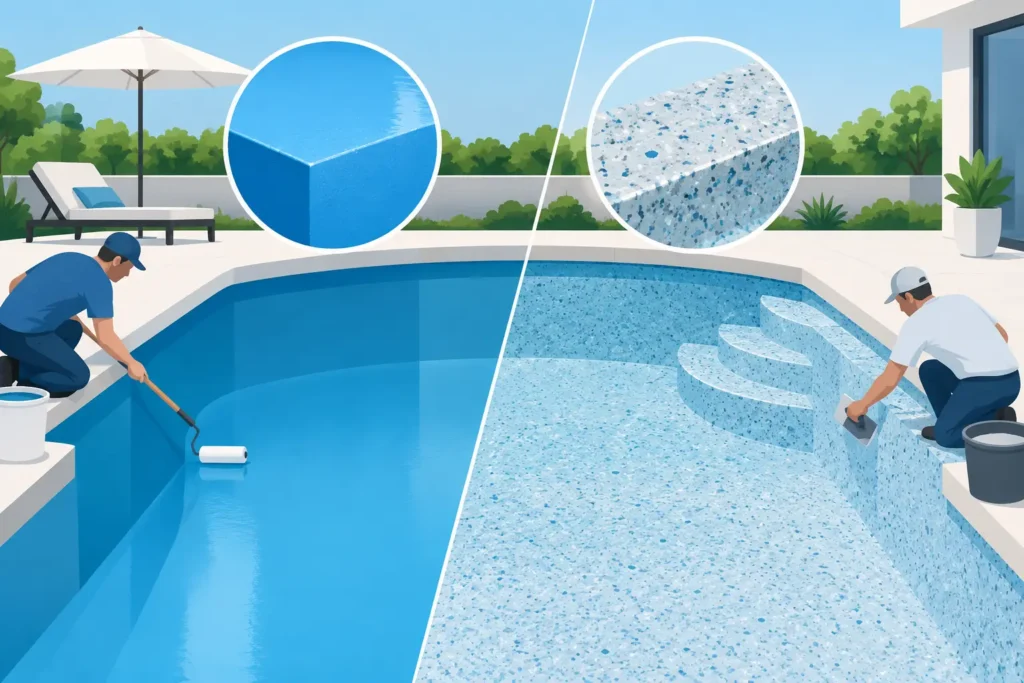
A pool can look clean at a glance and still be approaching a finish failure. Rough steps, persistent stains, small cracks, exposed aggregate, and chalky water are not just cosmetic concerns. When comparing pool resurfacing versus replastering options, the key question is whether the underlying pool shell is sound enough for a new finish or whether repairs need to come first.
For homeowners, HOA boards, and commercial property managers in the Santa Clarita Valley and San Fernando Valley, this decision affects appearance, swimmer comfort, maintenance needs, downtime, and long-term cost. A qualified inspection prevents a simple finish project from becoming an expensive surprise halfway through construction.
Pool Resurfacing Versus Replastering Options Explained
People often use resurfacing and replastering as if they mean the same thing. They are related, but they are not identical.
Replastering specifically means removing a worn plaster finish and applying a new plaster-based interior finish. Traditional white plaster is the familiar smooth, bright pool surface found in many older California pools. It remains a practical choice for owners who want a clean look and a lower upfront price.
Resurfacing is the broader term. It can include replastering, but it may also involve structural crack repair, tile replacement, coping work, removal of failing material, bond-coat preparation, and installation of a more durable finish such as quartz, pebble, or polished aggregate. In other words, replastering is one type of resurfacing project, while resurfacing addresses the whole condition of the pool interior and the materials surrounding it.
That distinction matters when a pool has more than normal wear. A new plaster coat cannot solve waterline tile that is loose, a leaking skimmer, hollow areas behind the finish, or cracks caused by movement in the shell. Covering a problem is not the same as repairing it.
Signs Your Pool Needs More Than Routine Service
No finish lasts forever, even with consistent chemical balancing and professional weekly care. Pool surfaces are exposed to sun, changing water chemistry, swimmer traffic, automatic cleaners, and years of expansion and contraction. Traditional plaster often lasts roughly 7 to 15 years, although its actual life depends heavily on water balance, the original installation, and how the pool is used.
Some surface changes are normal. Minor mottling or color variation can occur with plaster and does not automatically mean the finish has failed. Other symptoms deserve prompt attention because they can get worse or create safety concerns.
A resurfacing evaluation is usually appropriate when the pool has rough or sharp areas that irritate swimmers’ feet, widespread staining that brushing cannot remove, recurring algae in pitted areas, visible cracking, peeling paint, or plaster that is flaking away. If the finish feels sandy or leaves dust in the pool after repeated cleaning, the surface may be deteriorating.
For HOA and commercial facilities, surface condition also affects the daily guest experience. A visibly stained or rough pool can generate complaints, increase cleaning time, and make a well-managed property appear neglected. Scheduling renovation before a finish becomes severely damaged gives property managers more control over budgets and closures.
When Replastering Is the Right Choice
Replastering makes sense when the pool shell is stable, the plumbing is performing properly, and the existing finish is simply worn out. It is often the most straightforward solution for a pool with fading, etching, light staining, or general roughness but no major substrate problems.
Standard white plaster offers a classic appearance, a smooth feel, and a cost-conscious path to restoring a pool. It also makes it easy to spot debris and algae during regular maintenance. For a rental property, community pool, or homeowner preparing to sell, a well-installed plaster finish can provide a clean reset without selecting a premium material.
The trade-off is longevity and appearance retention. Plaster is more vulnerable to etching and staining when water chemistry is neglected. It can also show mineral scale or discoloration more readily than darker aggregate finishes. A lower initial price may be the right decision, but it should be paired with disciplined water care after the pool is refilled.
Replastering is not a shortcut project. Proper surface preparation, curing, startup chemistry, and communication about the first weeks of care all influence the outcome. A finish can only perform as well as the work beneath it.
When a Full Resurfacing Project Makes More Sense
A broader resurfacing project is usually the better option when there are visible cracks, failed patches, loose tile, recurring leaks, hollow-sounding areas, or signs that the existing surface was applied over weak material. It is also the practical choice for owners who want to update the pool’s entire look rather than simply replace the old plaster.
During a full renovation, the contractor can assess the exposed shell after the existing finish is removed. That is the best time to make repairs that would otherwise stay hidden. It may also be an efficient time to replace waterline tile, update outdated returns and drains, repair coping, or coordinate equipment improvements.
For an HOA or apartment community, combining related work can reduce the number of separate pool closures. The project needs clear planning, resident communication, and realistic scheduling, but addressing the full scope at once can be less disruptive than repeatedly closing the facility for individual repairs.
Adrian’s Pro Pools approaches remodeling work with that broader ownership in mind, from assessing existing conditions to completing the finish work and communicating clearly about any authorized repairs found during the project.
Choosing a Finish That Fits Your Property
The finish material should match the pool’s use, the desired appearance, and the budget for both installation and future upkeep. There is no single best choice for every property.
Traditional plaster
White or colored plaster is usually the most economical finish option. It delivers a classic pool appearance and works well when the pool structure is in good condition. It requires attentive water chemistry, especially during the startup period, to help limit etching, scale, and staining.
Quartz finishes
Quartz blends plaster with colored quartz aggregate. The result is generally harder and more durable than standard plaster, with more color choices and a more consistent decorative look. Quartz often suits homeowners who want an upgrade in durability without moving to a full exposed-pebble appearance.
Pebble and aggregate finishes
Pebble finishes are known for long service life, natural texture, and resistance to visible staining. They are popular for custom backyard remodels because they create more depth and color variation in the water. They also cost more upfront, and some aggregate products feel more textured underfoot than plaster. The right product and installation method matter, particularly for shallow areas and steps where swimmers walk most often.
Polished aggregate finishes
Polished aggregate can provide a refined, smoother alternative to more textured pebble surfaces. It is often selected for high-end renovations where appearance and comfort carry equal weight. Because these finishes are material- and labor-intensive, they are best chosen after comparing the full project scope rather than by finish price alone.
Paint is sometimes considered for a fast visual change, especially on older pools. It can be appropriate in limited situations, but it typically does not offer the lifespan of a properly installed plaster or aggregate finish. A contractor should identify the existing surface and its condition before recommending paint as a solution.
The Repairs Behind a Durable Finish
The most attractive finish will not last if the pool has unresolved movement, leaks, or poor bonding. Before resurfacing begins, a thorough evaluation should look at cracks, delamination, tile condition, fittings, skimmers, plumbing concerns, and the pool deck’s relationship to the shell.
Not every crack means the pool is structurally failing. Some are surface cracks, while others can indicate movement that requires more involved repair. The difference cannot be determined reliably from a photo or a quick look across the water. Removing the old finish often reveals whether the shell needs localized repair before the new material is installed.
This is also why the lowest quote is not always the lowest project cost. A proposal that skips preparation, omits necessary repairs, or does not explain the finish material can leave the owner with avoidable change orders or a finish that fails early. Ask what preparation is included, how repairs are documented, which finish system is specified, and what the startup process will require.
Planning Downtime and Protecting the New Surface
Most resurfacing projects require the pool to be drained, prepared, repaired as needed, finished, filled, and chemically started up. Exact timing varies with project scope, weather, material selection, local requirements, and the time needed to fill the pool. Commercial and HOA properties should plan around resident use, inspections when applicable, and clear closure notices.
Once the pool is filled, the first month is especially important. New plaster-based finishes need careful brushing and closely managed water chemistry as they cure. Skipping this work can lead to staining, scale, or uneven appearance. A reliable service plan helps protect the investment after the construction crew leaves.
The right choice is not simply plaster versus pebble, or the least expensive quote versus the most elaborate design. Start with an honest condition assessment, choose a finish that fits how the pool is used, and make sure the repair scope supports the new surface. A well-planned renovation gives your pool a better finish, a safer feel, and a stronger foundation for years of dependable enjoyment.