
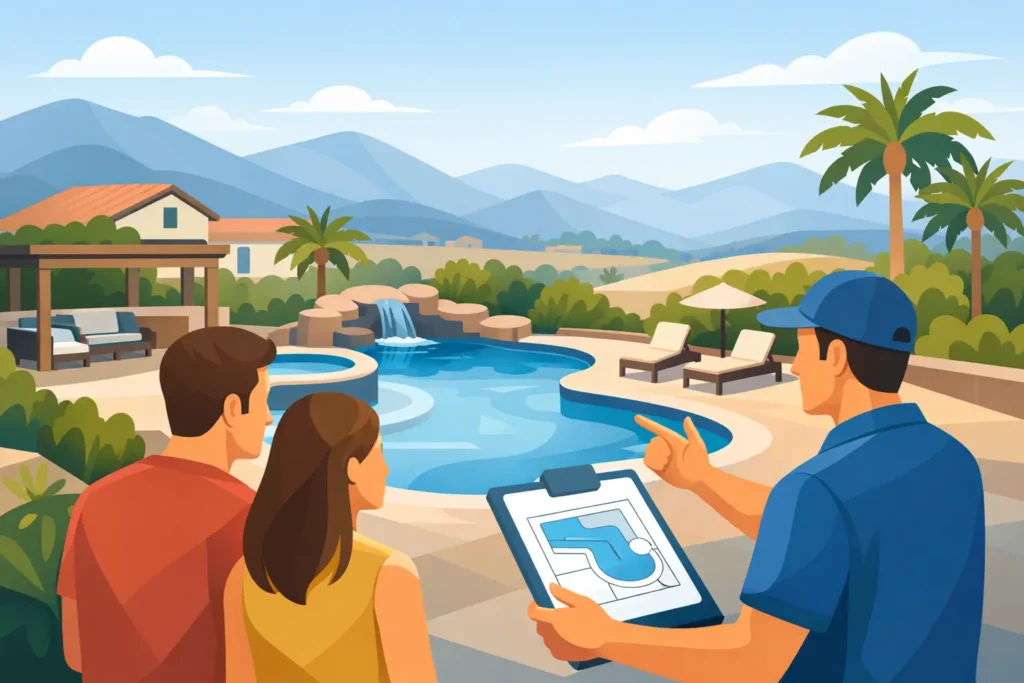
A custom pool builder Santa Clarita homeowners choose should do more than create an attractive pool shape on paper. The right contractor should understand how your family uses the yard, how the site drains after a heavy rain, where afternoon sun hits, and what it takes to complete a project with clear communication and accountable workmanship.
A new pool is a major improvement to your home and daily life. It can create a place for kids to play, make entertaining easier, add a spa for year-round relaxation, or turn an underused slope or lawn into a backyard you actually enjoy. The best results start well before excavation. They start with a builder who listens, explains the process honestly, and has the experience to manage the details from concept through completion.
What a Custom Pool Builder in Santa Clarita Should Handle
Custom construction is not a one-size-fits-all package. Every property has different access points, grades, utility locations, setbacks, drainage needs, and homeowner priorities. A dependable pool contractor begins by evaluating the site rather than pushing a standard design that may not fit the space.
During the planning stage, your builder should help connect the big picture to practical decisions. That includes pool size and placement, depth, entry style, spa integration, equipment location, finish materials, lighting, water features, and surrounding hardscape. It also means discussing how the construction area will affect gates, landscaping, patios, and access to the home.
The paperwork matters, too. Permitting, required inspections, and coordination with local requirements can affect the schedule. A licensed contractor who takes ownership of these steps helps prevent avoidable confusion and gives homeowners a clearer view of what comes next.
Adrian’s Pro Pools brings the perspective of a licensed C53 swimming pool contractor to new construction projects, along with hands-on experience caring for pools long after the build is complete. That matters because a beautiful new pool should also be practical to operate, service, and enjoy.
Begin With How You Want to Use the Backyard
The most useful design conversation is not, “What is the biggest pool that will fit?” It is, “What do you want this backyard to do for you?” A family with young children may prioritize broad entry steps, shallow play areas, and clear sight lines from the house. Homeowners who entertain may want a spa, tanning ledge, integrated seating, and room for guests to move around the deck.
Fitness-focused owners may prefer a longer swim lane or a layout that supports exercise. Others may want a compact pool with a raised spa and upgraded finishes because their goal is a quiet retreat rather than a large gathering space. None of these approaches is automatically better. The right choice depends on your lot, budget, lifestyle, and maintenance expectations.
Share those priorities early. A builder can make informed recommendations when they know whether the pool is for weekend entertaining, daily family use, low-impact exercise, or a complete backyard renovation. This also helps distinguish between features that provide lasting value and features that may look impressive but do not match how you will use the property.
Plan for the Entire Outdoor Space
A pool should feel connected to the yard, not dropped into the middle of it. Consider where people will sit, where towels and food will go, how guests will enter the pool area, and whether there is enough open deck for lounge chairs. Think about shade, privacy, outdoor cooking, and the view from inside the home.
On many Santa Clarita properties, elevation changes and sun exposure deserve special attention. A sloped lot can create opportunities for elevated design elements, but it can also require more planning for drainage, retaining conditions, and access. Likewise, a pool that receives intense afternoon sun may be ideal for swimmers while making shade structures and equipment placement more important.
Design Choices That Affect Cost and Ownership
A custom pool budget is shaped by more than the pool’s length and width. Site conditions, excavation requirements, access limitations, structural needs, material selections, plumbing runs, electrical work, and the complexity of the design all influence the final investment.
Features such as spas, waterfalls, fire elements, automation, upgraded tile, pebble finishes, and extensive decking can add a great deal to the finished experience. They can also add cost, construction time, and future service needs. A good builder will explain those trade-offs directly instead of treating every upgrade as essential.
For example, automation can make pool ownership easier by allowing convenient control of lighting, temperature, and equipment schedules. It is especially useful for homeowners who travel or want simple day-to-day operation. However, it should be selected with an understanding of the equipment it controls and the features you will realistically use.
Energy-efficient variable-speed pumps are another practical consideration. They can reduce operating costs and support quieter circulation, but the overall equipment setup should be sized correctly for the pool, spa, and water features. Oversized or poorly planned equipment does not create a better pool. It can create unnecessary expense and operational headaches.
Do Not Treat Drainage as an Afterthought
Drainage is one of the least glamorous parts of a backyard project, and one of the most important. Water needs a planned path away from the pool deck, home, and surrounding improvements. Improper drainage can lead to standing water, surface damage, erosion, or unwanted runoff during rainy periods.
Ask your contractor how the design accounts for grade changes, deck drainage, and existing site conditions. The answer should be specific to your property. A responsible builder will not promise that every situation is simple, especially on a tight, sloped, or access-challenged lot. Clear explanations at the start are far better than expensive corrections later.
Ask Better Questions Before You Sign
Choosing a custom pool builder is not only about comparing a few renderings or choosing the lowest estimate. You are selecting a contractor who will work around your home for months, manage multiple phases of construction, and be responsible for the quality of work beneath the finished surface.
Ask whether the contractor is properly licensed, bonded, and insured for swimming pool construction. Ask who will be your point of contact, how change requests are handled, and how the schedule will be communicated. Find out how the company addresses unforeseen site conditions, because construction projects occasionally reveal issues that were not visible during the first walkthrough.
You should also ask what happens after the pool is filled. New pools need start-up care, water balancing, equipment orientation, and regular service to protect the finish and keep the system operating as intended. A builder with maintenance and repair experience can offer valuable guidance because they understand the equipment and service realities behind the finished design.
For HOA-managed or multifamily properties, the questions expand further. Boards and managers should confirm that the contractor understands access coordination, resident communication, safety expectations, documentation, and the operational requirements of shared-use pools. A commercial or community pool project must support reliable operation after construction, not simply meet a visual goal on opening day.
Communication Is Part of the Construction Quality
Pool construction involves many moving parts: design approvals, permits, excavation, steel, plumbing, electrical work, gunite or shotcrete, tile, coping, decking, equipment installation, interior finish, start-up, and final inspections. Homeowners do not need to become construction experts, but they do deserve to know where the project stands.
Look for a contractor who provides realistic expectations and responds when questions arise. An honest schedule accounts for inspections, material availability, weather, and the natural sequence of the work. Fast promises are appealing, but dependable progress and quality workmanship are more valuable than a schedule that ignores real-world conditions.
Good communication also includes respect for your property. Construction is disruptive by nature, yet crews should arrive prepared, maintain an orderly jobsite, protect access where possible, and keep you informed about upcoming work. Those habits reflect accountability, not just customer service.
Build for Years of Enjoyment
The best custom pool is one that still makes sense after the first summer. It suits the property, supports how you live, operates efficiently, and can be maintained without constant frustration. That outcome comes from careful planning, sound construction, quality equipment, and a contractor who remains available when the project is complete.
Before choosing a pool design, take a few evenings to watch how your family moves through the yard. Notice the sun, the views worth preserving, the areas that need privacy, and the spaces that already bring people together. Those observations can turn a new pool from a construction project into a backyard built around the way you live.
Pingback: How to Plan a Custom Pool for Your Backyard - Adrian's Pro Pools