
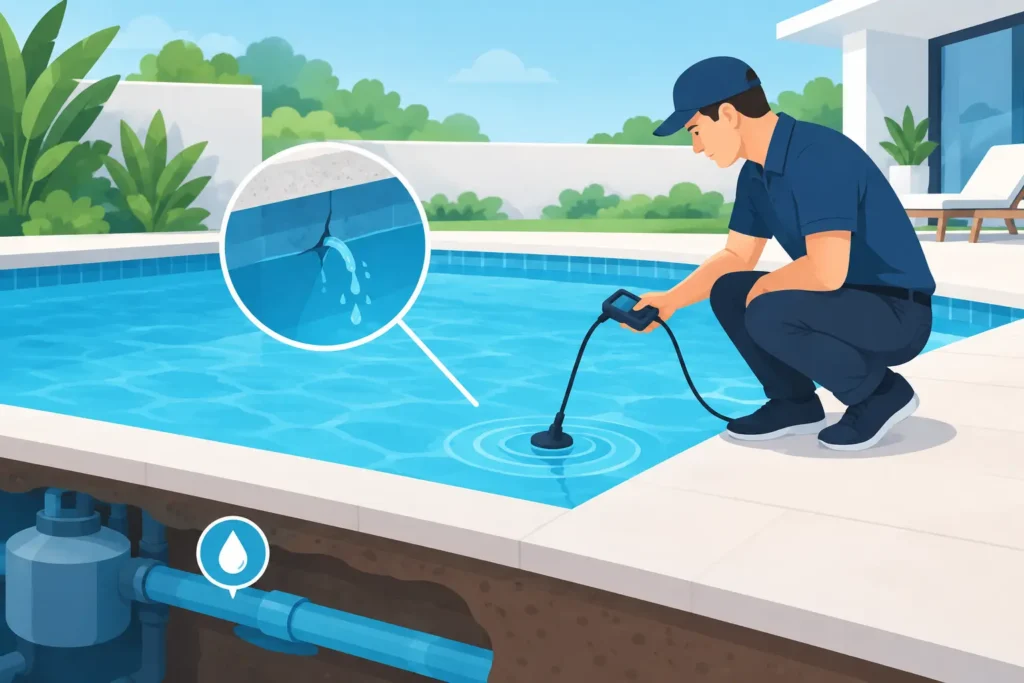
A pool that needs frequent topping off can feel like a normal part of warm Southern California weather. Sometimes it is. But when the water level drops faster than evaporation can explain, waiting can turn a manageable repair into damaged decking, wasted water, higher chemical costs, or equipment problems. Knowing how to detect pool leaks gives homeowners and property managers a practical way to act before the problem grows.
A leak may come from the pool shell, plumbing, fittings, skimmer, light niche, spa, or equipment pad. The source is not always visible, and guessing can lead to unnecessary repairs. Start with a few reliable observations, then bring in a qualified pool professional when the signs point to a true leak.
Start by Ruling Out Normal Water Loss
Every outdoor pool loses water through evaporation, especially during hot, dry, windy weather. Splash-out from swimmers, water features, and backwashing a filter can also lower the level. A typical pool may lose roughly one-quarter to one-half inch of water per day in summer, though conditions and pool use make a real difference.
The concern begins when the loss is noticeably faster, happens consistently, or continues during mild weather with little use. If you are adding several inches of water each week, do not assume heat is the only reason. The extra water use can dilute chemicals, throw off water balance, and place unnecessary demand on your automatic fill system.
Before testing, turn off waterfalls, deck jets, and other features that create overspray. Check that the autofill is not masking the amount of water being lost. For HOA and commercial pools, record the water level and make-up water use as part of the regular service log. A clear record helps identify a pattern early and supports informed repair authorization.
How to Detect Pool Leaks With the Bucket Test
The bucket test is a simple comparison between water loss in the pool and water loss from a container of water sitting beside it. It does not locate a leak, but it can help separate evaporation from a likely pool leak.
Fill a clean five-gallon bucket with pool water and place it on the first or second pool step, where it can remain stable. The water inside the bucket should be close to the same temperature and exposure as the pool water. Mark the water line inside the bucket and mark the pool water line on the outside of the bucket. A piece of tape or a grease pencil works well.
Leave the pool undisturbed for 24 hours. If possible, keep the pump running as it normally would. Then compare the two water levels. If the pool level falls more than the bucket level, the pool is likely losing water beyond ordinary evaporation.
For a more useful result, repeat the test with the circulation system off for 24 hours. This comparison can provide an important clue:
- If water loss is greater while the pump is running, the issue may involve pressure-side plumbing, return lines, fittings, or equipment.
- If water loss is greater with the pump off, suction-side plumbing, the shell, skimmer, drains, or a structural opening may be more likely.
- If loss is about the same in both tests and exceeds the bucket’s loss, the leak may be in the pool vessel or a component that leaks regardless of pump operation.
- If pool and bucket levels drop at a similar rate, evaporation is the more likely explanation.
This is a diagnostic starting point, not a final answer. Plumbing behavior, variable-speed pump schedules, and an autofill can make results harder to interpret. Still, the test gives a pool technician useful information and can reduce time spent searching in the wrong place.
Look for Clues Around the Pool and Equipment
Water does not always leave a visible puddle. It can move through soil, under decking, or into a damaged line underground. The following signs deserve attention, especially when they appear together:
- Soft, wet, or unusually green areas near the pool, spa, equipment pad, or adjacent landscape
- Cracks that are widening in the deck, coping, tile line, or pool interior
- Air bubbles returning to the pool, difficulty priming the pump, or a pump basket that repeatedly loses water
- A skimmer that suddenly struggles to draw water because the level drops below the opening
- Higher water bills, more frequent chemical adjustments, or an autofill that seems to run constantly
Check the equipment pad carefully. Look at pump seals, filter tanks, heater connections, valves, unions, and plumbing joints for drips or mineral buildup. A slow leak at the pad may only show when the system is running. It is often easier and less expensive to repair than an underground plumbing leak, so this inspection should come early in the process.
For a commercial or HOA pool, do not overlook the practical impact of water loss. A pool that falls below its skimmer line can lose proper circulation, create a safety concern, and interfere with regular operating schedules. Prompt documentation and repair coordination protect the facility and help prevent a small issue from becoming a service interruption.
Watch Where the Water Level Stops
If you shut off the autofill and allow the water to drop naturally, the level where it stops can offer another clue. Water that stabilizes at the bottom of the skimmer may indicate a skimmer crack, failed skimmer connection, or problem near that elevation. Water stopping at a return fitting, light, or step line can point toward a fitting or penetration in that area.
Do not let the water drop below the level needed to safely operate equipment, and never run the pump when the pool water is too low. This observation is most useful when managed carefully and monitored daily. In many cases, a professional can inspect likely areas before substantial drainage is necessary.
Use Dye Testing Carefully
A dye test can help confirm a suspected small opening in a still pool. With the pump off, use a small amount of testing dye near a crack, fitting, light niche, skimmer throat, or other suspected point. If there is an active leak, the dye may pull toward the opening.
The key is calm water. Even a slight current can move dye and create a false impression. Dye testing also works best when you already have a specific suspect area. It is not an efficient way to search every inch of a pool, and it cannot reliably diagnose hidden plumbing leaks.
Avoid poking, scraping, or removing fittings without the right experience. Pool lights, main drains, and plumbing connections require careful handling. A visible crack may be cosmetic, while a small gap behind a fitting may be the actual source. Proper leak detection is about confirming the cause before recommending a repair.
When It Is Time for Professional Leak Detection
Call a pool repair professional when the bucket test indicates excess loss, the water level is dropping quickly, wet soil appears near the pool, or equipment begins showing symptoms. A qualified technician can combine visual inspection with pressure testing, electronic listening tools, plumbing isolation, and targeted dye testing. The right approach depends on the pool’s construction, plumbing layout, equipment condition, and whether the leak changes with the pump on or off.
Professional detection is especially valuable before remodeling, replastering, replacing decking, or approving major repair work. Repairing a visible symptom without identifying the source can mean paying twice. For HOAs and commercial properties, documented findings also give boards and managers a clearer basis for scheduling work and communicating with residents or tenants.
Adrian’s Pro Pools brings a hands-on, accountable approach to pool repair and ongoing maintenance for homeowners, HOAs, and commercial properties throughout the Santa Clarita Valley and San Fernando Valley. The goal is not to sell a larger repair than necessary. It is to identify the problem, explain the options clearly, and complete quality work that protects the pool and the property around it.
A falling water line is easy to overlook when life is busy, but consistent water loss rarely fixes itself. Measure it, note what changes when the equipment runs, and address confirmed leaks while the repair is still straightforward.