
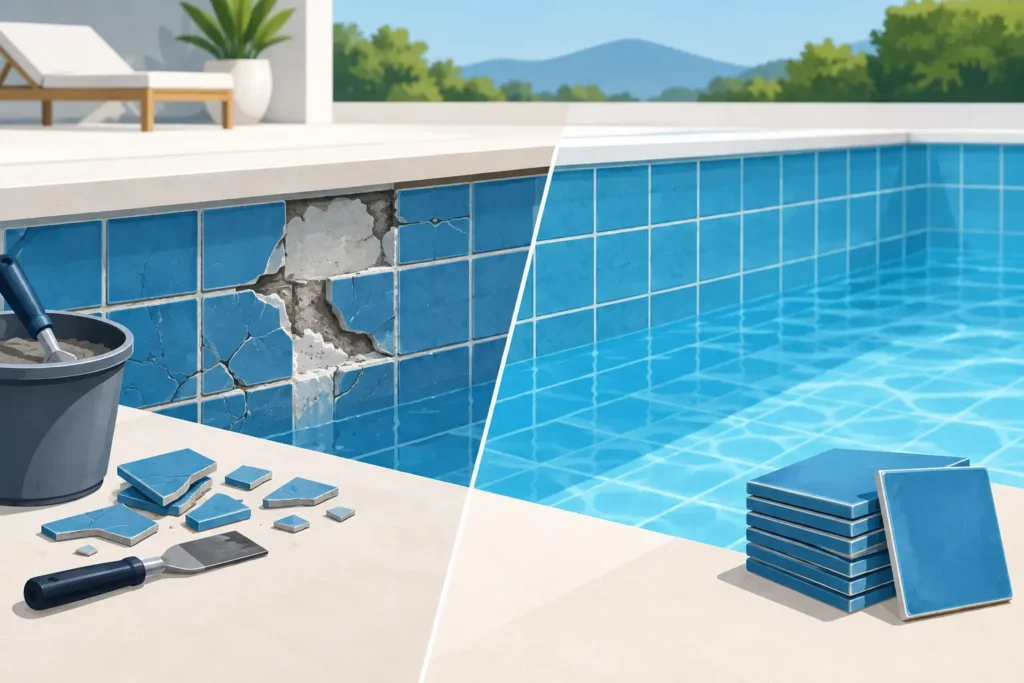
A missing tile near the waterline can look like a small cosmetic issue, but pool tile repair often reveals a bigger question: is the tile itself failing, or is the pool structure, bond beam, or water chemistry causing the damage? Addressing that question early protects the finish, prevents sharp edges, and helps avoid a repair that has to be redone a few months later.
For homeowners, a tile issue can take away from an otherwise beautiful backyard. For HOAs, apartments, and commercial properties, loose or broken tile can create a safety concern and a poor experience for residents and guests. The right repair starts with a careful inspection, clear communication about the cause, and a solution that fits the condition of the pool.
What Causes Pool Tile Damage?
Pool tile is designed to handle water, sun, and regular cleaning, but it is not immune to movement and wear. A single cracked tile may result from an impact, such as a dropped skimmer lid or pool equipment bumping the wall. Several loose tiles in one area, however, may point to a problem below the surface.
The most common causes include age-related adhesive failure, settling or movement in the pool shell, freeze-thaw exposure in colder climates, and water getting behind the tile line. In the Santa Clarita Valley and San Fernando Valley, intense heat and sun exposure can also put years of stress on pool materials. While California does not face frequent freezing conditions, soil movement and structural shifts can still affect tile, coping, and expansion joints.
Water chemistry matters as well. Persistently imbalanced water can damage grout, contribute to calcium scale, and make tile surfaces look dull or stained. Calcium buildup is often mistaken for tile failure. In many cases, the tile is still sound, but it needs professional cleaning or carefully selected treatment rather than replacement.
Loose Tile Is Different From Surface Staining
A white, rough line around the waterline is usually calcium scale. It may be removable, depending on the tile type and severity. Chips, cracks, hollow-sounding areas, missing grout, or tiles that move when touched are different concerns. Those conditions call for inspection before anyone tries to scrape, patch, or glue tile back into place.
It also helps to distinguish between tile and coping. Tile is the finish installed along the waterline or throughout a raised spa. Coping is the cap around the pool edge. Damage to either one can allow water into areas where it does not belong, but the repair method is not the same.
When Pool Tile Repair Is the Right Choice
Targeted pool tile repair is often the best value when the problem is limited and the surrounding installation remains stable. A qualified technician may be able to remove damaged pieces, prepare the surface, install matching replacement tile, and restore grout without disturbing the rest of the waterline.
This approach makes sense when only a few tiles are cracked or missing, the bond behind adjacent tiles is secure, and there are no signs of ongoing structural movement. It is also a practical solution when replacement tile is available. Keeping a few tiles from an original pool build or remodel can make future repairs far easier.
Color matching deserves an honest conversation. Tile batches vary, and older tile lines may be discontinued. Even a tile with the same product name can look slightly different after years of sun, water exposure, and cleaning. A skilled repair team can often place a close match in an inconspicuous area or blend repairs thoughtfully, but an exact invisible match is not always possible.
For a commercial or HOA pool, small repairs should also be scheduled with facility operations in mind. The repair area may need to remain closed while materials cure, and the pool may require a limited shutdown depending on the scope of work. Planning ahead helps minimize disruption for residents, swimmers, and property staff.
Signs You May Need More Than a Spot Repair
Replacing one or two tiles is not the right answer when the surrounding system is failing. Repeated tile loss, long cracks across multiple tiles, deteriorated grout around the entire waterline, or tiles separating in sheets can indicate that a broader renovation is more cost-effective.
Watch for these warning signs:
- Tiles continue to loosen after previous repairs.
- Cracks extend beyond the tile line into coping, deck areas, or the pool shell.
- The waterline tile has widespread hollow spots or visible separation.
- Water levels drop faster than normal and a leak is suspected near the tile or skimmer area.
- The pool finish, coping, and tile are all aging at the same time.
A broader project may involve replacing the waterline tile, renewing the coping, repairing expansion joints, resurfacing the interior finish, or correcting areas affected by movement. It costs more than a small patch, but it can prevent the cycle of paying for repeated isolated repairs while the underlying condition worsens.
Why the Inspection Matters Before Work Begins
A dependable contractor does not start by promising a quick fix from a photo alone. Photos are useful for initial discussion, but they cannot show whether tile is firmly bonded, whether grout has failed behind the visible area, or whether a crack is active.
During an on-site assessment, the repair professional should examine the damaged tile and nearby sections, check for signs of movement or moisture intrusion, and consider the age and condition of the pool. If a leak is possible, leak detection may be recommended before tile work begins. Installing new tile over an unresolved leak path can waste time and money.
For HOA and commercial clients, documentation and authorization are just as important as the repair itself. Property managers need a clear scope, a practical schedule, and notice of any additional work that becomes necessary after damaged materials are removed. That transparency helps boards make informed decisions and protects the operating schedule of the facility.
What a Quality Tile Repair Process Looks Like
The repair process depends on whether the work can be completed with the pool full or whether draining is needed. Minor work near the waterline may sometimes be performed without a full drain, while larger sections, raised spas, or tile below the water level may require the pool to be lowered or emptied. Draining must be handled carefully because some pools should never be left empty without evaluating groundwater and structural conditions.
First, damaged tiles and compromised grout are removed without unnecessarily disturbing sound surrounding material. The substrate is cleaned and evaluated. If the surface behind the tile is weak, cracked, or contaminated, it must be properly prepared before new tile is installed.
New tile is then set with materials suited for pool exposure, followed by appropriate grouting and curing time. Rushing the curing stage can compromise the repair. Once the area is ready for service, the pool should be refilled or returned to normal operation with balanced water chemistry.
The details matter. Proper preparation, compatible materials, clean workmanship, and respect for the property separate a repair that holds up from one that becomes another service call. Adrian’s Pro Pools approaches repair work with that same accountability, whether the job involves a homeowner’s waterline tile or a shared community pool that needs prompt attention.
Protecting Tile After the Repair
No tile installation lasts forever, but regular care can extend its life and keep repairs from becoming more extensive. Consistent water chemistry protects grout and helps prevent scale from building up around the waterline. Weekly service also makes it easier to spot small changes before tiles fall away or cracks expand.
Avoid aggressive do-it-yourself scraping tools or harsh acids unless the tile type and condition have been evaluated. Some cleaning methods can scratch glazed surfaces, weaken grout, or create an uneven appearance. If calcium is heavy, professional treatment is usually safer than trying to force it off with a blade.
Keep an eye on the expansion joint between the coping and deck, too. This flexible joint helps accommodate movement. When it fails, water can move into areas beneath the deck or behind the coping, creating conditions that may eventually affect nearby tile.
Choosing a Contractor for Tile Work
Pool tile repair sits at the intersection of finish work, structural awareness, water management, and jobsite safety. The lowest price is not always the best choice if it skips diagnosis, uses unsuitable materials, or leaves you without an explanation of what was repaired.
Look for a licensed, insured pool contractor with experience in both repair and renovation. Ask whether the estimate addresses the cause of the damage, not only the visible tile. For community and commercial pools, confirm that the contractor understands the need for clear scheduling, property access coordination, and clean work areas.
If you have noticed loose waterline tile, cracking grout, sharp edges, or recurring damage, arrange an inspection before the issue spreads. A timely evaluation gives you options – from a focused repair to a planned renovation – and helps keep your pool safe, attractive, and ready to enjoy.