
A pool can look perfect on a showroom floor and still be the wrong fit for your property. When homeowners ask about concrete versus fiberglass pools, the best answer is not a one-size-fits-all recommendation. Your lot access, preferred shape, timeline, finish expectations, budget, and plans for the home all matter.
For Santa Clarita Valley and San Fernando Valley homeowners, the decision also involves practical California construction realities: permitting, utility coordination, hillside or tight-yard conditions, drainage, and the condition of existing hardscape. A qualified pool contractor should look at the full property before steering you toward a material.
Concrete Versus Fiberglass Pools: The Main Difference
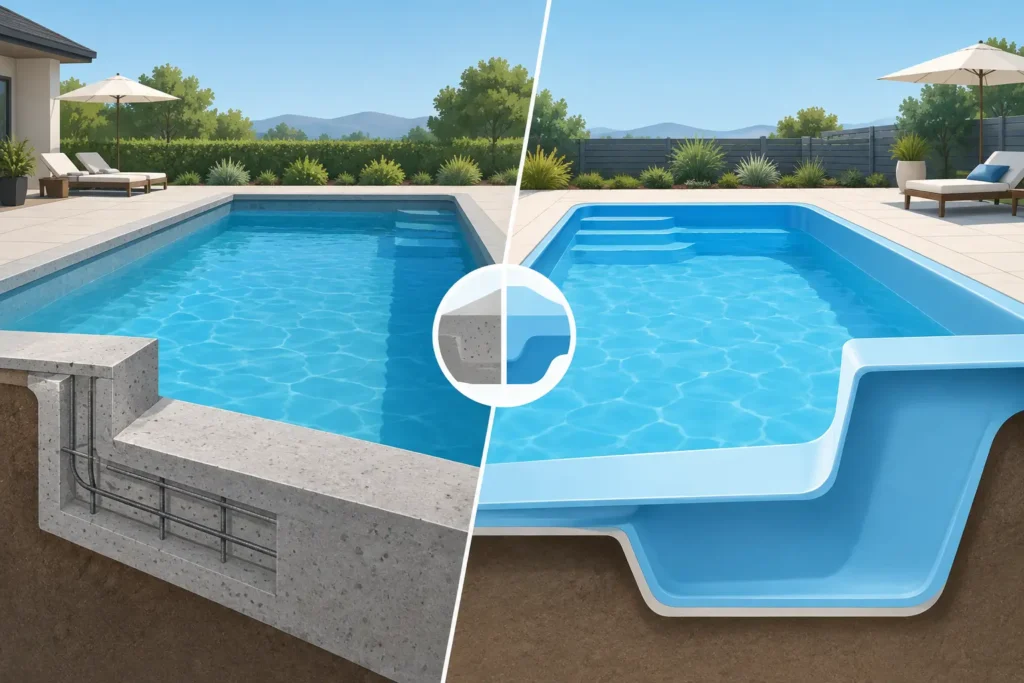
A concrete pool, often built with shotcrete or gunite, is constructed on site. After excavation, the contractor installs steel reinforcement, plumbing, and the pool shell. The pool is then finished with plaster, pebble, tile, or another selected interior surface. Because it is built in place, a concrete pool can be shaped around the yard rather than requiring the yard to fit a pre-made shell.
A fiberglass pool arrives as a factory-built, one-piece shell. The contractor excavates the area, prepares a level base, sets the shell, connects plumbing, backfills carefully, and completes the surrounding deck and equipment work. Fiberglass pools come in a wide variety of shapes and sizes, but the dimensions are limited to the manufacturer’s available models and to what can be transported and placed on the property.
Neither option is automatically better. Concrete offers maximum customization. Fiberglass generally offers a shorter shell installation process and a smooth, nonporous surface. The right choice depends on what you need your backyard to do for you over the next several years.
Design Freedom and Backyard Fit
Concrete is usually the stronger option when design is the priority. It can accommodate freeform curves, geometric layouts, tanning ledges, beach entries, oversized spas, custom depths, vanishing edges, integrated seating, and unusual configurations. If you want the pool to work around a mature tree, a narrow side yard, a slope, or an existing patio, concrete provides more flexibility.
This matters for homeowners planning a complete backyard project rather than only a pool. A custom concrete design can coordinate with an outdoor kitchen, fire feature, retaining wall, raised spa, or new decking. It can also make better use of an irregular lot where a standard shell would leave awkward unused areas.
Fiberglass designs have improved substantially, and many homeowners find a model that suits their goals. Built-in benches, steps, tanning ledges, and deep-end layouts are common. However, you are selecting from established shapes rather than designing every dimension from scratch. If a particular model fits your available space and desired style, that limitation may not be a drawback at all.
Access is a major consideration. A fiberglass shell must be delivered and lowered into the excavation, often by crane. Tight gates, power lines, steep slopes, mature landscaping, or nearby structures can make delivery difficult or add cost. A concrete pool is built from materials brought to the site in stages, which can be more manageable on properties with restricted access.
Installation Timeline: Faster Is Not Always Simpler
Fiberglass pools are often associated with faster installation, and that can be true once the shell is on site and the project is properly prepared. The shell can be placed quickly compared with forming and shooting a concrete structure. For a straightforward yard with good access, fiberglass may reduce the construction timeline.
But the pool shell is only one part of the project. Excavation, utility work, drainage, electrical, equipment installation, decking, fencing, permits, inspections, and landscaping still require planning and coordination. Material availability and local inspection schedules can affect either type of project.
Concrete pools generally take longer because the shell is built on site and must cure before finishing stages proceed. Custom details add time as well. That longer schedule can be worthwhile when the project requires a highly tailored design, substantial grading, structural work, or integration with other backyard improvements.
The most dependable approach is to ask for a realistic project schedule based on your actual property, not a generic promise. Good communication about inspections, weather delays, change orders, and finish selections helps prevent surprises.
Upfront Cost and Long-Term Value
A fiberglass pool may have a lower initial price than a similarly sized custom concrete pool, especially when the site is open and the selected shell is a standard model. Its predictable factory form can simplify portions of the build.
Concrete often costs more upfront because it involves custom engineering, steel, on-site labor, finishing work, and more design choices. Complex features such as a negative edge, elevated spa, custom tile, or extensive structural walls will increase the project cost further.
However, comparing only the initial proposal can lead to a poor decision. A less expensive shell may not offer the size, depth, layout, or visual impact you want. On the other hand, paying for a highly customized concrete pool may not make sense if a fiberglass model meets your needs and your priority is getting in the water sooner.
Long-term value also depends on maintenance, finish renewal, equipment quality, and how well the pool fits the property. A professionally designed pool that complements the home and is maintained properly can be an asset to daily life and future resale appeal. It should not be viewed as a guaranteed dollar-for-dollar return, but as an investment in the home and how you use it.
Maintenance and Surface Care
Fiberglass has a smooth gel-coat surface that can make it harder for algae to gain a foothold. Many owners appreciate the easy feel underfoot and the reduced surface roughness compared with some plaster finishes. Fiberglass pools still need consistent circulation, balanced water chemistry, brushing, filter care, and professional attention when equipment issues arise.
Concrete pools require the same core water-care discipline, but their interior finish is more porous. Proper brushing and chemistry management are especially important, particularly after a new finish is installed. Over time, a concrete pool’s plaster or pebble finish may need renovation or replacement. The timing varies based on water balance, usage, finish material, and maintenance history.
It is not accurate to say fiberglass is maintenance-free or that concrete is difficult to maintain. Both can provide years of reliable use when the system is correctly installed and serviced. The bigger risk is neglected water chemistry, underperforming equipment, or a contractor who does not explain the maintenance requirements after construction.
For HOA and commercial properties, the choice can involve additional considerations. Bather load, code requirements, safety features, accessibility needs, operating schedules, and the need to keep the facility available all influence the right construction plan. A pool that is simple to service and built for heavy use may be more valuable than one chosen solely for its initial appearance.
Durability, Repairs, and Renovation Options
Concrete is known for structural strength and design permanence. It can be renovated in many ways over its life, including new finishes, tile replacement, coping upgrades, plumbing improvements, lighting updates, and complete reshaping during a major remodel. That adaptability is appealing to homeowners who expect their property needs to evolve.
Fiberglass shells are durable and designed to flex slightly with normal ground movement. Still, proper installation is critical. The excavation base, water management, backfill, plumbing connections, and groundwater considerations must all be handled correctly. Repairs to gel coat or surface blemishes are possible, but they should be evaluated and completed by experienced professionals.
California soil conditions and drainage deserve careful attention with either material. Water pressure around a pool shell, improper drainage, or poorly managed grading can create problems that are far more expensive than getting the site preparation right from the start. Before construction begins, discuss the property’s drainage patterns, any known soil concerns, and how water will be directed away from the pool and home.
How to Choose the Right Pool for Your Property
Start with the way you plan to use the pool. A family that wants a simple, comfortable place to cool off may find that a fiberglass model checks every box. A homeowner creating a resort-style entertaining space, working with a narrow or unusual lot, or envisioning a custom spa and water features may be better served by concrete.
Also consider how long you plan to stay in the home, whether you expect to remodel the yard in phases, and how much construction activity your property can accommodate. A clear plan is more useful than chasing the fastest installation or the lowest starting number.
Before signing a contract, ask the contractor to explain the proposed scope in plain language. You should understand what is included for excavation, access, engineering, permits, equipment, electrical work, finish materials, decking, fencing, startup, and warranty coverage. If site conditions change, ask how additional work will be documented and authorized.
At Adrian’s Pro Pools, our approach is to evaluate the property, listen to how you want to use the space, and provide honest guidance before construction starts. The best pool is the one that fits the yard, the budget, and the level of care you expect over time.
A pool project should leave you excited about the finished backyard, not uncertain about what happens next. Choose a design and construction partner that will answer questions clearly, respect your property, and stay accountable from the first layout discussion through startup and ongoing service.
Pingback: How to Drain Pool Safely Without Costly Damage - Adrian's Pro Pools