
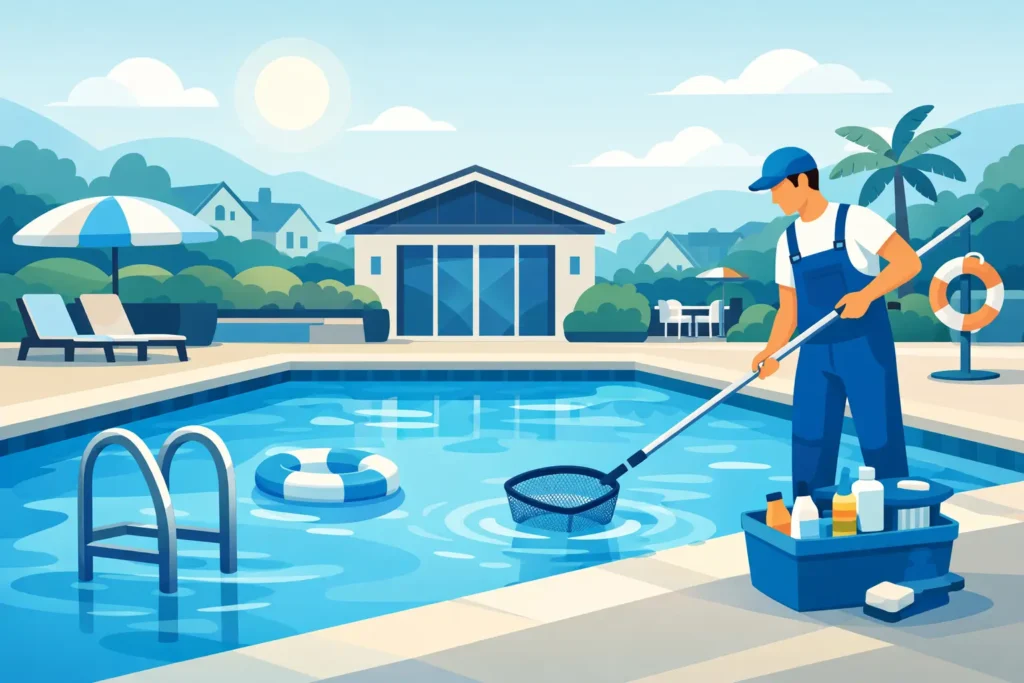
A community pool can look fine at 9 a.m. and become a board-level problem by noon. A failed pump, cloudy water, an unsecured gate, or an unaddressed chemical issue can quickly lead to resident complaints, temporary closure, and costly disruption. Reliable HOA pool maintenance services are not simply about skimming leaves. They protect a shared amenity that affects resident satisfaction, property appearance, and daily operations.
For HOA boards and community managers, the right service partner brings consistency, clear communication, and the ability to recognize small concerns before they become major repairs. That matters especially in the Santa Clarita Valley and San Fernando Valley, where heat, wind, heavy pool use, and debris can put extra demand on pool equipment and water chemistry.
What HOA Pool Maintenance Services Should Cover
A shared-use pool needs a more disciplined service plan than a typical backyard pool. More swimmers mean more sunscreen, oils, debris, and organic material entering the water. Equipment often runs longer, and a problem that might be inconvenient at a private home can affect an entire community.
Weekly visits should address the visible condition of the pool as well as the systems residents do not see. This includes skimming the surface, vacuuming when needed, brushing walls and tile, emptying baskets, checking water level, and inspecting the deck area for obvious concerns. A clean pool is important, but clean-looking water alone is not proof that it is properly maintained.
Water testing and chemical adjustment are equally essential. A qualified technician monitors sanitizer levels, pH, alkalinity, stabilizer, and other factors that influence water quality and equipment performance. The proper balance depends on the pool, its circulation system, bather load, weather, and treatment method. Adding chemicals without testing, or treating recurring problems with a quick shock treatment, can create more expensive issues over time.
Equipment checks should be part of the regular routine. Pumps, filters, heaters, chlorinators, timers, valves, drains, and automated controls all deserve attention. A technician who notices a small leak, unusual pump noise, weak circulation, or rising filter pressure can help the association act before the system fails during a busy weekend.
The Difference Between Residential and HOA Pool Care
Residential maintenance and commercial-style community pool service share the same basics, but the responsibility is different. An HOA is managing a common area used by many residents and guests. The pool must remain presentable, functional, and appropriately maintained while the board balances budgets, vendor accountability, and resident expectations.
That is why dependable scheduling matters. An association should know when the technician is expected, what was serviced, and whether any follow-up is needed. Missed visits create avoidable uncertainty. Clear service records help managers answer questions, track recurring issues, and make informed decisions when equipment repair or replacement is recommended.
Responsiveness matters just as much. If the pool becomes cloudy, a pump stops running, or an equipment issue threatens a closure, the association needs a contractor who answers the phone and communicates honestly about next steps. Not every issue can be repaired immediately, particularly when parts must be ordered. However, a professional provider should explain the condition, provide authorization options before additional work proceeds, and keep the manager updated.
Compliance Is Part of Routine Service
Community pools are regulated shared-use facilities, not private amenities. Their operation can involve local health requirements, required safety equipment, posted rules, approved signage, and documentation. The details vary by property and jurisdiction, so boards should work with a provider familiar with the expectations that apply to their facility.
Regular maintenance supports compliance because it creates a consistent opportunity to identify concerns. A technician may notice a damaged drain cover, faded depth marker, failing gate latch, missing safety equipment, or water condition that requires attention. These items should not be treated as minor cosmetic details. They can affect safety, inspections, and whether the pool can remain available to residents.
A qualified pool contractor also understands the line between routine care and work that needs a repair proposal, permit, inspection, or specialized service. That distinction protects the association from rushed decisions and unclear scope. It also gives the board a more accurate picture of what is required, what is recommended, and what can be planned for in the reserve budget.
Preventive Maintenance Protects the HOA Budget
The least expensive repair is often the one prevented by consistent care. Filters that are not cleaned on schedule force pumps to work harder. Small plumbing leaks can waste water and damage surrounding equipment areas. Unbalanced water can wear on plaster, tile, heaters, and metal components. Neglect does not always show up as an immediate emergency, but it usually appears later in the form of shortened equipment life and higher repair costs.
Preventive maintenance does not mean replacing every component at the first sign of age. It means evaluating condition, performance, repair history, and the practical cost of waiting. A well-run service provider should be able to explain why a repair is urgent, why another item can be monitored, and when replacement may make more financial sense than repeated service calls.
For example, an older pump may still operate but run loudly, lose prime, or consume more energy than it should. A repair could be appropriate if the problem is isolated. If multiple components are failing and the motor has reached the end of its useful life, a replacement discussion may be more responsible. The right answer depends on the equipment, the pool’s usage, and the association’s maintenance priorities.
What Boards Should Expect From Their Pool Provider
A quality provider makes it easier for the board and manager to do their jobs. The service relationship should be built on accountability rather than vague assurances. At a minimum, associations should expect punctual service, professional appearance, respectful treatment of the property, clear reporting, and direct communication when a concern is found.
When comparing HOA pool maintenance services, ask how often the pool will be visited, who performs the work, and how service findings are documented. Ask how emergency calls are handled and whether the company can manage repairs, equipment upgrades, remodeling, and other work if the property needs more than routine cleaning. Using separate vendors for every issue can be necessary in some situations, but it can also slow communication and make it harder to identify responsibility.
Credentials and insurance also deserve attention. A licensed, bonded, and insured contractor offers an added level of protection for an HOA overseeing a shared facility. Experience with commercial and HOA pools matters because these properties have different operating demands than a single-family backyard pool.
A Service Plan Should Match the Property
There is no single maintenance schedule that fits every association. A small HOA pool with limited use may need a different plan than an apartment community pool with daily traffic, a heated spa, mature landscaping, or frequent windblown debris. Seasonal changes also matter. Summer may require closer monitoring because of higher temperatures and heavier use, while fall can increase cleaning needs where leaves are a concern.
The best approach starts with an honest assessment of the property. Consider the pool and spa size, equipment age, operating hours, number of residents, landscape conditions, and recent repair history. From there, the service provider can recommend an appropriate visit frequency and explain what is included in the recurring scope.
Adrian’s Pro Pools brings licensed, insured, hands-on experience to HOA and commercial pool care throughout the Santa Clarita Valley and San Fernando Valley. For boards, that means one accountable local team that can maintain the pool, identify repair needs, and help manage larger renovation or equipment projects when the time comes.
A community pool should give residents a reason to enjoy where they live, not give managers another preventable emergency to solve. Choosing a responsive provider with a clear maintenance plan lets your board protect that amenity with greater confidence all season long.
Pingback: What a Commercial Pool Service Company Should Do - Adrian's Pro Pools
Pingback: Pool Repair San Fernando Valley Homeowners Trust - Adrian's Pro Pools
Pingback: How to Choose a Pool Remodeling Contractor in Santa Clarita - Adrian's Pro Pools
Pingback: Pool Pump Repair Service: When to Call a Pro - Adrian's Pro Pools
Pingback: Pool Finish Options for California Backyards - Adrian's Pro Pools