
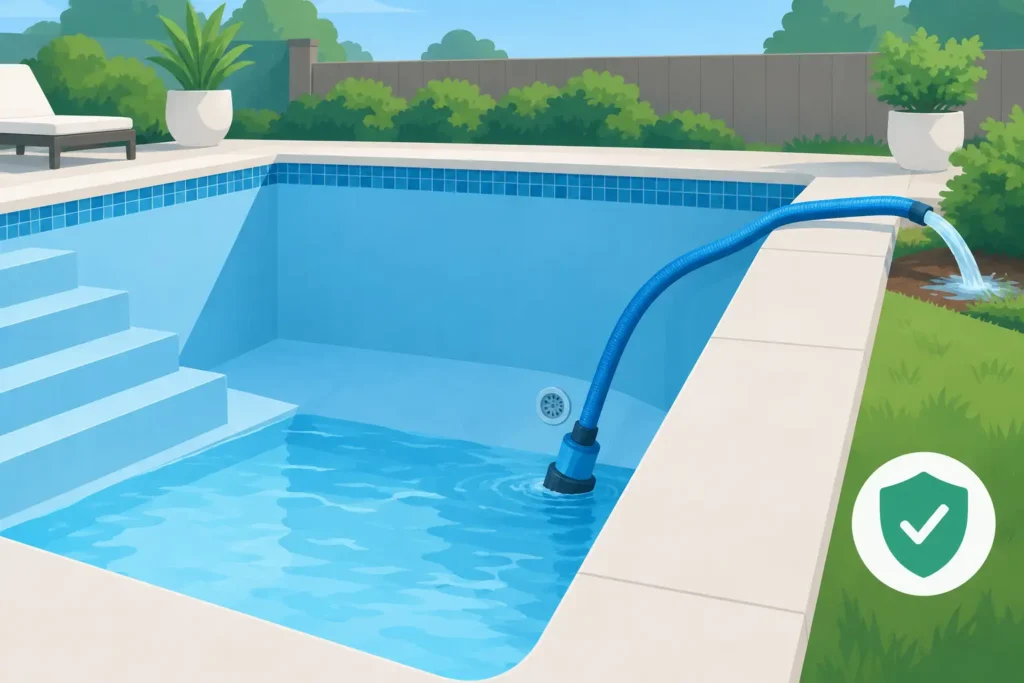
An empty pool can look like a straightforward maintenance project. In reality, knowing how to drain pool safely means protecting the pool shell, surrounding soil, equipment, and local drainage system before the first gallon leaves the waterline. A rushed drain can lead to lifted plaster, cracked concrete, a floating fiberglass shell, damaged vinyl, or wastewater flowing where it does not belong.
For most homeowners, HOA boards, and property managers, a complete drain should be the exception rather than a routine chore. When it is necessary, the safest approach starts with a site-specific plan, not a rental pump.
First, Confirm That a Full Drain Is Necessary
Many pool problems can be corrected without completely emptying the vessel. High cyanuric acid, total dissolved solids, algae after a major treatment failure, plaster work, structural repairs, or a remodel may justify draining. Even then, a partial drain and refill can sometimes solve the chemistry issue while reducing risk.
A professional water test gives you a better basis for the decision. For example, high stabilizer may call for replacing a portion of the water, while an algae issue may respond to proper brushing, filtration, and treatment. Draining a pool simply because the water looks poor can create a much larger problem than the one you started with.
Commercial and HOA pools require additional care. Their operating permits, bather load, health requirements, and planned downtime all need to be considered. Closing a shared pool unexpectedly affects residents, guests, and property operations, so it pays to schedule work carefully and communicate early.
Check Groundwater and Weather Before You Drain
The greatest structural concern is hydrostatic pressure. When a pool is full, the weight of the water inside helps hold it in place. If groundwater beneath or around the pool is high, removing that internal weight can allow pressure below the shell to push upward. In severe cases, an empty concrete pool can lift or crack, and a fiberglass pool can rise out of the ground.
Recent heavy rain, poor yard drainage, a high water table, or a property near a slope can increase this risk. Santa Clarita Valley and San Fernando Valley properties vary widely by neighborhood, soil conditions, and elevation, so do not assume a dry-looking yard means the ground below is dry.
Avoid draining before, during, or immediately after substantial rain. If there is any question about groundwater, have a qualified pool contractor evaluate the pool and its hydrostatic relief system. A hydrostatic valve may be located in the main drain area, but opening or servicing it is not a casual DIY task. It can be stuck, damaged, or inaccessible, and it does not eliminate the need for a proper assessment.
Know Your Pool Type and Its Risks
Concrete or gunite pools are durable, but an empty shell is still vulnerable to groundwater pressure, surface damage, and cracking. Older pools may have weakened plaster, exposed rebar, or existing structural movement that becomes more visible once water is removed.
Fiberglass pools require particular caution because they are lighter and more susceptible to lifting when groundwater is present. Vinyl-liner pools should not be fully drained unless the work specifically requires it and the contractor has a plan for the liner. A liner can shrink, shift, wrinkle, or tear when left empty, especially in warm Southern California weather.
The finish matters as well. Plaster, pebble, tile, and exposed aggregate surfaces should not sit empty longer than necessary. Heat and direct sun can stress older finishes, while improper washing methods can permanently damage the surface. If your drain is tied to resurfacing, tile repair, or a remodel, coordinate the drain with the crew doing the work so the pool is not empty for days without a reason.
Plan Where the Water Will Go
Pool water is not automatically safe to send into the street, storm drain, landscaped areas, or a neighbor’s property. Chlorine, salt, algaecides, and other treatment chemicals can harm waterways, plants, and soil. Local rules also differ by jurisdiction, sewer provider, and property type.
Before draining, contact the appropriate local sewer or sanitation agency and confirm the approved discharge method for your address. In many cases, dechlorinated pool water may be allowed to enter a sanitary sewer connection under specific conditions, but you should never make that assumption. Storm drains generally lead to local waterways, not a treatment facility.
If discharge to a sanitary sewer is approved, make sure the connection can accept the flow and that the water is released slowly enough to avoid backups. Do not run a large-volume discharge through an interior sink, toilet, or cleanout without authorization. A pool professional can help identify a safe discharge plan and manage flow rates.
For HOA and commercial properties, document the approved method before work begins. This helps protect the association or property owner, especially when drains, common-area landscaping, parking areas, and public access are nearby.
Prepare the Water, Equipment, and Work Area
Once the drain is justified and the discharge plan is confirmed, reduce chlorine to a permitted level before pumping. Stop adding chlorine, shock, and other chemicals ahead of time, then test the water. Do not rely only on the calendar because chlorine levels are affected by sun, water temperature, and recent treatment.
Turn off pool equipment at the breakers before lowering the water below the skimmer or return lines. Pumps should never run dry. If the pool has automation, heaters, salt systems, boosters, or water features, verify they are off and protected before work starts.
Keep people and pets away from the work area. Secure hoses so they cannot shift into walkways, neighboring lots, or storm drains. If you are using a submersible pump, make sure its electrical connection is properly protected and kept away from standing water. Extension cords, wet concrete, and improvised electrical setups are a dangerous combination.
A complete drain is not the moment to multitask. Someone should monitor the water level, discharge point, hoses, and pump throughout the process.
Drain Slowly and Monitor Conditions
A controlled drain is safer than trying to empty the pool as fast as possible. Use appropriately sized equipment, follow the approved discharge rate, and watch for erosion, pooling, sewer backup, or water moving toward a street inlet.
As the level drops, inspect the shell for cracks, hollow spots, loose tile, damaged fittings, and signs of groundwater entering through the main drain or floor. If water begins rising into the empty pool from below, stop work and contact a qualified pool contractor. Continuing to pump can increase the pressure difference beneath the shell.
Never enter an empty pool while a pump is operating or while the shell is being assessed for groundwater concerns. Wet surfaces are slippery, deep ends create a fall hazard, and an unstable drain setup can create avoidable risk. Use proper access and keep the area secured.
Clean, Repair, and Refill Without Delay
Once the pool is empty, complete only the work that requires an empty vessel. Surface cleaning, acid washing, tile repair, plumbing work, and plaster preparation each have different procedures. Acid washing in particular involves hazardous chemicals and should be handled by trained professionals with proper protective equipment and wastewater controls.
Do not leave the pool empty longer than necessary. After approved repairs or cleaning are complete, begin refilling promptly. Use a clean water source and monitor the fill level. Do not shut off the water and walk away, since an overflowing pool can damage landscaping, structures, and adjacent property.
When the water reaches the proper operating level, restart equipment according to the manufacturer requirements. Test and balance water before reopening the pool. This includes sanitizer, pH, alkalinity, calcium hardness, and stabilizer as applicable to the system. For shared-use pools, follow the required health and operational procedures before allowing swimmers back in.
When to Call a Pool Professional
A homeowner may be able to manage a carefully planned partial drain under the right conditions. A full drain deserves professional help when there has been recent rain, groundwater is possible, the pool is fiberglass or vinyl-lined, plumbing or surface repairs are planned, or local discharge requirements are unclear.
For HOA and commercial pools, professional oversight is usually the practical choice. The work affects safety, compliance, resident expectations, and the condition of a valuable common-area asset. A qualified contractor can assess the pool, coordinate the drain, protect equipment, manage wastewater, and get the facility back in service with less uncertainty.
Adrian’s Pro Pools serves homeowners and managed properties throughout the Santa Clarita Valley and San Fernando Valley with responsive maintenance, repair, remodeling, and construction support. If a drain is connected to a repair or renovation, having one accountable team evaluate the full scope can prevent unnecessary downtime and expensive surprises.
A safe drain is not measured by how quickly the pool becomes empty. It is measured by whether the shell stays secure, the water is handled responsibly, the repair is completed correctly, and your pool is ready to return to service with confidence.