
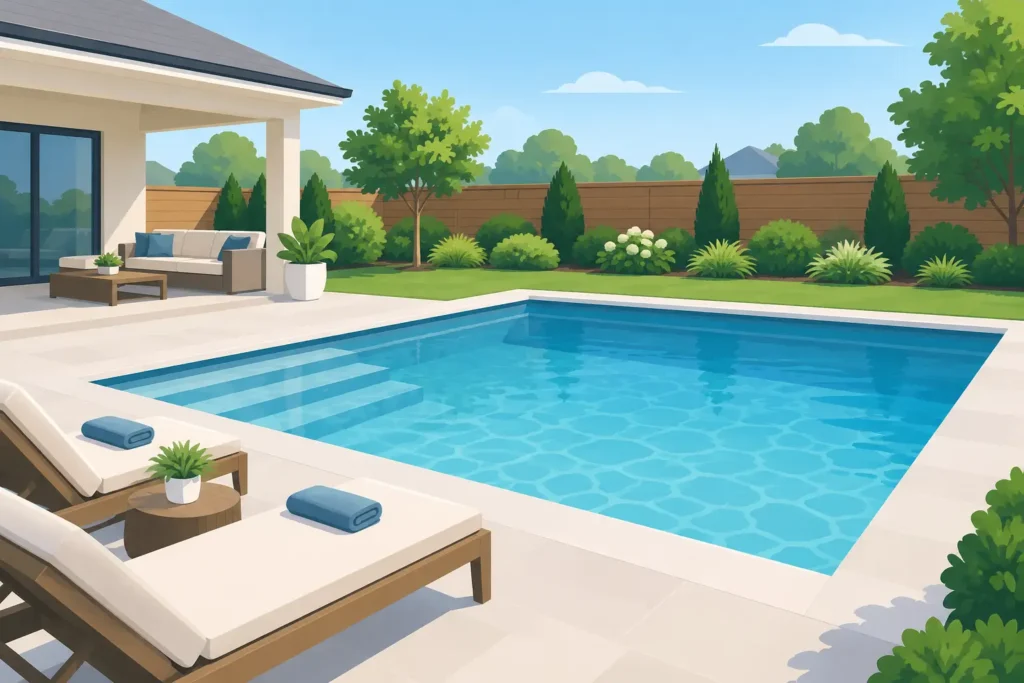
A new pool should make your property more enjoyable, not leave you managing unanswered questions, surprise changes, and a torn-up yard for longer than expected. Successful pool construction starts well before excavation. It begins with a practical plan for how your household will use the space, what the property can support, and who will be accountable from the first design conversation through startup.
For homeowners in the Santa Clarita Valley and San Fernando Valley, the best pool is rarely the biggest one on the plan. It is the one that fits the yard, meets local requirements, operates efficiently, and feels easy to own after the project is complete.
Start Pool Construction With How You Will Use the Space
A pool design should follow your lifestyle rather than a trend photo. A family with young children may prioritize a shallow play area, clear sightlines from the home, and durable finishes. Homeowners who entertain may want a larger deck, a Baja shelf, spa seating, or room for outdoor dining. Someone focused on fitness may prefer a long, unobstructed swim lane.
These decisions affect far more than appearance. The shape and depth of the pool influence excavation, structural work, circulation, heating needs, and long-term operating costs. A raised spa can create a striking focal point, but it also adds plumbing, equipment, and finish details that need to be planned correctly. Water features can add atmosphere, yet each one requires thoughtful hydraulic design so it performs as expected without putting unnecessary strain on the system.
A site visit is where good ideas meet real conditions. The contractor should evaluate access for equipment, property lines, slopes, drainage, existing utilities, trees, and the location of the equipment pad. In many Valley backyards, space is limited or the lot has elevation changes. Those conditions do not automatically prevent a pool project, but they can affect design choices, engineering, timeline, and budget.
Design for the Yard You Have, Not an Idealized One
The pool itself is only one part of the finished environment. Decking, drainage, fencing, landscaping, lighting, and equipment access all deserve attention early in the process. Leaving them until later often creates avoidable compromises.
For example, an equipment pad should be accessible for future service while remaining considerate of noise and sightlines. Drainage should direct water away from the house and avoid creating problems at neighboring properties. The patio layout should allow people to move comfortably between the pool, spa, doors, seating areas, and outdoor kitchen without making the yard feel crowded.
Material selection also involves practical trade-offs. Concrete decking offers flexibility and can complement many designs, while pavers may make future access to underground utilities easier. Tile, coping, plaster, and aggregate finishes each have different looks, maintenance expectations, and price points. The right combination depends on the property, the desired style, and how the pool will be used year after year.
Think Beyond the First Summer
A pool is a long-term system, not a one-season improvement. Choosing energy-efficient equipment, appropriately sized plumbing, and reliable automation can make everyday ownership more convenient. Variable-speed pumps, modern filtration, automated controls, heaters, and saltwater systems can all be worthwhile, but they should be selected based on the pool’s actual design and the owner’s priorities.
For some homeowners, controlling the pump schedule, lights, and temperature from a phone is a major convenience. For others, the priority is straightforward equipment that is easy to operate and maintain. A qualified contractor should explain the options in plain language, including what each feature adds to the project and what it means for ongoing service.
Permits, Safety, and Paperwork Are Part of the Job
Pool construction in California involves more than digging and pouring concrete. Permitting, plans, inspections, safety requirements, and local building standards are central parts of a properly managed project. Requirements can vary by jurisdiction, and a professional contractor should help guide the process rather than leaving the owner to sort out unfamiliar paperwork alone.
Safety barriers are especially important. Depending on the property and local code, this can involve fencing, self-closing and self-latching gates, door alarms, pool alarms, approved covers, or other required protection. These details should be addressed during planning, not treated as a last-minute obstacle before final approval.
The same level of care matters when a project involves an HOA or multifamily property. Shared-use pools have added operational considerations, including safety, access, scheduling, resident communication, and potential health-related standards. Property managers and board members need a contractor who understands that construction work must be organized around the people who live there, not just the work crew’s schedule.
What a Well-Managed Construction Process Looks Like
Every project is different, but a clear sequence helps owners know what to expect. After the design, proposal, and plans are finalized, the construction process commonly moves through permitting, layout, excavation, steel installation, plumbing and electrical work, structural shell work, tile and coping, decking, equipment installation, finishes, and startup.
Weather, inspections, material availability, site conditions, and approved changes can affect timing. Honest communication matters most when something does not go exactly as planned. A dependable contractor will explain what happened, how it affects the schedule or cost, and what comes next. That is much better than vague updates or silence after work has begun.
Before choosing a contractor, ask how changes are handled. Some adjustments are normal once a project is underway, especially if hidden site conditions are discovered. The important question is whether additional work is documented, authorized, and clearly explained before it moves forward.
You should also ask who will oversee the work, how often you can expect updates, and how the site will be kept orderly. Construction naturally creates noise, dust, and disruption, but professional crews respect the property. They protect access where possible, keep materials organized, and avoid treating the yard like an afterthought.
The Lowest Bid Is Not Always the Lowest Cost
Pool proposals can look similar on the surface while covering very different scopes of work. One estimate may include equipment, permits, drainage, electrical allowances, startup service, and finish selections that another leaves open. Comparing only the bottom line can lead to costly misunderstandings later.
Review the proposal carefully. Make sure it identifies the pool dimensions, depth profile, finish, tile, coping, deck scope, equipment package, safety features, permit responsibilities, and any exclusions. If an allowance is included for a material or trade, ask what happens if the final selection costs more than the allowance.
Licensing, insurance, and experience should carry real weight in the decision. A pool project involves structural work, utilities, water management, and safety requirements. Hiring a qualified swimming pool contractor protects your investment and gives you a clearer path to accountability if questions arise during the work.
Plan for Care After the Build
A new pool needs proper startup, water balancing, equipment orientation, and consistent service. The first weeks are especially important as the interior finish cures and the system is dialed in. Owners should understand basic operation, but they should not be expected to become water chemistry experts overnight.
Ongoing maintenance protects the look, comfort, and life of the new pool. Regular cleaning, chemistry checks, filter care, and early repair attention help prevent minor issues from becoming expensive ones. This is also why it helps to work with a company that can support the pool after construction, not simply finish the build and disappear.
At Adrian’s Pro Pools, the goal is to provide that continuity – thoughtful planning, quality workmanship, responsive communication, and dependable care after the water is in. A well-built pool should give you confidence every time you step into the backyard, because the details behind it were handled with the same care as the view from the patio.