
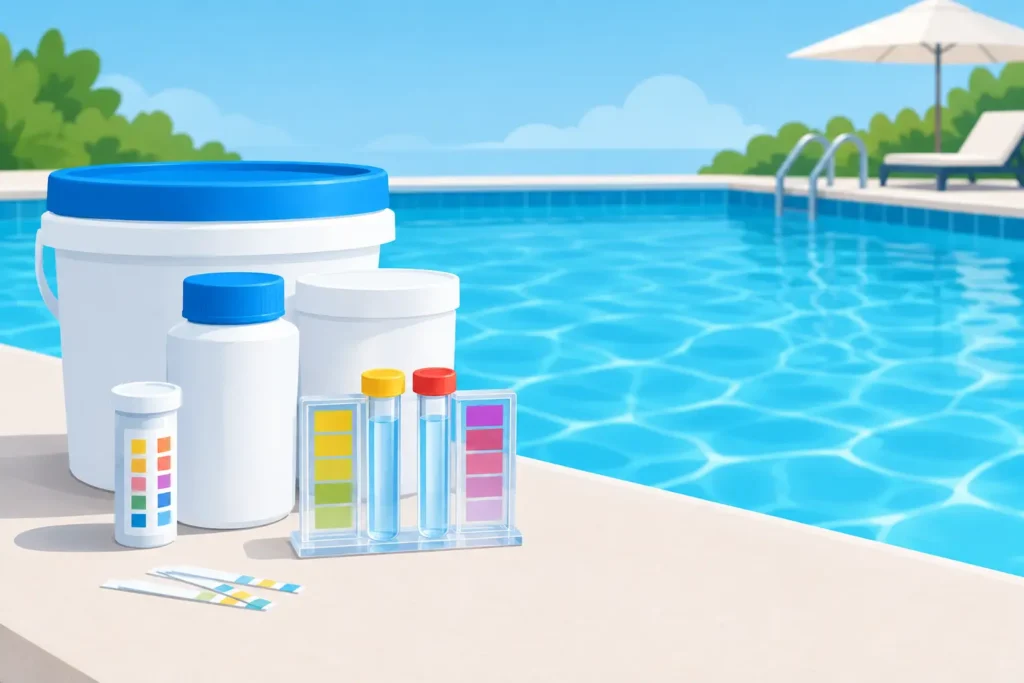
Cloudy water, burning eyes, a strong chlorine smell, or recurring algae are not just cosmetic pool problems. They are often signs that pool chemical balancing has fallen out of range. A pool can look reasonably clean on the surface while its water chemistry is working against the equipment, irritating swimmers, or allowing contaminants to build up.
For homeowners, a balanced pool means more time enjoying the backyard and less time chasing water issues. For HOAs, apartment communities, and commercial properties, it also supports a cleaner facility, a better resident experience, and dependable day-to-day operation. The goal is not to add more chemicals. It is to test accurately, make measured adjustments, and keep the water in a stable range.
What Pool Chemical Balancing Actually Controls
Pool water chemistry is a system. Each reading affects the others, which is why adding a product based on one test result alone can sometimes create a second problem. Proper service starts with a complete water test, then addresses the readings in the right order.
The core readings include sanitizer, pH, total alkalinity, calcium hardness, cyanuric acid, and total dissolved solids. Pools may also need testing for phosphates, metals, salt level, or other conditions depending on the water source, pool finish, equipment, and recent treatment history.
Chlorine or another approved sanitizer kills germs and controls algae. pH measures whether the water is too acidic or too basic. Total alkalinity helps hold pH steady, while calcium hardness protects plaster, grout, tile, heaters, and other pool surfaces from aggressive or scale-forming water. Cyanuric acid, often called stabilizer, helps protect chlorine from sunlight in outdoor pools.
A helpful way to think about these numbers is that sanitizer handles cleanliness, while the balance readings protect comfort and the pool itself. Both matter. A pool with adequate chlorine but poor pH and hardness can still create costly problems over time.
The Best Order for Pool Chemical Balancing
When several readings are off, resist the urge to correct everything at once. That approach makes it difficult to know what caused the next change. A trained technician normally tests the water, reviews the pool’s recent chemical use and bather load, and makes targeted adjustments.
In most cases, total alkalinity is addressed before pH because alkalinity helps prevent pH from swinging up and down. Once alkalinity is in the appropriate range, pH can be adjusted more reliably. Calcium hardness and cyanuric acid should then be reviewed in relation to the pool surface, sanitizer method, and local water conditions.
Sanitizer should be maintained throughout the process. If chlorine is low, especially after heavy use, wind, rain, or hot weather, the pool may need immediate treatment. But adding a large amount of chlorine without understanding pH, stabilizer, and water condition can lead to short-lived results or unnecessary chemical use.
Exact target ranges depend on the pool and its operating system. A saltwater pool, for example, has different day-to-day considerations than a traditionally chlorinated pool. A newly plastered pool also requires closer monitoring than an established pool because the surface is still curing. This is one reason generic advice from a test-strip bottle does not always fit the property in front of you.
Common Water Problems and What They Can Mean
A strong “chlorine” odor does not necessarily mean there is too much chlorine. It can indicate chloramines, which form when chlorine has already reacted with contaminants. The solution may involve testing free and combined chlorine, improving circulation, cleaning the pool, and applying the correct treatment rather than simply turning down the chlorine feeder.
Cloudy water can come from poor filtration, unbalanced pH, low sanitizer, fine debris, high calcium, or a combination of issues. If the filter is dirty or the circulation system is not running long enough, chemical adjustments alone may not restore clarity. Water chemistry and equipment performance need to be evaluated together.
Algae often appears when sanitizer is too low, circulation is limited, or brushing and cleaning have been inconsistent. Green, yellow, and black algae do not behave exactly the same way, so a one-size-fits-all treatment can waste time and chemicals. Brushing affected areas, cleaning the filter, checking circulation, and holding sanitizer at the correct level are all part of resolving the issue.
Scale along the tile line or inside a heater can point to high calcium hardness, high pH, elevated alkalinity, or evaporation that has concentrated minerals in the water. On the other hand, water that is too aggressive can pull minerals from plaster and grout. Both conditions can shorten equipment life and affect the appearance of the pool.
Why Testing Frequency Matters
Residential pools generally benefit from regular weekly testing, with more frequent checks during hot weather, periods of heavy swimming, wind events, or after a party. Outdoor pools in the Santa Clarita Valley and San Fernando Valley can lose sanitizer quickly under strong sun and high temperatures. Evaporation also concentrates minerals, which may gradually change calcium and total dissolved solids readings.
Commercial and HOA pools need a more disciplined routine because bather loads can change dramatically from one day to the next. A quiet weekday and a busy weekend can place very different demands on the same body of water. Shared-use facilities also have public-health requirements that should be managed by qualified personnel who understand the applicable local standards and documentation needs.
Test strips are convenient for a quick check, but they have limitations. A reliable service program uses appropriate test methods, keeps records, and looks for patterns over time. If pH rises every week, for instance, the answer may be a planned adjustment strategy rather than repeated emergency corrections.
Chemical Balancing Is Not a Substitute for Maintenance
Water cannot stay balanced if the pool is full of leaves, fine debris, oils, and organic material. Skimming, vacuuming, brushing, emptying baskets, and maintaining filters all reduce the load placed on the chemicals. Proper circulation distributes sanitizer and prevents stagnant areas where algae can begin.
Equipment also plays a major role. A failing pump, clogged filter, leaking chlorinator, damaged salt cell, or inaccurate controller can create chemistry problems that keep returning. Repeatedly adding chemicals without investigating the equipment may mask the real issue while increasing operating costs.
This is especially relevant for property managers. A pool that is closed unexpectedly due to cloudy water or a sanitation issue affects residents, tenants, and staff. Consistent maintenance is usually less disruptive and less expensive than reacting after the water has already turned.
When to Call a Pool Professional
Some routine adjustments are manageable for experienced pool owners who test consistently and follow product instructions carefully. However, professional help is a smart choice when water remains cloudy after treatment, algae keeps returning, the pool requires frequent large chemical corrections, or you notice staining, scaling, leaks, or equipment concerns.
It is also wise to bring in a qualified pool service provider after a remodel, replaster, major repair, equipment upgrade, or extended period of neglect. Those situations can change how the water behaves, and a careful startup plan can protect a significant investment.
For HOA and commercial facilities, dependable service is about more than a clean appearance. It requires consistent testing, clear communication, prompt attention to developing issues, and work performed with respect for residents and property operations. Adrian’s Pro Pools provides hands-on maintenance and repair support for pools that need that level of accountability.
Balanced water is one of the quiet signs of a well-cared-for pool. Swimmers notice it when the water is clear, comfortable, and ready to use, while owners notice it in fewer surprises, protected equipment, and a pool that continues to look like it should.