
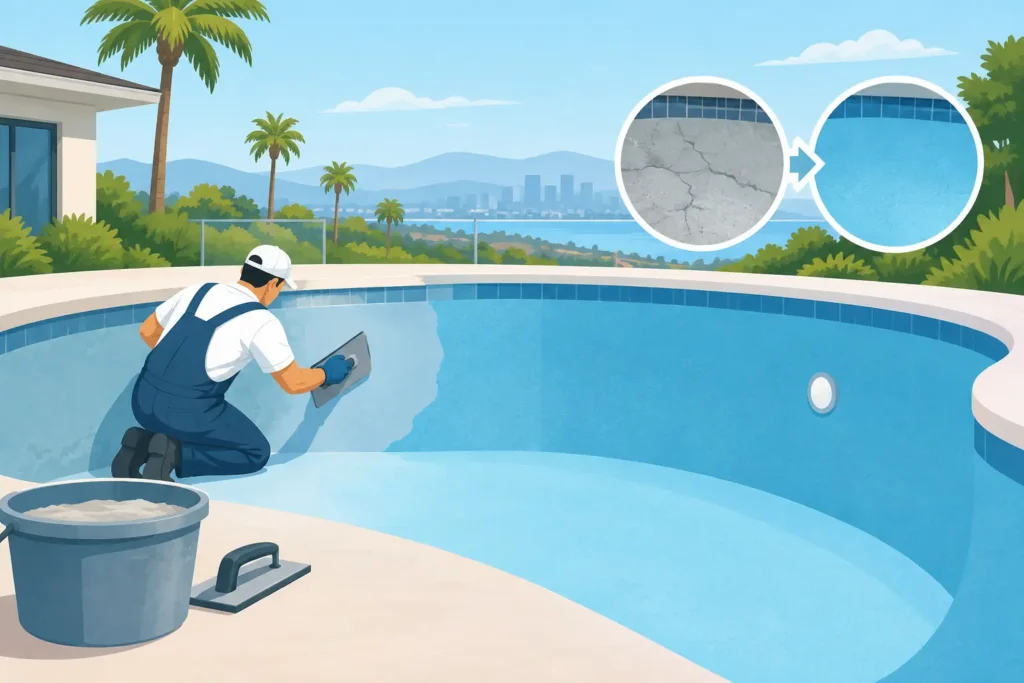
A rough, stained, or constantly patched pool surface can turn a backyard feature into a recurring maintenance concern. For homeowners, HOA boards, and property managers, understanding pool replastering cost California starts with more than a price per square foot. The finish you select, the condition beneath the old plaster, access to the pool, and required repairs all shape the final investment.
In Southern California, replastering is often part of a broader renovation plan. It is the right time to correct surface damage, update tile, improve lighting, address drains, or replace aging equipment before a fresh interior finish goes on. A qualified contractor should inspect the pool in person, explain what is included, and provide clear authorization before any additional work begins.
Typical Pool Replastering Cost in California
For many residential pools, a basic white plaster replaster can fall roughly between $7,000 and $15,000. Pools with premium aggregate finishes, extensive prep work, difficult access, waterline tile replacement, or structural repairs can run from $15,000 to $30,000 or more.
Those figures are planning ranges, not a substitute for a site-specific estimate. A compact, straightforward pool in good condition costs far less to resurface than a large freeform pool with an attached spa, raised features, old tile, and cracks that need repair. California labor costs, material availability, and local permit requirements also vary by area.
Commercial and HOA pools should be budgeted separately from typical backyard projects. Shared-use pools may involve larger surface areas, mandated safety updates, health-related requirements, coordination with property management, and scheduling that minimizes disruption to residents or guests.
What Is Included in a Replastering Estimate?
A dependable estimate should make it easy to see what work is covered. At minimum, replastering generally includes draining the pool, removing or preparing the old surface, performing agreed-upon surface repairs, applying the new finish, filling the pool, and completing the initial start-up process.
The preparation stage matters as much as the new finish. Old plaster may need to be chipped out completely, or it may be prepared for a bonded overlay depending on its condition and the chosen system. A contractor should not promise a one-size-fits-all approach before evaluating hollow spots, delamination, cracking, staining, and previous repairs.
Some items are commonly priced separately because every project is different. These can include waterline tile, coping, spa spillway work, drain covers, skimmer repairs, plumbing repairs, deck modifications, equipment upgrades, and permit fees. Ask whether water delivery, debris removal, start-up chemicals, and warranty terms are included as well.
The Main Factors That Change the Price
Pool size and shape
Surface area is a major cost driver, but it is not the only one. A deep pool, oversized spa, tanning ledge, beach entry, steps, benches, and intricate curves all add labor and material needs. A simple rectangular pool is generally quicker to prepare and finish than a pool with multiple elevations and custom features.
Contractors measure the interior surface, not only the pool’s length and width. This is why two pools with similar deck footprints can receive very different proposals.
Finish selection
Basic white plaster is typically the most economical option and creates a clean, classic appearance. It may be a practical fit for owners who want to restore a pool without making the resurfacing portion of a renovation overly expensive.
Quartz finishes add color and greater durability through blended aggregates. Pebble and exposed aggregate finishes offer a more textured, high-end look and are popular for resort-style backyards, but their material and installation costs are higher. Glass bead and specialty finishes can raise the budget further.
The most expensive surface is not automatically the best choice. Consider the feel underfoot, desired water color, surrounding landscape, maintenance expectations, and how long you plan to own or manage the property. For an HOA or apartment community, durability and ease of long-term upkeep may carry more weight than a highly customized appearance.
Condition of the existing shell
Surface cracks are not all the same. Some are cosmetic and can be repaired as part of normal preparation. Others may point to movement, bond failure, plumbing leaks, or structural concerns that should be diagnosed before replastering.
If a new finish is applied over an unresolved issue, the surface may not perform as intended. Spending money to identify the cause first can prevent a much more frustrating and costly repair later. Honest communication at this stage protects the property owner and helps set a realistic project schedule.
Tile, coping, and feature work
Many owners replace waterline tile when replastering because the work is already underway and new plaster creates a crisp edge against new tile. Replacing cracked coping, rebuilding a spa spillway, refinishing a baja shelf, or repairing a rock feature can also be practical during the same project.
Bundling related work can reduce repeated mobilization and downtime, but it also increases the initial quote. The best approach is to separate must-have repairs from optional upgrades so you can make decisions with a clear view of the budget.
Access, drainage, and local conditions
A pool behind a narrow side yard, on a hillside, or with limited equipment access can require more labor. Nearby landscaping, delicate hardscape, and parking limitations can affect how materials and debris are handled.
Southern California conditions add another consideration: water. Draining and refilling must be planned responsibly, and local rules can affect discharge, water use, and permits. A professional contractor will review the site conditions before setting expectations for timing and cost.
When Does a Pool Need Replastering?
Most plaster pool surfaces eventually show wear, but the timeline depends on water chemistry, bather load, exposure, maintenance practices, and finish type. Traditional plaster may last roughly seven to 15 years when properly maintained. Aggregate finishes can often last longer, though no surface is maintenance-free.
Persistent roughness, visible etching, discoloration that does not respond to professional treatment, recurring stains, peeling, pitting, and exposed underlying material are common signs that resurfacing should be considered. Frequent patching can also signal that it is time to evaluate the entire interior rather than continue with short-term repairs.
For commercial and HOA properties, surface condition is more than an appearance issue. Rough or deteriorated finishes can affect swimmer comfort, make cleaning harder, and create a poor impression for residents and visitors. Planning the project before the surface reaches a serious failure point gives managers more control over scheduling and resident communication.
How to Budget Without Surprises
Start with an on-site inspection rather than relying on a low online price. A thorough estimate should identify the selected finish, approximate surface area, preparation method, included repairs, tile or coping allowances, start-up responsibilities, and anticipated project timeline.
It is also wise to set aside a contingency for concealed conditions. Once old plaster is removed, previously hidden cracks, hollow areas, damaged fittings, or plumbing concerns may become visible. A contractor cannot responsibly price unknown damage as though it does not exist, but they should explain how discoveries will be documented and approved before proceeding.
Do not compare proposals on the total alone. One quote may include draining, start-up, tile work, permits, and detailed prep, while another may leave those items out. Compare the scope line by line, ask questions early, and make sure you understand the finish product being proposed.
Choosing a California Replastering Contractor
Replastering is a skilled renovation project, not simply a cosmetic coating. Look for a properly licensed, bonded, and insured swimming pool contractor with experience in the type of property you manage. Homeowners should ask about project supervision, workmanship standards, communication during the job, and how the contractor handles changes discovered after prep begins.
HOA boards and commercial managers should also ask about safety planning, scheduling, documentation, and experience working around occupied properties. Clear communication helps avoid unnecessary confusion when a shared amenity is temporarily closed.
Adrian’s Pro Pools approaches resurfacing as part of the pool’s complete condition, not as an isolated surface job. That means reviewing the finish, tile, equipment, drainage, and repair needs together so clients can make informed decisions before work begins.
A replastering project should leave you with more than a better-looking pool. The right plan gives you a sound surface, a clear scope of work, and confidence that the investment supports years of dependable use.