
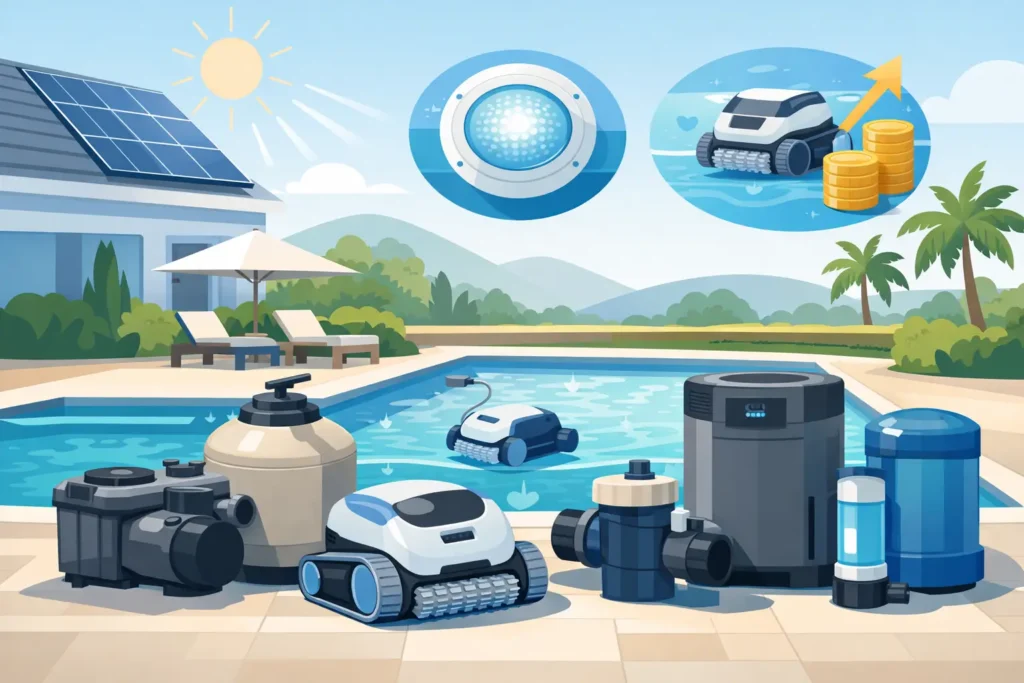
A pool can look perfectly fine from the deck while aging equipment quietly drives up utility bills, creates circulation problems, and turns small service needs into repeated repairs. The right pool equipment upgrade options can make ownership easier, improve water quality, and protect the investment in your backyard or shared facility. The key is choosing upgrades based on how the pool is used, not simply replacing equipment because it is old.
For homeowners, that may mean lower energy use and more dependable heating before a weekend swim. For HOAs, apartments, and commercial properties, it often means consistent water circulation, fewer operational interruptions, and equipment that can keep pace with daily bather loads. A qualified pool professional can evaluate the full system, identify the cause of recurring issues, and recommend work that fits the property rather than pushing a one-size-fits-all package.
Pool Equipment Upgrade Options to Consider First
The most valuable upgrade is not always the largest or most visible one. Equipment works as a system: the pump moves water, the filter removes debris, the sanitizer keeps water safe, and the heater and controls affect comfort and convenience. If one component is undersized, failing, or poorly matched to the others, the whole pool can underperform.
Variable-speed pool pumps
A variable-speed pump is often the first upgrade worth evaluating. Unlike a single-speed pump that runs at one high setting, a variable-speed model can operate at lower speeds for normal filtration and increase output when the pool needs stronger circulation, vacuuming, water features, or spa jets.
Lower-speed operation can reduce energy use and noise while still providing the circulation needed for clean water. California pool owners often see this upgrade make practical sense because pumps can represent a major share of a pool’s electrical use. The actual savings depend on pool size, plumbing layout, operating schedule, and local utility rates, so a proper equipment assessment matters.
For an HOA or commercial pool, pump selection requires additional planning. The system must meet the circulation and turnover requirements for that facility, not merely save power. A pump that is too small can create water-quality concerns, while an oversized unit can waste energy and place unnecessary strain on plumbing.
Filter upgrades for clearer water
A clean, properly sized filter supports every other part of pool care. Older filters may be difficult to service, leak at seals or valves, or struggle to keep up with heavy debris and frequent use. Upgrading a filter can improve water clarity, reduce the burden on the pump, and make routine maintenance more manageable.
Cartridge, sand, and diatomaceous earth filters each have their place. Cartridge filters can offer fine filtration and avoid the frequent backwashing associated with some other systems. Sand filters are familiar and durable, while diatomaceous earth filters can provide excellent filtration when maintained correctly. The best choice depends on the pool, available equipment space, water-use considerations, and the level of maintenance the owner or facility is prepared to handle.
A filter upgrade should include an inspection of valves, pressure gauges, plumbing connections, and the equipment pad. Replacing only the filter may not solve a problem caused by a clogged line, air leak, or failing pump.
Automated controls and smart scheduling
Automation is especially useful when a pool has a spa, water features, landscape lighting, or several pieces of equipment that need coordinated operation. A modern control system can schedule filtration, adjust pump speeds, manage heating, and let an owner or property manager monitor functions from a compatible device.
For a homeowner, this can mean coming home to a warm spa without walking to the equipment pad. For a community pool, automation can help establish repeatable operating schedules and make it easier to notice when equipment is not responding as expected. It does not replace regular professional service, chemical testing, or visual inspections, but it can make daily operation more consistent.
The trade-off is complexity. A basic pool with a single pump and no features may not need a large automation package. In that case, a dependable timer and correctly programmed variable-speed pump may deliver most of the benefit at a more reasonable cost.
Heater and heat-pump replacements
A heater upgrade can extend the usable swim season and improve comfort, but it should be selected based on how quickly and how often the pool needs to heat. Gas heaters typically provide fast temperature increases and can be a good fit for occasional spa use or pools that need quick recovery. Heat pumps generally work more gradually and may be attractive for properties that maintain water temperatures over longer periods.
The right decision depends on the fuel source, desired swim schedule, climate exposure, and whether the pool has a spa. Equipment sizing is critical. An undersized heater can run for long periods without meeting expectations, while a larger unit may cost more upfront than the property needs. A pool cover should also be part of the conversation, since it can reduce heat loss and evaporation significantly.
Saltwater system and sanitation upgrades
Saltwater chlorine generators create chlorine from dissolved salt, providing a steady sanitation method for many residential pools. Owners often appreciate the consistent chlorine production and the feel of properly balanced saltwater. However, a salt system still requires testing, balancing, cell inspection, and periodic replacement of the salt cell.
For commercial and HOA facilities, sanitation equipment must be considered alongside local health requirements, bather load, and the property’s established operating procedures. Supplemental systems may be appropriate in certain applications, but they do not eliminate the need for proper chlorine or bromine residuals, circulation, filtration, and documented pool care.
The best sanitation upgrade is one that makes water management more reliable without creating a maintenance process the property cannot realistically support.
When Repair Makes More Sense Than Replacement
Not every equipment problem requires an upgrade. A noisy pump may need a seal, bearing, capacitor, or plumbing repair. A heater that will not start could have an ignition, sensor, gas supply, or control issue. Replacing equipment before diagnosing the actual cause can lead to unnecessary expense.
Replacement becomes more sensible when repairs are frequent, parts are becoming difficult to source, the equipment is inefficient, or a repair would only postpone a larger failure. It is also worth considering an upgrade during a pool remodel, when plumbing, electrical work, decking, or equipment-pad improvements can be coordinated as part of the larger project.
For shared-use pools, planned replacement is usually better than waiting for a complete breakdown. A failed pump or heater can disrupt residents, guests, and scheduled operations. Property managers benefit from knowing which equipment is nearing the end of its useful life so approvals, budgeting, and installation can be handled with less pressure.
Choosing the Right Upgrade for Your Property
Before authorizing new equipment, ask for a clear explanation of what is failing, why it is failing, and whether the proposed replacement is properly sized for the pool. A dependable contractor should discuss the condition of the plumbing, electrical connections, valves, filter, and existing controls – not focus on one component in isolation.
It also helps to consider the property’s real priorities. A homeowner may value quiet operation, easy spa control, and lower monthly energy use. An HOA board may prioritize dependable circulation, compliant service, predictable maintenance, and equipment that staff or service technicians can operate without confusion. Those are different goals, and the equipment plan should reflect them.
Adrian’s Pro Pools helps homeowners, HOAs, and commercial properties evaluate repairs and upgrades with the full pool system in mind. With experienced, licensed service, the focus stays on quality work, honest recommendations, and equipment that supports reliable pool operation.
A well-planned equipment upgrade should leave you with fewer surprises, not more buttons to manage. Start with the issue the pool is showing today, then choose the solution that will keep the water cleaner, the system more efficient, and the property easier to care for tomorrow.
Pingback: 12 Pool Renovation Ideas for a Better Backyard - Adrian's Pro Pools