
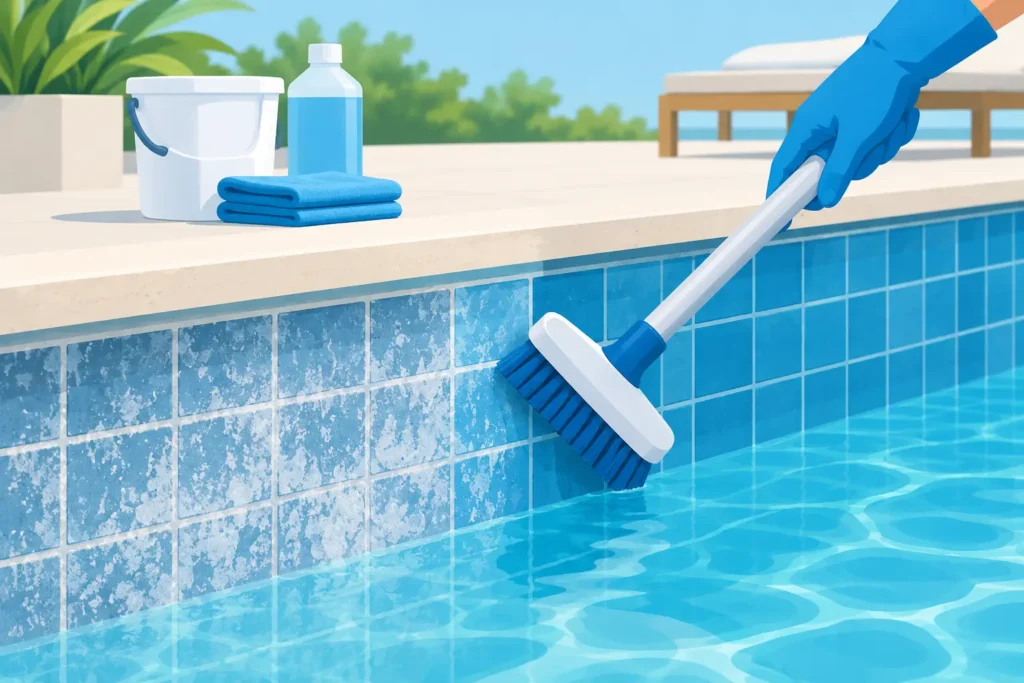
That rough white band at the waterline is more than a cosmetic problem. Pool scale can dull tile, stain plaster, restrict water flow, and make an otherwise clean pool look neglected. Knowing how to remove pool scale starts with recognizing what surface you have, how severe the buildup is, and what caused it in the first place. The wrong cleaning method can scratch tile, damage a finish, or create a bigger water-balance problem than the scale itself.
For homeowners, HOA boards, and property managers in the Santa Clarita Valley and San Fernando Valley, hard water and high evaporation make scale a frequent concern. The good news is that early buildup can often be managed safely. Heavy deposits or recurring scale usually call for a more complete inspection and treatment plan.
What Pool Scale Is and Why It Keeps Coming Back
Most pool scale is calcium carbonate, a hard, chalky mineral deposit left behind when calcium-rich water evaporates or falls out of balance. It often appears as a white or gray crust along the waterline, on spillways, around spa jets, and inside salt cells or heaters. In some cases, it may feel like rough sandpaper on plaster or pebble finishes.
Calcium phosphate is another, less common type of scale. It can be harder and more stubborn, and it is often associated with phosphate issues and high pH. The two can look similar, which is why a surface assessment matters before choosing a cleaner.
Scale is not simply a sign that a pool was skipped for a week. It can develop even with regular service when pH runs high, total alkalinity is not controlled, calcium hardness is elevated, or the water temperature rises. Saltwater pools are especially prone to scale around the salt cell because chlorine generation naturally raises pH in that area.
Ignoring it has consequences. Buildup can reduce heater efficiency, interfere with circulation equipment, shorten salt-cell life, and leave permanent-looking marks that become more difficult to remove over time.
How to Remove Pool Scale Safely
The safest approach depends on where the scale is located. Waterline tile can tolerate methods that would be too aggressive for plaster, fiberglass, vinyl, or delicate stone. Start with the mildest effective option and increase treatment only when necessary.
Start with a close inspection
Before cleaning, look closely at the deposit. Light calcium scale is usually thin, white, and powdery or crusty. Heavy scale may be thick, gray, and firmly bonded to tile or interior finishes. Also inspect grout, natural stone, glass tile, skimmer throats, return fittings, and the equipment pad.
If the surface feels rough throughout the pool, rather than just at the waterline, the issue may be widespread calcium precipitation. That is a water chemistry problem first and a cleaning problem second.
Turn off nearby water features while cleaning, keep children and pets away from the work area, and wear gloves and eye protection. Never mix pool chemicals or household cleaners. Combining acids, chlorine products, or other chemicals can create dangerous fumes.
Use a scale remover made for pool tile
For mild scale on ceramic or porcelain waterline tile, apply a pool-safe calcium and scale remover according to its label. These products are generally less aggressive than straight acid and can be a practical first choice for routine maintenance. Work in small sections, let the product dwell only as directed, then scrub with a non-metallic pad or appropriate tile brush.
Rinse each section thoroughly so cleaner residue does not enter the pool in concentrated amounts. Avoid using abrasive pads on glossy tile, glass tile, polished stone, or specialty finishes. A tool that removes scale quickly can also leave visible scratches that cannot be buffed out.
Use pumice only on suitable hard surfaces
A wet pumice stone can remove light mineral deposits from certain unglazed ceramic tile and durable plaster surfaces. Keep both the stone and surface wet at all times, use very light pressure, and test a hidden area first. The goal is to lift the mineral deposit, not grind the surface underneath.
Do not use pumice on vinyl liners, fiberglass, acrylic surfaces, glass tile, polished stone, or soft decorative tile. It can permanently scratch these materials. If there is any uncertainty about the surface, stop and use a less abrasive cleaner or request a professional evaluation.
Treat stubborn waterline scale with care
Heavy waterline scale may require a professional-strength descaling product or carefully controlled acid treatment. This is where many do-it-yourself attempts go wrong. Acid can remove calcium deposits, but it can also etch tile glaze, weaken grout, discolor natural stone, damage metal fixtures, and affect pool water chemistry.
Acid should never be poured directly onto a dry pool surface or used without proper dilution, ventilation, protective equipment, and containment. It is also not an appropriate answer for every finish. A qualified pool technician can determine whether targeted tile cleaning, bead blasting, media blasting, or another controlled method is the better option.
For commercial and HOA pools, surface cleaning should be planned around swimmer safety, deck access, chemical handling procedures, and the condition of surrounding finishes. The quickest-looking fix is not always the most cost-effective one if it creates etching, closures, or repeat repairs.
Do Not Acid Wash a Pool for Routine Scale
An acid wash removes a thin layer of plaster along with stains and scale. It can make an aged white plaster pool look brighter for a time, but it is an aggressive procedure with a limited place in pool care. Every acid wash shortens the life of the finish, and it is not appropriate for fiberglass, vinyl, most pebble finishes, or pools with structural or finish concerns.
Acid washing also does not solve the chemistry conditions that caused the scale. If pH, alkalinity, calcium hardness, or water balance remain out of range, new buildup can appear soon after the pool is refilled. A professional should inspect the interior finish and water history before recommending an acid wash or any drain-and-clean service.
Remove Scale From Equipment Before It Becomes a Repair
Scale inside equipment is less visible but can be more expensive. Salt cells, heaters, filters, and spa jets all depend on clear water pathways. A scaled salt cell may generate chlorine less efficiently, while scale in a heater can reduce heat transfer and place extra stress on internal components.
Salt cells should be inspected on the manufacturer-recommended schedule. If deposits are visible, use the approved cleaning method and solution for that specific cell. Repeated acid cleaning can shorten cell life, so a cell should not be soaked simply because it is part of the routine. Remove deposits only when inspection confirms they are present.
If a heater is making unusual noise, losing heating performance, showing error codes, or developing recurring scale, stop treating it as a cleaning issue alone. Equipment diagnosis may be needed to prevent a small mineral problem from becoming a major repair.
Prevent Pool Scale From Returning
Once scale is removed, prevention comes down to consistent water management. Weekly testing is useful, but pools with heavy use, high temperatures, water features, spas, or salt systems may need more frequent attention. The goal is not to chase one number. It is to keep the overall water balance stable for the pool’s finish, equipment, and sanitizer system.
Pay particular attention to pH, total alkalinity, calcium hardness, and temperature. High pH is one of the most common drivers of calcium scale. In areas with hard fill water, calcium hardness can creep up over time through evaporation and refilling. Draining and refilling may eventually be necessary, but that decision should account for local water conditions, pool finish, groundwater considerations, and current water chemistry.
A quality sequestering agent may help keep minerals suspended in water rather than depositing on surfaces. It is a maintenance tool, not a cure for severe scale or poorly balanced water. It must also be replenished because these products break down over time.
Regular brushing helps, especially along the waterline, steps, spillways, and spa walls. Keep the waterline clean before deposits harden, and inspect salt cells and heater performance during scheduled maintenance. For shared-use pools, documenting readings and corrective actions helps property managers identify patterns before residents notice a recurring appearance or equipment issue.
When to Call a Pool Professional
Call for professional service when scale covers large areas, returns quickly after cleaning, affects a heater or salt system, or appears on a specialty finish. It is also wise to bring in an experienced technician before using acid on tile, plaster, stone, or equipment.
Adrian’s Pro Pools can assess the source of recurring scale, clean appropriate surfaces, and correct the balance issues that keep deposits forming. For homeowners and managed properties alike, the objective is not just a cleaner tile line. It is a pool that stays attractive, operates efficiently, and avoids unnecessary damage.
A small rough patch at the waterline is usually easier to handle than a season of ignored buildup. Address it early, use the right method for the surface, and keep the water balanced so the finish and equipment receive the same dependable care as the people who use the pool.