
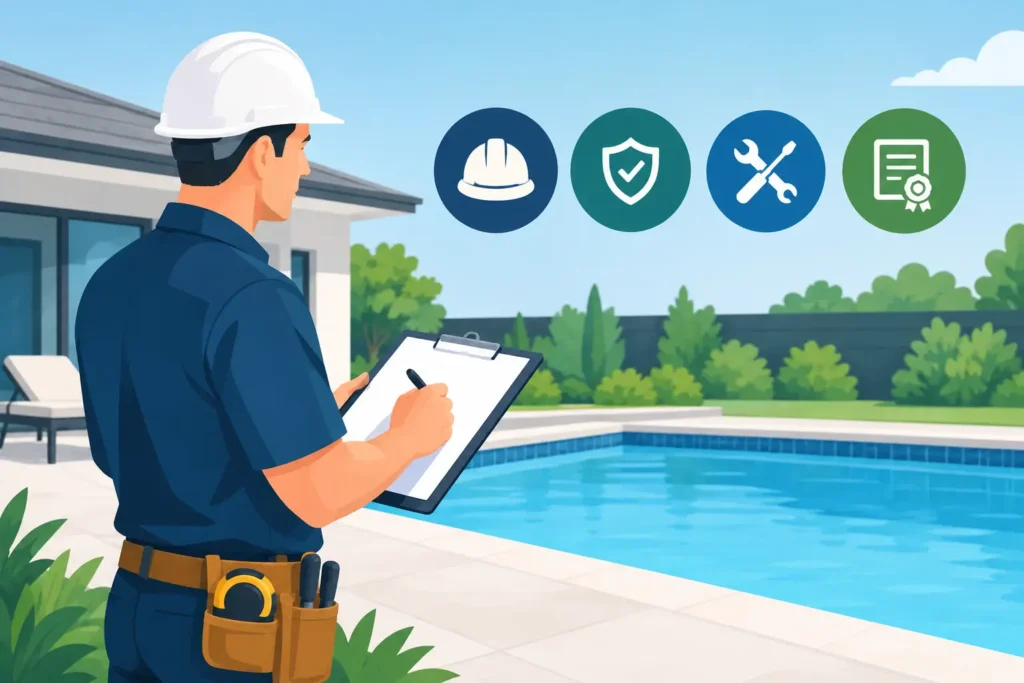
A pool project can look straightforward from the backyard fence. Then excavation begins, equipment needs to be sized, permits enter the picture, and one delayed decision can affect the entire schedule. That is why licensed pool contractor qualifications deserve more attention than a quick online search or a low estimate. The right contractor brings verified authority to perform the work, appropriate insurance, practical experience, and accountability from the first conversation through final completion.
For homeowners, this protects a major investment and the place where family and guests spend their time. For HOA boards, apartment operators, and commercial property managers, the stakes are even higher. A poorly handled repair or renovation can disrupt residents, create avoidable safety concerns, and turn a manageable project into a long list of follow-up issues.
Start With the Correct California Contractor License
California pool contractors are not interchangeable. The license classification should match the work being proposed. For swimming pool construction, remodeling, and many substantial pool-related projects, the relevant classification is generally the C53 Swimming Pool Contractor license.
A C53 license is designed for contractors who construct, repair, service, and alter swimming pools, spas, and related systems. That matters when a project involves more than routine cleaning or a simple equipment swap. Structural work, plumbing changes, resurfacing, tile, coping, decking connected to the pool project, and equipment installation all require a contractor who understands how the systems work together.
Ask for the contractor’s license number, verify that it is active, and confirm the classification. A contractor should be comfortable providing this information. It is not an awkward request. It is a normal part of choosing a qualified professional.
A license alone is not a promise that every project will go perfectly. It does, however, show that the contractor has met California’s licensing requirements and is subject to state oversight. It also gives you a clearer path to verify the business before work starts.
Match the License to the Scope of Work
Some pool work may involve more than one specialty. Electrical upgrades, gas-line work, major concrete work, or landscape changes can require additional licensed professionals depending on the scope. A capable pool contractor should explain what is included in its own work, where specialty trades are needed, and who is responsible for coordinating them.
This is especially valuable during a remodel. Replacing a pump is one type of job. Redesigning a pool, adding a spa, moving equipment, installing new automation, updating drains, and rebuilding surrounding hardscape is another. Clear responsibility prevents gaps between trades and reduces surprises after the project is already underway.
Insurance and Bonding Protect More Than the Project
Insurance is one of the most practical licensed pool contractor qualifications to review. A contractor should carry appropriate liability insurance and workers’ compensation coverage for employees. Ask for current proof rather than assuming coverage is in place.
Liability insurance helps protect against property damage or injuries connected to the work. Workers’ compensation is just as important. Without proper coverage, an injury on your property can create serious complications for the property owner or association.
Bonding is also worth understanding. A contractor license bond is required for California licensed contractors and provides a limited form of consumer protection when certain legal obligations are not met. It is not a substitute for careful contractor selection, a detailed written agreement, or adequate insurance. Still, it is another sign that the contractor is operating within the established licensing system.
For HOA and commercial properties, request certificates of insurance that meet the association’s or property’s requirements before work begins. Property managers often need specific additional-insured wording or documentation. An experienced contractor will recognize that these requests are part of responsible project coordination, not unnecessary paperwork.
Pool Experience Should Be Specific, Not General
A contractor can be licensed and still be a poor fit for a particular job. Ask about experience with projects similar to yours, including the pool type, equipment brand, finish, and property setting.
A residential homeowner planning a backyard renovation may want to see examples of replastering, tile replacement, energy-efficient equipment upgrades, or new spa construction. An HOA board may need proof that the contractor can service multiple bodies of water, communicate with management, maintain clean work areas, and keep residents informed when access is affected.
Commercial and shared-use pools also bring a different operating environment. They may have higher bather loads, tighter service expectations, health-related operational requirements, and little room for extended downtime. The contractor should understand that a closed community pool affects more than a project schedule. It affects residents, leasing, amenity use, and the property’s reputation.
Adrian’s Pro Pools brings experience across recurring service, repairs, remodeling, and new construction, with particular attention to HOA and commercial pool needs. That full-service perspective can be valuable because the team handling a repair or renovation understands how the completed pool needs to operate week after week.
Credentials for Shared and Regulated Pools
For public, commercial, HOA, apartment, and other shared-use pools, ask about the credentials and procedures used for regular service. In Los Angeles County, pool service technicians working with regulated facilities may need to meet county public health credential requirements.
This does not mean every maintenance visit looks the same as a construction inspection. It means the service provider should understand the importance of water quality, circulation, required records, equipment condition, and timely communication when an issue affects safe operation. A qualified contractor knows when routine service is enough and when a repair, inspection, or closure needs to be addressed promptly.
Permits, Codes, and Paperwork Are Part of the Job
Pool construction and major remodeling are not only about selecting tile or choosing a pump. Depending on the project, permits, inspections, safety requirements, and local building standards may apply. The details depend on the location and scope of work.
Before signing an agreement, ask who will handle permits and how inspections will be scheduled. Get that answer in writing. A reliable contractor should explain the process in plain language and identify what decisions or approvals are needed from you.
This is one area where the lowest bid can become expensive. An estimate that leaves out permitting, code-related upgrades, disposal, or necessary site work may look attractive at first. If those items appear later as unexpected additions, the initial savings disappear quickly.
For California homes, pool safety features are also a central consideration. Gates, barriers, doors, alarms, covers, and other required protections may be part of a new construction or remodel discussion. The contractor should help you understand what applies to your project without making vague promises about approval before the plans and site conditions are reviewed.
Look for Clear Communication and Written Scope
Qualifications are proven in the way a contractor manages the work. You should receive a written scope that identifies what will be done, the materials or equipment included, payment terms, anticipated schedule, and process for changes. It should be clear whether permits, demolition, hauling, start-up service, and warranty support are included.
No construction project is completely free of unknowns. Hidden plumbing conditions, weather, material availability, and inspection timing can affect a schedule. The difference is how the contractor responds. A dependable professional communicates early, documents changes, and asks for authorization before moving ahead with added work whenever possible.
Pay attention during the estimate process. Do calls get returned? Are questions answered directly? Does the contractor arrive on time and respect the property? These early interactions often reflect how the business will perform once the work is underway.
Questions Worth Asking Before You Hire
You do not need to become a pool construction expert to hire one. A few direct questions can reveal whether a contractor is prepared, transparent, and right for the job:
- What license classification do you hold, and is it active for this type of work?
- Can you provide current liability insurance and workers’ compensation documentation?
- Have you completed similar residential, HOA, or commercial pool projects?
- Who is responsible for permits, inspections, and communication with the property manager or HOA?
- What is included in the written price, and how are change orders handled?
- Who will be my day-to-day point of contact once work begins?
The answers should be specific. Be cautious if a contractor avoids providing documentation, offers unclear explanations, pressures you to sign quickly, or cannot define who is responsible for the next step.
Choose Accountability, Not Just a Quote
The best contractor is not always the one with the lowest price or the fastest promised start date. Pool work involves systems that must perform safely and reliably long after the crew leaves. Choosing a licensed, bonded, insured contractor with relevant experience gives you a stronger foundation for that result.
Take the time to verify credentials, compare scopes instead of only totals, and choose a team that communicates with care. Whether you are protecting a community amenity or building the backyard you have planned for years, qualified work and honest accountability bring the peace of mind a pool project should provide.