
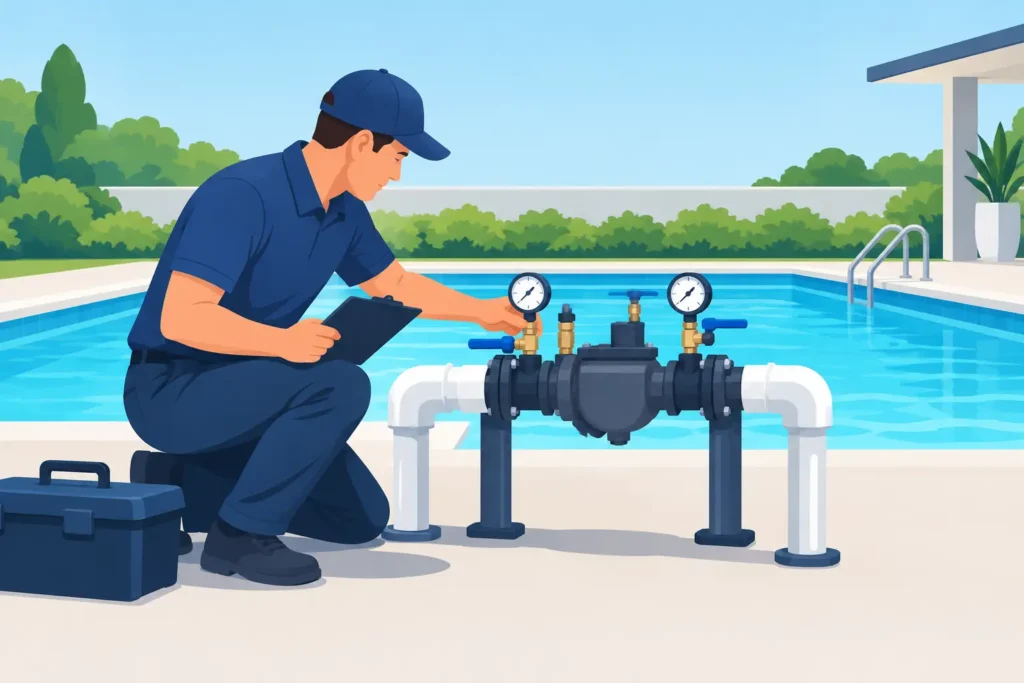
A pool should be a place to relax, not a possible pathway for contaminated water to reach the drinking-water supply. Backflow testing pools is the process of verifying that the protective device on a pool’s water connection is working as intended. For homeowners, HOA boards, and commercial property managers, it is a small but meaningful part of responsible pool ownership.
The device is commonly located on the potable-water line that serves a pool auto-fill. Its purpose is straightforward: it helps prevent pool water, treatment chemicals, or debris from flowing in the wrong direction if water pressure changes. A properly maintained pool is only part of the job. The connection that supplies fresh water to it deserves attention too.
Why Backflow Testing Matters for Pool Owners
Water normally flows from the public water system to your property. But pressure can change during a water-main break, fire hydrant use, plumbing repair, or another interruption in the system. If the pressure on the supply side drops, water can be drawn backward through an unprotected or failed connection. That reversal is called backflow.
A pool auto-fill line can create a cross-connection because it connects potable water to an environment containing pool water and chemicals. Chlorine, salt, algaecides, and other contaminants should never have an opportunity to move toward the drinking-water line. The backflow preventer is there to stop that possibility.
Testing confirms more than the fact that a device is installed. A certified tester checks whether its internal components, shutoff valves, and relief mechanisms operate at the required pressure. A device can look fine from the outside while a worn check valve, debris buildup, or damaged seal affects its performance.
For shared-use pools, this is also an operational issue. An unresolved backflow notice can create extra work for a community manager and may affect compliance with the local water provider or health-related requirements. Addressing it promptly is typically less disruptive than waiting for a deadline, a failed test, or a water service concern.
When Is Backflow Testing for Pools Required?
The exact schedule depends on the water provider, local jurisdiction, device type, and property use. Many backflow assemblies require annual testing, but owners should follow the notice and requirements issued for their property rather than assume every pool follows the same timetable.
Testing may also be required after a new device is installed, after repairs are made, after a device is relocated, or when a water provider identifies an issue. New pool construction and major remodeling projects should include a review of the auto-fill connection before the pool is put into regular use.
HOA and commercial properties need a clear process because responsibility can easily be overlooked between the board, management company, maintenance provider, and plumber. The property owner or responsible party should keep the test notice, report, repair records, and any confirmation submitted to the water provider in one accessible file.
A homeowner may receive a letter or email from the local water agency identifying the assembly, test due date, and reporting instructions. Do not set it aside because the pool is rarely used or the auto-fill is turned off. The device may still need to be tested according to the agency’s schedule.
What Happens During a Backflow Test?
A qualified backflow tester attaches specialized gauges to the assembly and performs a series of controlled checks. The test evaluates whether the device prevents reverse flow under the conditions it is designed to handle. The tester also inspects the assembly for visible concerns, such as leaking valves, corrosion, improper installation, missing protective covers, or restricted access.
The pool does not usually need to be drained, and a routine test is generally brief. However, the tester needs safe access to the device. At a residence, that may mean unlocking a side gate or clearing landscaping around the assembly. At an apartment, HOA, hotel, or community pool, managers should make sure the tester can enter the equipment area without delay.
If the device passes, the tester completes the required documentation according to the local agency’s process. If it fails, the report identifies that the assembly did not meet the test standard. A failed result is not a reason to panic, but it does call for timely action.
Why Backflow Devices Fail
Backflow assemblies work in an outdoor environment, often near irrigation equipment, pool plumbing, or landscape areas. Over time, normal wear can affect springs, seals, check valves, and internal components. Dirt or mineral buildup can interfere with moving parts, while sun exposure and moisture can contribute to deterioration around the exterior.
Physical damage is another concern. A device can be bumped by lawn equipment, struck during construction, or affected by an improperly supported pipe. Freezing conditions are less common in the Santa Clarita Valley and San Fernando Valley than in colder climates, but temperature swings and outdoor exposure still take a toll on plumbing components.
Installation problems can also lead to failure. An assembly may be the wrong type for the application, installed in the wrong orientation, placed where it cannot be serviced, or missing required clearance. This is why a qualified professional should evaluate both the device and the connection, especially after a pool renovation, equipment upgrade, or plumbing alteration.
What to Do If Your Pool Backflow Test Fails
Start by reviewing the test report and the due date provided by the water agency. Some failures can be repaired with replacement internal parts; others require replacement of the entire assembly. The right solution depends on the condition of the device, whether proper replacement parts are available, and whether the existing installation meets current requirements.
Do not authorize a repair based on guesswork alone. Ask for a clear explanation of the failure, the proposed repair or replacement, expected cost, and whether additional plumbing work is needed. For HOAs and commercial properties, written documentation helps the board or manager make an informed decision and preserve a record for future maintenance planning.
After repair or replacement, the assembly generally needs to be retested. Make sure the final passing result is submitted or delivered as required. Completing the repair without completing the follow-up test can leave the original compliance issue unresolved.
Pool service and backflow service can overlap, but they are not identical. Regular pool maintenance protects water quality, circulation, and equipment performance. Backflow testing focuses on the potable-water connection and should be performed by a properly qualified tester. Coordinating the two services can help spot access issues or auto-fill concerns early, while keeping each task in the hands of the appropriate professional.
A Practical Plan for Homeowners and Property Managers
The best approach is simple: know where the backflow assembly is, keep it accessible, save agency notices, and schedule testing before the deadline. For a managed community, assign one responsible contact who can approve access, receive reports, and track any required repairs.
It also helps to inspect the area during routine pool visits. Look for standing water, dripping fittings, corrosion, overgrown shrubs, damaged insulation, or anything blocking access to the device. These observations do not replace a certified test, but they can prevent a minor issue from becoming an urgent repair.
For properties with multiple pools, irrigation systems, or several water connections, maintain an asset list that identifies each assembly and its annual testing date. This is especially useful for HOAs, apartment communities, and commercial sites where staff or vendors may change over time.
Adrian’s Pro Pools helps local property owners and managers keep pool systems maintained, organized, and ready for the issues that come with real-world operation. When a backflow concern appears alongside an auto-fill, plumbing, or pool-equipment issue, prompt communication and qualified service help protect both the property and the people who use it.
A passing backflow test is easy to overlook because nothing dramatic happens when a device works correctly. That is exactly the point. Stay ahead of notices, keep records current, and treat the pool’s water connection with the same care you give the pool itself.