
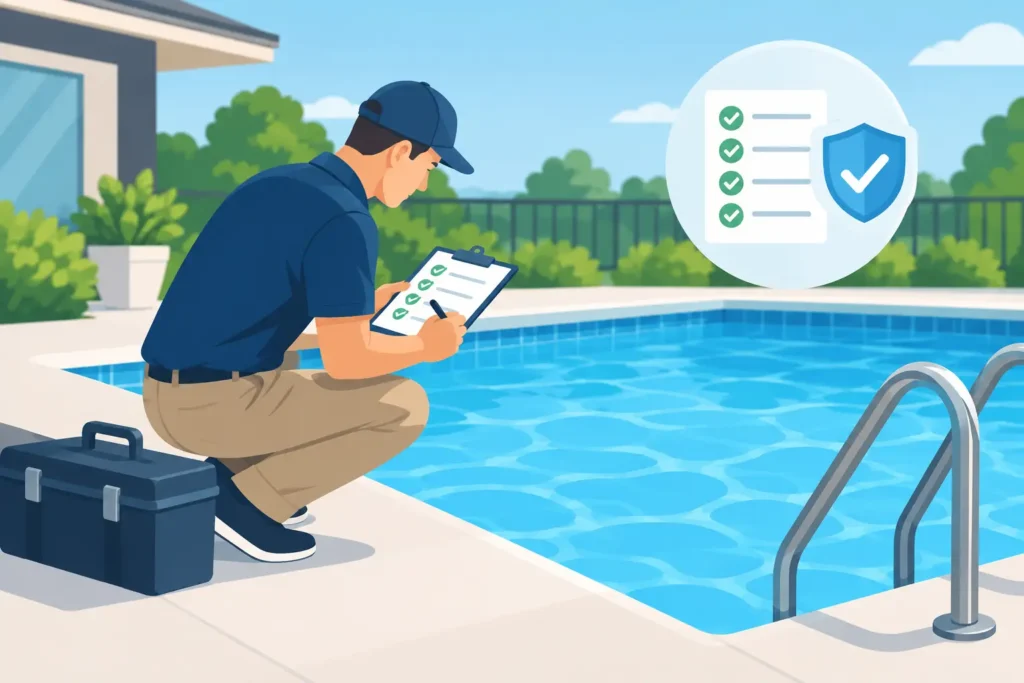
A pool can look clear from the patio and still have a circulation problem, a failing drain cover, or a safety issue waiting to become expensive. A professional pool inspection gives homeowners, HOA boards, and property managers a clear picture of what is working, what needs attention, and what should be planned before a small concern becomes a pool closure or major repair.
For a private backyard pool, an inspection protects the investment you have made in your home and outdoor space. For an HOA, apartment community, or commercial property, it also helps protect residents, guests, staff, and day-to-day operations. The goal is not to create a list of unnecessary repairs. It is to identify real conditions, explain priorities honestly, and give you practical next steps.
What a Pool Inspection Should Cover
A thorough inspection looks beyond the water’s appearance. It reviews the pool as a complete system: the vessel, circulation equipment, electrical components, safety features, water condition, and visible signs of damage or wear.
The exact scope depends on the property. A homeowner preparing to buy a house may need a condition assessment of the existing pool and equipment. An HOA may need recurring oversight focused on operational reliability and shared-pool safety. A property manager may need documentation and repair recommendations that help prevent an unexpected closure during peak swim season.
Pool Structure and Surface Condition
The inspection begins with the pool itself. Cracks, hollow-sounding areas, loose tile, deteriorating coping, staining, and rough plaster can all tell part of the story. Not every crack means the pool is structurally failing. Some are cosmetic or related to normal surface aging. Others may point to movement, water loss, or a condition that deserves a closer evaluation.
The inspector should also look at the skimmers, returns, main drain area, steps, handrails, ladders, and pool deck. Loose handrails, damaged tile edges, uneven deck sections, and failing sealant can create safety concerns even when the pool equipment is running normally.
For older pools, surface wear is often a budgeting issue as much as a repair issue. A worn finish may still function for a period of time, but rough plaster can be uncomfortable, difficult to clean, and more likely to hold algae or staining. Knowing the condition early lets owners plan a remodel instead of reacting to a sudden failure.
Pumps, Filters, Heaters, and Plumbing
The equipment pad is where many expensive problems begin quietly. During a pool inspection, the pump, filter, heater, valves, plumbing connections, automation controls, and visible wiring should be reviewed for leaks, corrosion, unusual noise, poor performance, and signs of improper installation.
A small drip at a pump seal may not stop the pool from operating today, but it should not be ignored. Water near electrical equipment, damaged plumbing fittings, or a pump that regularly loses prime can lead to larger repairs and unnecessary utility costs. Equipment that is working harder than it should may also struggle to keep water clear during hot San Fernando Valley and Santa Clarita Valley weather.
Filter condition matters as well. A cartridge filter, sand filter, or DE filter requires the correct maintenance schedule and proper internal components to do its job. If circulation is weak, the problem is not always the pump. A clogged filter, obstructed skimmer line, incorrect valve position, or undersized equipment may be part of the cause.
Heater inspections are especially valuable before cooler-weather use or when a spa is part of the property. A heater that fails to ignite, cycles off unexpectedly, or displays error codes needs professional attention. Owners should never attempt to bypass safety controls to keep a heater running.
Safety Is More Than a Fence
Safety features deserve close attention because they protect the people using the pool and the people responsible for it. Residential pools and shared-use facilities have different requirements, but both benefit from a careful review of barriers, gates, drain covers, suction fittings, handrails, depth markers, lighting, and emergency equipment where applicable.
A gate that does not self-close or latch reliably is not a minor inconvenience. Damaged or missing drain covers should also be treated as a priority, since they are designed to reduce entrapment hazards. For HOA and commercial pools, the condition and placement of required signage, lifesaving equipment, and enclosure features can affect both safety and compliance.
Pool lighting is another area that should not be handled casually. A light that flickers, fills with water, trips a breaker, or does not operate should be inspected by a qualified professional. Electrical work around a pool requires the right training, testing, and attention to local requirements.
Water Quality and Circulation Tell a Bigger Story
Balanced water is essential, but chemical readings alone do not confirm that a pool is healthy. Clear water can still have poor circulation, ineffective sanitization, or an underlying equipment issue. During an inspection, water chemistry should be considered alongside flow, filtration, visible algae, scale, staining, and the overall condition of the pool.
For homeowners, this can reveal why a pool needs frequent chemical adjustments or why algae keeps returning after treatment. For communities and commercial properties, it can help prevent recurring service calls and protect the consistency residents expect from a shared amenity.
Water balance affects more than swimmer comfort. Improper pH, calcium hardness, alkalinity, or sanitizer levels can damage plaster, corrode metal components, create scale, and shorten equipment life. The right response depends on the cause. Adding more chemicals without understanding the water and equipment conditions can mask the issue instead of correcting it.
When Should You Schedule a Pool Inspection?
A pool inspection is useful before purchasing a home with a pool, after taking over management of an HOA or multifamily property, and before committing to a major renovation. It also makes sense when a pool has recurring leaks, inconsistent water quality, unusual equipment noise, high utility bills, or repeated repair needs.
For established pool owners, a seasonal check can help catch concerns before heavy-use months. This is particularly helpful when the pool has been inactive, the equipment is aging, or the property has experienced construction, landscaping changes, or storm-related debris.
HOA and commercial decision-makers should not wait for a complaint or health-related concern to review conditions. Routine maintenance is essential, but periodic inspection adds another level of accountability. It helps boards and managers prioritize repairs, document property conditions, and reduce the chance that a preventable issue interrupts pool access.
Common Findings and How to Prioritize Them
Not every finding requires immediate replacement. A good inspection separates urgent safety or operational issues from maintenance items and longer-term upgrades.
Urgent concerns can include exposed electrical hazards, failed safety barriers, damaged drain covers, active leaks near equipment, severely compromised plumbing, or equipment conditions that prevent safe operation. These should be addressed promptly.
The next category includes items that may still be functioning but are likely to fail or cause higher costs if delayed. Examples include a noisy pump motor, a leaking filter tank, worn heater components, deteriorated plaster, or loose coping. Planning these repairs early gives owners more control over timing and budget.
Finally, there are improvement opportunities. Variable-speed pumps, upgraded automation, energy-efficient heaters, LED lighting, new interior finishes, and modern safety features may not be emergency needs, but they can improve operating costs, appearance, and everyday use. Whether an upgrade makes sense depends on the age of the system, expected ownership timeline, and the condition of the surrounding pool components.
Why Experience Matters for HOA and Commercial Pools
Shared pools demand reliable service because more people depend on them. A delayed repair can affect residents, create frustration for management, and place added pressure on maintenance staff. Commercial and HOA pools also require attention to health-related standards, safety conditions, equipment uptime, and clear communication when work is needed.
That is why it helps to work with a licensed, insured pool contractor that understands both routine service and larger repairs. Adrian’s Pro Pools brings more than two decades of hands-on experience to residential, HOA, and commercial pool care throughout the Santa Clarita Valley and San Fernando Valley. Clear recommendations, punctual service, and properly authorized work make it easier to keep a pool operating with confidence.
A pool inspection is not about finding fault with every aging part. It is about knowing the true condition of your pool, making informed decisions, and keeping a place meant for relaxation safe and ready to enjoy.