
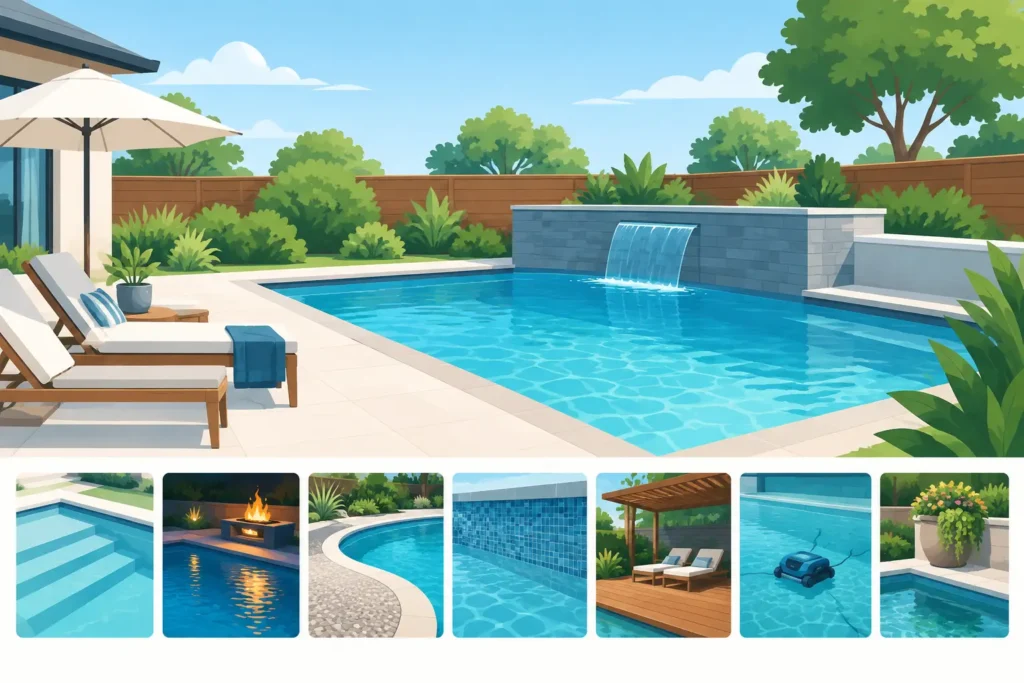
A pool can still hold water and yet feel like the oldest part of the property. Stained plaster, dated tile, rough decking, unreliable equipment, and poor lighting can make a backyard less inviting and create ongoing maintenance concerns. The right pool renovation ideas address both appearance and performance, turning a worn pool into a cleaner, safer, more enjoyable place to spend time.
For homeowners, a renovation is an opportunity to make the backyard fit how the family uses it now. For HOAs, apartments, and commercial properties, it can improve resident satisfaction while reducing avoidable service calls and supporting a well-maintained facility. The best starting point is not choosing a color. It is identifying what is no longer working and building a practical scope around it.
Start With the Structure and Daily Use
Before selecting finishes or features, have the pool shell, plumbing, drains, lights, equipment pad, and deck evaluated. Surface damage may be cosmetic, but cracking, hollow areas, deteriorated coping, leaks, or aging plumbing need attention before decorative upgrades begin. Covering up a problem usually costs more when it resurfaces later.
Think about how the pool is used, too. A family with young children may prioritize safer entry steps and updated barriers. A homeowner who entertains may want a larger tanning area and better evening lighting. A community pool may need durable finishes, clear depth markers, reliable circulation, and improvements that minimize downtime for residents.
Pool Renovation Ideas That Change the Look
1. Replaster with a modern finish
A new interior finish is often the most noticeable change in a pool renovation. Traditional white plaster provides a bright, classic appearance, while pebble and quartz finishes offer more texture and can better hide minor variations over time. Finish color affects water appearance as well. Lighter tones tend to create a clear blue look, while deeper gray or blue finishes can make water appear more dramatic.
The best choice depends on budget, desired style, water chemistry habits, and the pool’s surroundings. A quality installation and proper startup care are just as important as the finish itself.
2. Replace faded waterline tile
Waterline tile has an outsized effect because it sits at eye level and frames the pool. Replacing outdated patterned tile with porcelain, glass, stone-look, or clean contemporary tile can refresh the entire pool without changing its shape. It is also a practical time to address loose tile, damaged grout, or calcium buildup that has become difficult to manage.
For shared pools, select a tile that is attractive but durable and easy to maintain. Highly textured materials may look impressive but can require more detailed cleaning.
3. Update coping and the deck edge
Coping creates the transition between the pool and the surrounding deck. Cracked, loose, or dated coping can make an otherwise sound pool look neglected. Options such as natural stone, precast concrete, brick, and porcelain can shift the look from traditional to modern while improving a rough or failing edge.
If the deck is also aging, consider whether a repair, overlay, or full replacement is the better long-term decision. Concrete coatings and pavers can provide a major visual upgrade, but drainage, slip resistance, and movement joints need to be planned correctly for California conditions.
4. Add a tanning ledge or improve entry steps
A shallow tanning ledge gives adults a place to relax in the water and younger swimmers a supervised splash area. Wider entry steps can also make a pool more accessible and comfortable for all ages. These changes involve structural work, so they are best considered during a larger remodel rather than as a quick add-on.
Not every pool has the footprint for a large shelf. In a compact backyard, redesigned steps may deliver more everyday value without taking too much away from the swim area.
Add Features With a Clear Purpose
5. Install LED pool and spa lighting
Old incandescent lights can be dim, inefficient, and difficult to service. Modern LED lighting improves visibility, uses less energy, and makes evening swimming more practical. White light offers a clean, timeless look, while color-changing options can create a festive setting for gatherings.
Lighting should be installed and sealed correctly, especially when electrical components and older niches are involved. Good lighting is not only decorative. It helps people see steps, walls, and pool edges after sunset.
6. Create movement with a water feature
Sheer descents, scuppers, deck jets, and spillover spas add sound and visual interest. A simple feature wall can become a focal point in a plain backyard, while a raised spa with a spillway makes the pool area feel more complete.
Water features do add operating considerations. They can increase evaporation, create more splash on nearby surfaces, and require appropriate circulation planning. Choose a feature that fits the property’s maintenance expectations rather than adding several elements that rarely get used.
7. Modernize the spa
If the pool includes a spa, renovating it alongside the pool creates a more unified result. New tile, a refreshed spillway, updated jets, better lighting, and a comfortable bench layout can make the spa a year-round feature rather than an overlooked corner of the backyard.
A spa remodel is also a good time to inspect heaters, valves, and controls. There is little benefit in a beautiful spa if it takes too long to heat or loses water through an unresolved issue.
Improve Efficiency and Control
8. Upgrade to a variable-speed pump
A variable-speed pump is one of the most practical equipment upgrades for many pool owners. It can run at lower speeds for routine filtration and increase output when the cleaner, water feature, or spa requires it. That can reduce energy use and often results in quieter operation.
The pump must be sized correctly for the pool, plumbing, filter, and features. A one-size-fits-all recommendation is not good service, especially for a commercial or HOA pool with higher circulation demands.
9. Replace aging filters, heaters, and plumbing components
Renovation work exposes areas that are easy to ignore during routine service. Old cartridge filters, corroded valves, undersized plumbing, inefficient heaters, and worn-out automation components can undermine the value of a cosmetic remodel. Replacing failing equipment during construction may be more efficient than reopening finished areas later.
For heated pools and spas, discuss energy use, recovery time, and how often the equipment will run. The right heater depends on the intended use, not just the initial purchase price.
10. Add automation for easier pool care
Automation allows owners and managers to control schedules, pumps, lighting, heating, and select features from a central control or mobile device. It is especially useful for properties where several people need visibility into pool operations.
Automation does not replace professional maintenance. It does make consistent scheduling easier and helps identify unusual equipment behavior before a small problem becomes a major interruption.
Prioritize Safety and Shared-Pool Needs
11. Refresh barriers, handrails, and visible safety details
Pool renovation is an appropriate time to inspect fencing, gates, latches, handrails, step markings, and deck conditions. A beautiful pool should still feel secure for children, guests, residents, and visitors. Worn rails, slick deck areas, and unreliable gates deserve attention before they become a liability concern.
HOA and commercial pool projects may have additional health, safety, and accessibility considerations. A qualified contractor can help identify the work involved and coordinate the appropriate process rather than leaving the property manager to sort out details after construction begins.
12. Plan for a cleaner, lower-maintenance finish
The most successful renovations are easier to care for after the work is complete. That may mean choosing tile that resists visible buildup, improving circulation, replacing a troublesome skimmer, or selecting deck materials that are easier to clean. It can also mean simplifying an overbuilt system with features that no longer serve the property.
For busy homeowners and property managers, dependable maintenance should be part of the renovation conversation from the beginning. Equipment access, drainage, finish selection, and water circulation all affect the time and cost required to keep the pool looking its best.
Build a Scope Before Setting a Budget
A realistic renovation budget starts with a site visit and a clear written scope. Surface-only updates cost differently from a remodel that includes structural changes, plumbing, equipment, decking, and permits. Ask what is included, what conditions could require additional authorization, and how the contractor will protect the property and communicate during the project.
Adrian’s Pro Pools approaches renovation as a complete pool-care project, with attention to the condition behind the visible finish as well as the final appearance. A thoughtful walk-through can help you invest in improvements that fit your property, your daily routine, and the years you plan to enjoy the water.
The best renovation is not necessarily the one with the most features. It is the one that makes your pool safer, easier to maintain, and more inviting every time you step outside.