
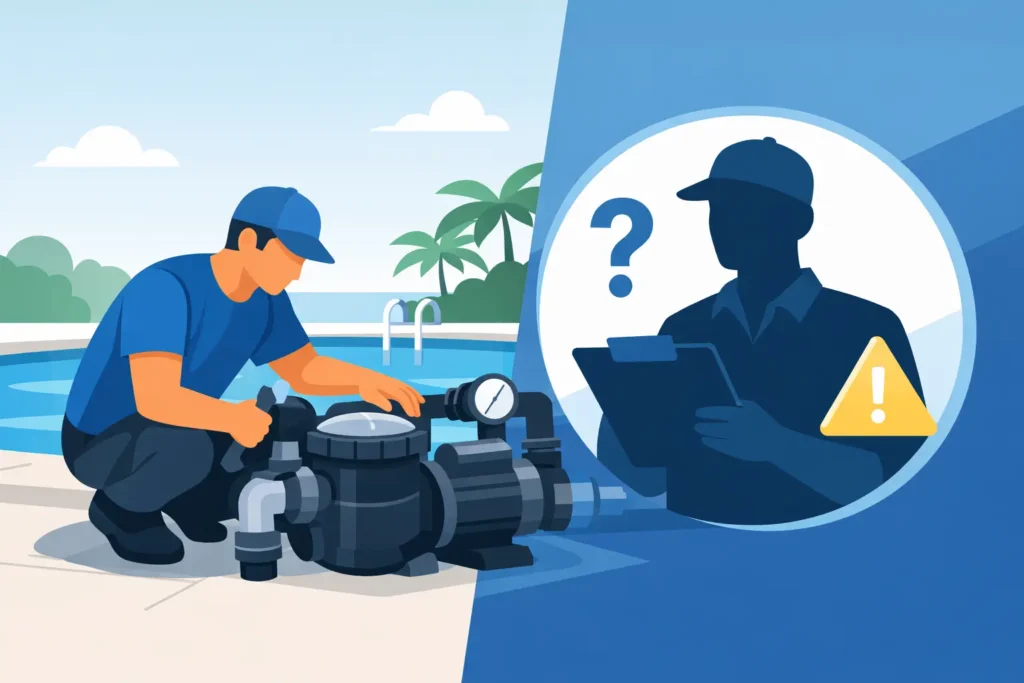
A pool pump that suddenly gets loud, loses pressure, or stops moving water can turn a clear pool into a service issue quickly. A dependable pool pump repair service identifies the actual cause before a small mechanical or electrical problem affects water circulation, filtration, and pool equipment. For homeowners, HOAs, and property managers, prompt attention protects both the pool and the people who use it.
Why the Pool Pump Matters So Much
The pump is the center of your pool’s circulation system. It pulls water through the skimmer and main drain, sends it through the filter and other equipment, then returns clean, treated water to the pool. When the pump does not run correctly, chlorine may not circulate evenly, debris can build up, and algae can gain a foothold faster than many owners expect.
For a residential pool, a pump problem can interfere with weekend use and create an avoidable cleanup expense. At an HOA, apartment community, hotel, or other commercial property, the stakes are higher. Reduced circulation can affect water quality, guest satisfaction, daily operations, and compliance expectations. A repair should be handled with the urgency the situation deserves, without guessing at what needs to be replaced.
Signs You Need Pool Pump Repair Service
Some pump failures are obvious. Others develop gradually and can be easy to overlook when the system still appears to be running. Paying attention to changes in sound, water movement, and operating time helps catch trouble before the pump fails completely.
A loud grinding or screeching sound often points to worn motor bearings. A humming motor that will not start may indicate a failed capacitor, a seized motor, or an electrical issue. If the pump repeatedly shuts off, trips a breaker, or feels unusually hot, stop running it and arrange a professional inspection. Continuing to force an overheating or electrically compromised pump to run can create more extensive damage.
Low pressure or weak flow at the return jets also deserves attention. The cause may be as simple as a full pump basket, a clogged filter, or an air leak at the pump lid. It can also involve a blocked suction line, worn impeller, failing motor, or a valve issue. The right repair starts with checking the entire circulation path rather than replacing parts based on one symptom.
Watch for air bubbles entering the pool through the return lines, water collecting beneath the pump, or a pump basket that will not fill with water. These signs can indicate a suction-side air leak, deteriorated O-ring, loose fitting, or plumbing issue. Even a small leak can reduce circulation and make the pump work harder than it should.
Common Pump Problems and What They Can Mean
Pool pumps are durable pieces of equipment, but seals, motors, electrical components, and moving parts wear over time. Southern California heat, long run times, age, and inconsistent maintenance can all shorten the life of key components.
A leaking shaft seal is one of the more common repair needs. This seal sits between the motor and the wet end of the pump. When it fails, water can reach the motor and cause corrosion or electrical damage. Repairing a seal leak early is generally far less costly than waiting until the motor is affected.
Motor problems vary. Sometimes the motor only needs a capacitor or switch replacement. In other cases, worn bearings or windings make repair less practical. A qualified technician can evaluate the motor’s condition, confirm whether the issue is mechanical or electrical, and explain whether a repair or replacement offers better value.
The impeller can become clogged with debris or damaged by debris that passes through a compromised basket. A damaged impeller reduces flow and may leave the pool struggling to circulate properly, even when the motor sounds normal. Plumbing restrictions, dirty filters, closed valves, and equipment leaks can produce similar symptoms, which is why a full diagnosis matters.
Variable-speed pumps add another consideration. They can reduce energy use and give owners better control over circulation schedules, but their drives and control components require accurate troubleshooting. Replacing a variable-speed pump without confirming the source of the failure can be an expensive mistake.
Repair or Replace? The Answer Depends
There is no single rule for deciding whether to repair a pool pump or install a new one. The age of the pump, the condition of the motor, the availability of replacement parts, current energy use, and the cost of the repair all matter.
A newer pump with a failed seal, capacitor, lid O-ring, or impeller may be an excellent repair candidate. A pump with a heavily corroded motor, recurring failures, or an obsolete component may be better replaced. If your pool currently uses an older single-speed pump, upgrading to an energy-efficient variable-speed model may also make sense, particularly for larger pools or facilities with long daily operating schedules.
For HOA and commercial pools, replacement decisions should also account for bather load, pool volume, operating hours, automation, and the need to maintain reliable circulation. The least expensive immediate option is not always the most cost-effective option over the next several years.
What a Professional Pump Inspection Should Include
A proper pump repair visit is more than listening to the motor for a few seconds. The technician should inspect the pump, check circulation performance, and look for the underlying condition that caused the failure.
That process may include reviewing the pump basket and lid, checking for suction leaks, inspecting fittings and valves, evaluating filter condition, examining the motor and electrical connections, and verifying that the pump is properly primed. The technician may also inspect the timer, automation controls, breaker, and bonding connections where appropriate.
For shared-use pools, service should be documented clearly and communicated promptly. Property managers and board members need to know what was found, what work is recommended, what authorization is needed, and how the issue may affect pool availability. Honest communication prevents surprises and helps responsible decision-makers protect their residents and budgets.
Steps Property Owners Can Take Before Service Arrives
If the pump is making a harsh noise, smoking, leaking heavily, or tripping the breaker, turn it off. Do not repeatedly reset the breaker or attempt to open electrical components. Water and electricity require professional handling.
For less urgent circulation concerns, check whether the pool water level is high enough for the skimmer to draw water. Empty the skimmer and pump baskets if you can do so safely, and confirm that equipment valves have not been moved or closed. Avoid adding chemicals as a substitute for circulation. Chemicals cannot perform properly when water is not moving through the system.
Take note of what changed. Was there a storm, a power outage, recent landscaping work, an unusual noise, or a change in the filter pressure? Clear observations help a technician diagnose the problem efficiently.
Preventing Avoidable Pump Repairs
Not every repair can be prevented, but consistent pool care reduces unnecessary strain on equipment. Keeping baskets clear, maintaining proper water level, cleaning or servicing the filter as needed, and correcting leaks early all support reliable pump operation.
Run time should match your pool’s needs. Too little circulation can lead to poor water quality, while excessive run time can increase utility costs and wear. The right schedule depends on the pool size, equipment, season, bather use, and whether the system has a variable-speed pump. A professional can help set a schedule that balances clean water with efficient operation.
Routine maintenance is especially valuable for HOA and commercial properties because a pump issue rarely affects only one person. Regular service provides an opportunity to spot unusual sounds, pressure changes, leaks, and declining flow before they become a closure-level problem.
Reliable Local Help for Pump Problems
Adrian’s Pro Pools provides repair and maintenance support for homeowners, HOAs, and commercial properties throughout the Santa Clarita Valley and San Fernando Valley. With licensed, bonded, and insured service, the focus is on accurate diagnosis, quality work, punctual arrival, and clear communication before additional work is performed.
A pool pump is not an accessory that can wait indefinitely for attention. If circulation changes, the motor sounds wrong, or water quality starts slipping, schedule service while the problem is still manageable. A timely inspection can keep your pool clean, your equipment protected, and your property ready for the people who count on it.
Pingback: Pool Equipment Upgrade Options That Pay Off - Adrian's Pro Pools