
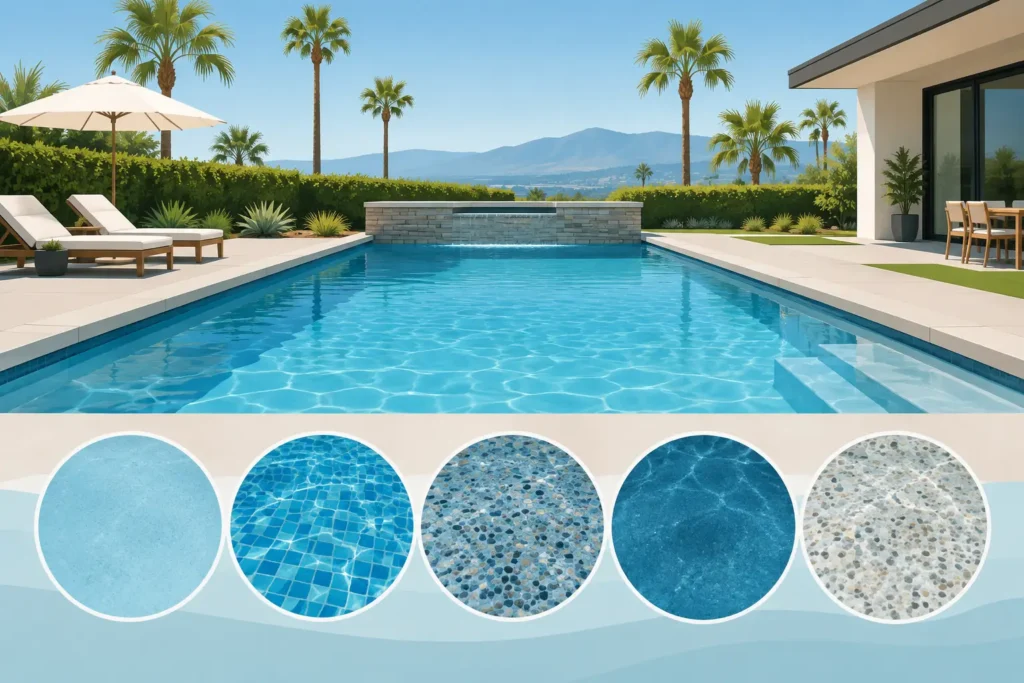
A pool can have reliable equipment, balanced water, and a beautiful new deck, yet still look dated if the interior finish is worn, stained, or rough underfoot. Choosing among pool finish options is one of the most visible decisions in a remodel or new build. It affects the water color, swimmer comfort, cleaning needs, durability, and the long-term cost of ownership.
For homeowners in the Santa Clarita Valley and San Fernando Valley, that decision also has to account for strong sun, hard-water conditions, active family use, and the look of the surrounding yard. For HOAs and commercial properties, the finish must stand up to heavier bather loads while helping the facility stay clean, presentable, and easier to manage.
The Main Pool Finish Options
Most plaster pools are finished with one of four materials: traditional white plaster, colored plaster, quartz aggregate, or exposed pebble aggregate. Tile is also a premium option, particularly for spas, waterlines, and fully tiled pool interiors. Each can create an attractive result when properly installed, but they do not offer the same lifespan, texture, or maintenance expectations.
Traditional White Plaster
White plaster is the classic pool finish. It is made from white cement, marble aggregate, and water, producing a bright, clean appearance that often gives pool water a light blue color. It remains popular because it is familiar, cost-conscious, and well suited to many residential remodels.
The trade-off is longevity. Standard plaster generally has a shorter service life than aggregate finishes, especially when water chemistry is inconsistent or calcium buildup is allowed to remain on the surface. It can also show stains, mottling, etching, and discoloration more readily than darker or more textured finishes.
White plaster can be a good choice when the budget is a major factor and the pool will receive consistent professional care. It is also a practical option for a property owner who prefers a timeless, bright pool rather than a dramatic water color.
Colored Plaster
Colored plaster uses pigments to create shades such as gray, blue, tan, or black. The interior color changes how the water appears, allowing a pool to feel more like a deep lagoon, a contemporary resort feature, or a natural stone body of water.
A medium or dark finish can help make a large pool feel more dramatic and may hide minor debris better than white plaster. However, color does not eliminate maintenance. Chemical imbalance, mineral deposits, and improper startup procedures can still create visible marks. Darker finishes may also make it harder to see leaves, small debris, or surface imperfections from the deck.
When selecting a color, view real installed pools in daylight whenever possible. A sample chip is useful, but water depth, sunlight, surrounding walls, landscaping, and tile all influence the final look.
Quartz Aggregate Finishes
Quartz finishes combine plaster with colored quartz aggregate. They provide more visual depth and greater surface strength than traditional plaster, making them a common middle ground between basic plaster and premium pebble.
For many homeowners, quartz offers a refined finish without the more pronounced texture of exposed pebble. It comes in a broad range of colors, from soft blue and gray to warmer earth tones, and can create a polished appearance that complements modern patio materials and waterline tile.
Quartz is generally more durable than standard plaster, but it still depends on quality installation and disciplined water chemistry. Calcium scale is a particular concern in Southern California. Regular testing, prompt brushing, and proper calcium management help preserve the surface and prevent buildup from becoming more difficult to remove.
Exposed Pebble Finishes
Exposed pebble finishes use small natural or polished stones set into the pool surface. They are known for durability, depth of color, and a high-end appearance. The visible aggregate creates movement and variation, so the finish tends to be more forgiving of minor surface irregularities than a smooth plaster interior.
This is often the strongest choice for homeowners planning a long-term backyard upgrade or for HOA and commercial pools where service life matters. Pebble finishes typically cost more upfront, but the extended lifespan can make that investment sensible over time.
Texture is the main consideration. Some exposed pebble products feel more noticeable under bare feet than plaster or quartz, particularly on steps, benches, and shallow lounging areas. Smaller or polished aggregate can offer a smoother feel, but every product has a different texture. Discuss how the pool will be used before choosing solely based on color.
Tile Pool Interiors
A fully tiled pool interior is a premium finish with exceptional visual impact. Glass, porcelain, and ceramic tile can create detailed patterns, rich color, and a highly customized design. Tile is especially popular in spas, raised water features, and high-visibility areas where a luxury finish is worth the investment.
Tile is durable, but it is not maintenance-free. Grout and waterline areas require regular attention, and hard-water scale can diminish the clean appearance of even the most beautiful installation. The initial cost is significantly higher than plaster or aggregate finishes, so full tile is usually selected for custom luxury projects rather than standard renovations.
How to Choose the Right Finish for Your Pool
The best finish is not always the most expensive one. It is the one that fits the pool’s use, design goals, budget, and maintenance plan. A family pool that sees daily summer use has different needs than a quiet courtyard pool at an apartment community. A backyard designed around warm travertine and natural landscaping calls for a different palette than a clean-lined modern property with dark coping and LED lighting.
Start with the water color you want. Lighter finishes tend to create clear sky-blue water, while gray, blue, and black interiors create deeper tones. Then consider the deck, coping, tile, landscaping, and exterior paint. A pool finish should connect those features rather than compete with them.
Next, be realistic about ownership. Every finish benefits from balanced chemistry, routine brushing, and prompt treatment of stains or scale. A more durable surface is not a replacement for professional maintenance. For shared-use pools, dependable recurring service is especially valuable because finish damage can develop quickly when water chemistry, circulation, or cleaning schedules fall behind.
What Affects Pool Finish Cost and Lifespan?
Material is only one part of the project cost. Pool size, surface condition, demolition requirements, access to the backyard, waterline tile replacement, coping repairs, and needed plumbing or equipment work can all affect the final scope. A remodel is also the right time to inspect drains, lights, skimmers, return fittings, and circulation equipment before the new surface is applied.
Lifespan varies based on finish type and care. Traditional plaster may need attention sooner than quartz or pebble, while a well-maintained aggregate finish can serve a pool for many years. Still, no contractor should promise an exact lifespan without considering the pool’s water chemistry, exposure, use level, and maintenance history.
Proper startup after refinishing matters just as much as the finish itself. The surface must be brushed as directed, chemistry must be adjusted carefully, and debris must be removed promptly during the curing period. Skipping these steps can affect appearance from the beginning.
Pool Finish Options for HOA and Commercial Pools
HOA boards and property managers should weigh more than appearance. A shared pool needs a finish that supports a clean, professional presentation while holding up to frequent use, routine service, and the operational demands of a regulated facility.
Exposed pebble and quartz are often strong candidates because they provide better durability than basic plaster while offering a broad range of colors. Light-to-medium tones can make it easier for staff and guests to see the pool bottom clearly, which is an important practical consideration. A surface that looks good but makes debris, staining, or visibility issues harder to manage may not be the right operational choice.
Before approving a renovation, managers should also plan for access, closure time, resident communication, inspections if applicable, and any repairs discovered once the old surface is removed. Clear authorization and honest communication help prevent avoidable surprises during the project.
Work With a Contractor Who Sees the Whole Pool
A finish should never be selected as an isolated cosmetic upgrade. The condition of the shell, waterline tile, coping, plumbing, drains, lights, and equipment all influence whether the completed project will perform as expected. A hands-on pool contractor can help identify what should be repaired now instead of leaving problems hidden behind a new finish.
Adrian’s Pro Pools helps homeowners, HOAs, and commercial property managers evaluate remodeling decisions with practical expectations, quality workmanship, and clear communication. Whether the goal is a clean plaster refresh or a complete backyard transformation with a premium aggregate finish, the right choice begins with an honest assessment of the pool you have and the years of use you expect from it.
A new finish is your opportunity to make the pool feel cared for every time someone steps outside. Choose the surface that fits the property, protect it with consistent service, and let the finished pool earn its place as a feature people are glad to use.