
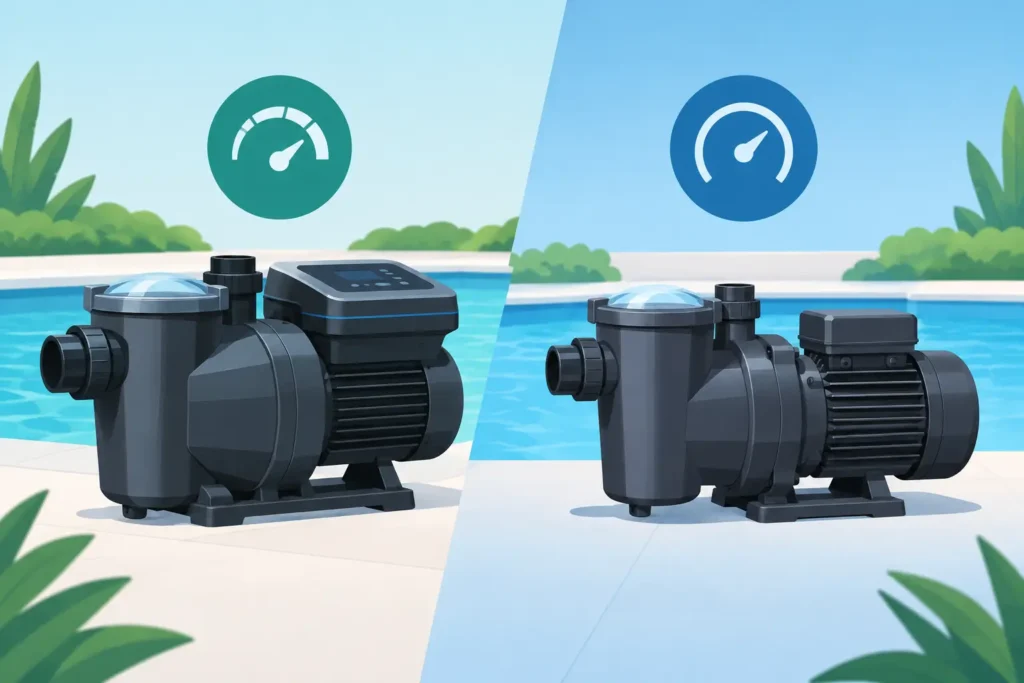
A pool pump is one of the few pieces of equipment that can affect your utility bill every day. When comparing variable speed versus single speed pumps, the right answer depends on your pool’s circulation needs, existing equipment, usage patterns, and budget. For many Santa Clarita Valley and San Fernando Valley pool owners, a variable-speed pump is the more efficient long-term choice. But a single-speed pump can still have a place in certain repair situations.
Variable Speed Versus Single Speed Pumps: The Core Difference
A single-speed pool pump runs at one fixed RPM. When it is switched on, it operates at full power until the timer turns it off. That approach is straightforward, but it can use more electricity than the pool needs for normal daily circulation.
A variable-speed pump allows the motor to run at different speeds. It can operate at a lower RPM for routine filtration, then increase speed when the pool needs more flow for a spa, water feature, vacuum, heater, or cleaning cycle. The pump’s onboard controls can typically schedule those settings throughout the day.
The difference matters because slowing a pump down even modestly can significantly reduce energy use. Pool water does not need maximum flow every hour of the day to stay clean, balanced, and properly circulated. A well-programmed variable-speed pump gives the system the ability to match output to the job at hand.
Why Variable-Speed Pumps Are Often the Better Investment
For most residential pools, and especially for pools that run many hours each day, variable-speed pumps offer meaningful operating advantages.
Lower Energy Use
A variable-speed pump uses a more efficient motor and can spend much of its schedule running at lower speeds. This is usually where homeowners see the greatest benefit. Rather than running a high-powered pump at full speed for six or eight hours, a pool may circulate effectively at a lower speed for a longer, less expensive period.
Actual savings depend on the size of the pool, the pump, the plumbing, local electric rates, and how the equipment is programmed. A pump that is oversized or scheduled incorrectly will not deliver its full potential. Proper installation and setup are as important as the equipment selection itself.
Quieter Daily Operation
Pump noise is a common concern, particularly when equipment sits near a bedroom, patio, neighbor’s property line, or shared HOA common area. Single-speed pumps often create a noticeable rush of water and motor noise because they are always operating at full output.
Variable-speed pumps are generally much quieter during low-speed filtration. That can make a real difference for homeowners enjoying the backyard and for property managers trying to keep common areas comfortable for residents.
Better Control for Modern Pool Equipment
Many pools need different flow rates at different times. A spa spillway, solar heating system, saltwater chlorine generator, pressure-side cleaner, heater, and water feature may each have their own circulation requirements. A variable-speed pump can be programmed to provide the needed flow without forcing the system to run at maximum speed all day.
This flexibility is especially helpful after a remodel or equipment upgrade. Adding a spa, upgraded filtration, automation, or decorative water features can change how the entire system needs to operate.
Support for California Efficiency Requirements
California pool equipment standards have pushed the market toward variable-speed technology for good reason. In many replacement situations, especially for larger residential filtration pumps, a compliant variable-speed option may be required or strongly favored. Requirements can vary by application, equipment type, and local conditions, so it is wise to have a qualified pool contractor review the installation before purchasing a replacement pump.
Where a Single-Speed Pump Can Still Make Sense
Single-speed pumps are not automatically the wrong choice. They are simpler, often less expensive upfront, and may be appropriate for a limited-use application.
For example, a small dedicated water feature, booster pump, or specialty system may only need to operate at one speed for a short period. In those cases, the added cost and programming capability of a variable-speed pump may not provide enough return. A single-speed unit can also be an option when matching an existing specialty setup, provided the application meets current requirements.
The drawback is that a single-speed filtration pump gives you little control. If it is powerful enough to operate a spa jet system or water feature, it may be moving far more water than necessary during normal filtering. That means higher electrical demand, more noise, and more wear from constant full-speed operation.
For a primary pool circulation pump, the lower purchase price of a single-speed unit should be weighed against years of operating cost. The least expensive pump at installation is not always the least expensive pump to own.
Choosing the Right Pump Size Matters as Much as Pump Type
A variable-speed pump is not a cure for an improperly designed system. The pump must be sized for the pool’s plumbing, filter, heater, desired turnover rate, and features. Installing a pump that is too large can create excessive flow, unnecessary noise, and strain on plumbing or equipment. A pump that is too small may not deliver enough flow for heating, cleaning, or water features.
The best pump selection starts with the actual pool, not a guess based only on horsepower. A professional should consider the pool volume, pipe size, filter type, elevation changes, equipment layout, spa requirements, and any attached features. For commercial and HOA pools, required circulation rates and operational standards add another layer of planning.
This is also why a pump replacement is a good time to inspect the rest of the equipment pad. A clogged filter, leaking valve, undersized plumbing line, damaged impeller, or aging timer can affect performance and make a new pump appear to be the problem.
What to Expect From Installation and Programming
Replacing a pool pump involves more than disconnecting wires and setting a new motor in place. The new pump must be correctly plumbed, electrically connected, primed, and tested for leaks and proper flow. If the pool uses automation, a heater, salt system, or separate spa controls, those components should be checked after installation.
Programming is where many variable-speed pump installations fall short. A common starting point is a low-speed filtration schedule for most of the day, with a higher-speed period scheduled for cleaning, heating, vacuuming, or water features. But the ideal settings are specific to the pool.
The goal is not simply to run the pump at the lowest possible speed. The pool still needs enough circulation to distribute chemicals, skim surface debris, support sanitation equipment, and keep the water clear. During hot weather, heavy use, storms, or algae treatment, the schedule may need adjustment.
For HOA and commercial properties, consistent operation is even more critical. Shared-use pools often have more bather load, more debris, tighter operational expectations, and less room for guesswork. A documented pump schedule and routine equipment checks help prevent avoidable water-quality issues and unexpected downtime.
Signs It May Be Time to Replace Your Pool Pump
A pump that has become loud, loses prime, leaks at the seal, trips the breaker, or struggles to circulate water should be inspected promptly. Some problems can be repaired, such as a failed capacitor, worn seal, damaged basket, or motor bearing. Other times, replacement is the more practical and reliable choice.
Age is part of the equation, but not the only factor. A functioning older single-speed pump may still be costing substantially more to operate than a modern variable-speed unit. If a major motor repair is needed, it is often worth comparing that repair cost with the long-term value of upgrading the entire pump.
A clear assessment should include the cause of the failure, available repair options, compatibility with the existing system, expected energy use, and any work needed to bring the installation up to current standards. Property owners should not have to approve equipment work without understanding what they are paying for and why.
Make the Decision Around Your Pool’s Real Needs
The choice between pump types should not be based on horsepower alone or on the lowest price on a shelf. It should be based on how your pool is used, what equipment it supports, and what it costs to keep the water clean and safe over time.
For most full-time residential filtration systems, variable-speed pumps provide better control, quieter operation, and a stronger long-term value. For specialized, short-run applications, a single-speed pump may still be practical. Adrian’s Pro Pools can evaluate the full equipment setup, explain the options clearly, and help you choose a pump that supports dependable circulation rather than creating another service issue down the road.