
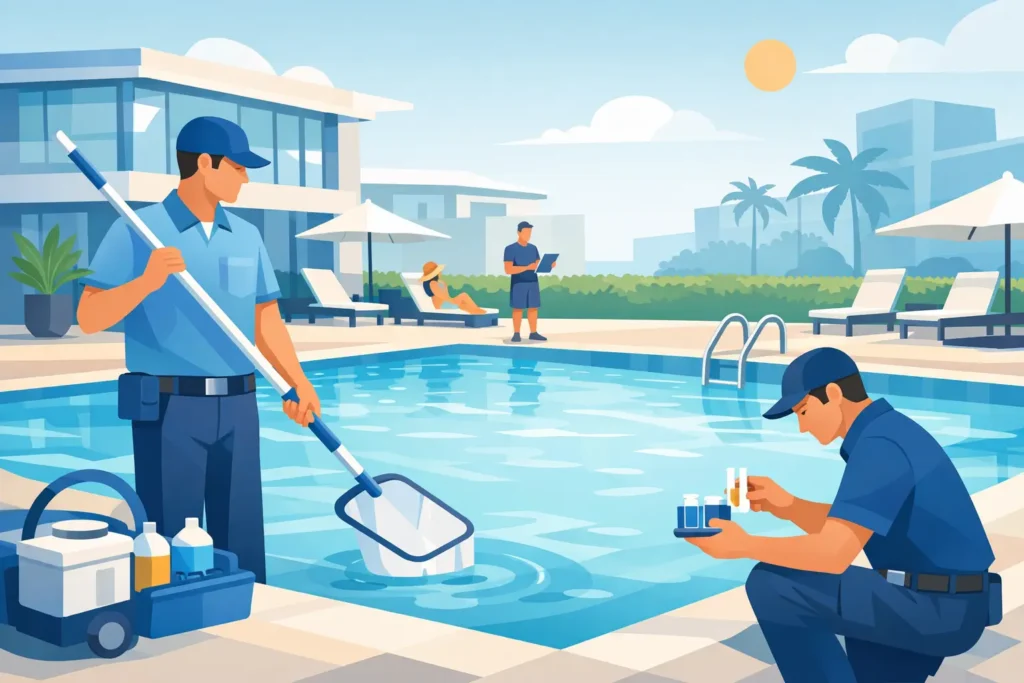
A shared pool can look fine at 8 a.m. and become a property-wide problem by noon. A failed pump, cloudy water, an unbalanced chemical reading, or a closed gate can affect residents, guests, staff, and your operating schedule immediately. That is why choosing a commercial pool service company is about more than finding someone to clean the water each week. It is about choosing a qualified contractor who helps protect a facility your community or business depends on.
For HOA boards, community managers, apartment operators, and commercial property managers in the Santa Clarita Valley and San Fernando Valley, the right service relationship brings consistency, clear communication, and a faster path from problem to solution. Here is what that relationship should look like.
A Commercial Pool Service Company Must Protect Daily Operations
Commercial and HOA pools experience heavier use than most backyard pools. More swimmers mean more debris, greater demand on circulation equipment, and less room for minor water-quality issues to go unnoticed. A pool that is technically open but visibly dirty or poorly maintained can still create complaints and damage confidence in the property.
Routine service should address the basics every visit: water testing and treatment, skimming, vacuuming as needed, tile-line cleaning, emptying baskets, and checking circulation. Yet reliable service goes further. The technician should also pay attention to early warning signs such as weak flow, unusual pump noise, leaking equipment, damaged fittings, or changing water clarity.
Preventive attention matters because pool problems tend to become more expensive when they are ignored. A small leak or failing seal may be manageable when discovered early. Left alone, it can contribute to equipment damage, water loss, unexpected downtime, and a larger repair authorization later.
Consistency Is Not the Same as a Quick Stop
Some service providers treat commercial accounts as a checklist completed as quickly as possible. That approach can leave property managers guessing whether a concern was noticed, whether chemicals were adjusted, or whether a repair is becoming urgent.
A dependable provider arrives when scheduled, performs the agreed scope of work, and leaves the area orderly. If additional work is needed, the manager or authorized board representative should receive a clear explanation before a major repair moves forward. Honest communication is especially valuable in association settings, where approvals may require multiple people and documented decisions.
Credentials and Experience Matter for Shared Pools
A commercial pool is not simply a larger residential pool. Shared-use facilities have operational and public-health responsibilities that require knowledgeable service. The company you hire should understand the equipment, water chemistry, safety expectations, and documentation associated with commercial and HOA pool care.
Ask whether the contractor is properly licensed, bonded, and insured. When repairs, renovations, equipment replacements, or larger construction work are involved, an appropriately licensed swimming pool contractor can provide continuity instead of forcing you to coordinate several unrelated vendors.
Experience with regulated shared-use facilities also makes a practical difference. A provider who regularly services HOA and commercial pools recognizes that a closure or equipment failure is not just an inconvenience. It can lead to resident complaints, management workload, delayed amenities, and pressure on the board to act quickly.
Adrian’s Pro Pools brings more than 20 years of hands-on pool experience to commercial and HOA clients, including a C53 swimming pool contractor license and Los Angeles County Department of Public Health pool service technician credential. That combination supports ongoing maintenance as well as the repair, remodeling, and construction work a property may eventually need.
Look for Clear Reporting and Fast Communication
Property managers do not need more emails. They do need useful information when a pool requires attention. A good commercial pool service company gives you enough detail to make informed decisions without burying you in technical jargon.
Service documentation can help show what was completed, identify recurring issues, and create a record for managers and boards. When a repair is recommended, the explanation should answer practical questions: What is wrong? How does it affect operation? Is the pool safe to use while waiting? What happens if the repair is delayed? What is the expected cost and timeline?
Responsiveness is equally important. Not every issue is an emergency, but every issue deserves an appropriate response. A broken heater may be less urgent during a heat wave than a circulation failure, while a leak near electrical equipment may need immediate attention. An experienced contractor helps you understand the difference and prioritizes work accordingly.
Communication Should Respect the Approval Process
HOA boards and commercial properties often have defined authorization procedures. A service company should work within those processes rather than creating confusion. That means communicating with the proper contact, providing estimates when needed, documenting recommended repairs, and avoiding surprise charges.
There is a balance to maintain. Waiting for approval is reasonable for a noncritical improvement. It may not be reasonable when a condition threatens water quality, equipment, or safe operation. Establishing emergency authorization limits at the beginning of the relationship can prevent delays when timely action matters most.
Maintenance Should Include an Equipment Strategy
Your pool equipment is the working center of the facility. Pumps, filters, heaters, automation, valves, lights, chlorination systems, and plumbing all need attention over time. A weekly cleaning visit alone will not extend the life of neglected equipment.
A capable provider watches how the entire system is performing. For example, poor circulation may be caused by a clogged filter, a failing pump, a valve issue, a plumbing restriction, or a combination of factors. Replacing the most obvious component without diagnosing the cause can waste money and fail to solve the problem.
Long-term planning is particularly helpful for aging commercial pools. Instead of waiting for every component to fail, property managers can budget around likely upgrades and repairs. That may include a pump replacement, filter work, heater repair, automation improvements, resurfacing, tile repair, or a more complete renovation.
The best recommendation is not always the most extensive one. If a repair can safely and reliably extend equipment life, that may be the right choice. If repeated repairs are becoming costly or downtime is increasing, replacement may be the better value. Your contractor should explain those trade-offs plainly.
Questions to Ask Before Hiring a Commercial Pool Service Company
Before signing a service agreement, have a direct conversation about expectations. The answers will tell you more than a low monthly price ever can.
- Do you regularly service HOA, apartment, and commercial pools?
- Are you licensed, bonded, and insured for the services you provide?
- What is included in each scheduled visit, and what requires separate authorization?
- How are service visits, chemical readings, concerns, and repair recommendations documented?
- Who should we contact after hours, and how do you prioritize urgent pool problems?
- Can you handle repairs, equipment upgrades, remodeling, and construction if our property needs them?
Also ask about scheduling and staffing. A local company with an established service area is often better positioned to arrive consistently and respond when a problem develops. The lowest bid can be tempting, but a missed visit, unclear reporting, or delayed repair can quickly erase the initial savings.
Choose a Partner, Not Just a Weekly Vendor
A well-maintained pool is an amenity that supports resident satisfaction, property appeal, and everyday enjoyment. A poorly managed one creates calls, complaints, unexpected expenses, and avoidable stress for the people responsible for it.
The right provider takes ownership of the work in front of them. They show up on time, keep the pool area clean, communicate honestly, and bring qualified solutions when routine service turns into a repair or project. For a commercial or HOA property, that reliability is not an extra. It is the foundation of keeping the pool ready when people expect to use it.
If your current service arrangement leaves you uncertain about water quality, equipment condition, or response time, it may be time for a conversation with a contractor equipped to manage the full picture. A clear assessment today can prevent a closed-pool notice tomorrow.
Pingback: Choosing an Apartment Pool Maintenance Company - Adrian's Pro Pools
Pingback: Green Pool Water Treatment That Works - Adrian's Pro Pools
Pingback: How Often Should a Pool Be Serviced? A Clear Schedule - Adrian's Pro Pools
Pingback: Commercial Pool Health Code Requirements - Adrian's Pro Pools