
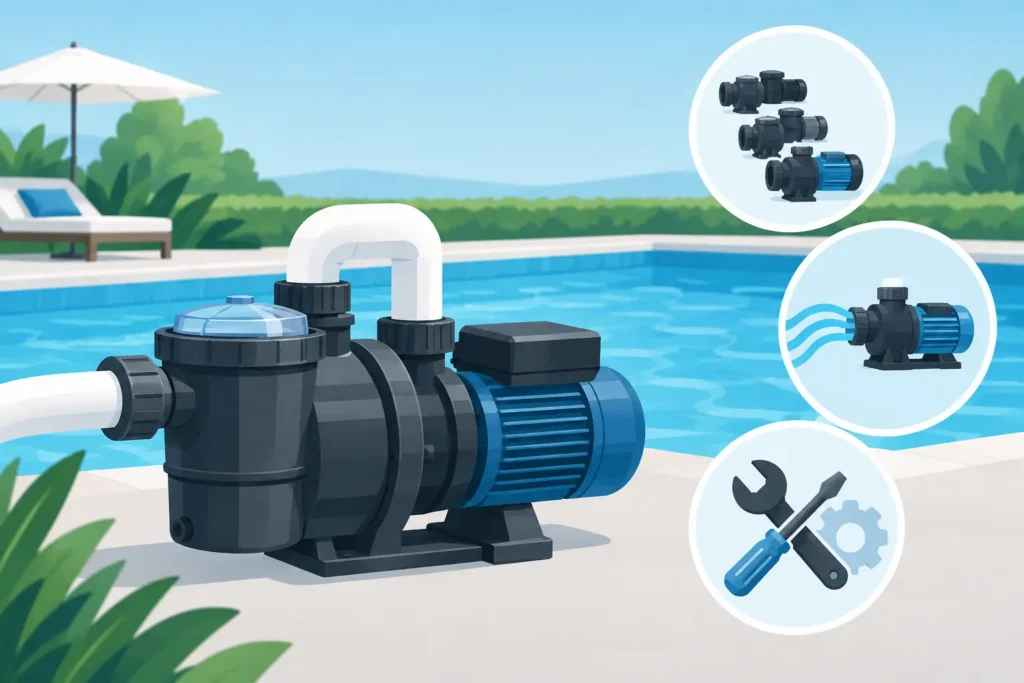
A pool can look perfectly clear in the morning and still have a circulation problem developing underneath the surface. When pool pumps are undersized, poorly programmed, noisy, or failing, water treatment becomes harder, debris lingers, and equipment can be placed under unnecessary strain. For homeowners, HOA boards, and commercial property managers, the pump is not just another piece of equipment. It is the working center of the pool system.
Choosing and operating the right pump protects water quality, helps control utility costs, and keeps the pool ready for the people who use it. The best solution depends on the pool’s size, plumbing, features, usage, and existing equipment. A pump that works well for a small residential pool may not meet the demands of a busy community or apartment pool.
What Pool Pumps Actually Do
A pool pump pulls water from the skimmers and main drain, sends it through the filter and other equipment, then returns cleaner treated water to the pool. Along the way, that circulation helps distribute sanitizer, move fine debris toward the filtration system, and prevent stagnant areas where algae can take hold.
The pump works with every other major part of the circulation system. If the filter is dirty, the pump has to work harder. If valves are set incorrectly, water flow can drop. If there is an air leak at the pump lid or suction line, the system may lose prime and run inefficiently. That is why a pump concern should be evaluated as part of the full system rather than treated as an isolated issue.
For pools with heaters, salt systems, water features, automated controls, or in-floor cleaning systems, proper circulation becomes even more important. Those components need the right water flow to operate safely and reliably.
Choosing Pool Pumps That Fit the System
The largest pump is not automatically the best pump. Oversizing can create high water velocity, increase energy use, add stress to plumbing and filters, and make the equipment pad louder than it needs to be. An undersized pump, on the other hand, may struggle to circulate the pool adequately or support added features such as a spa, waterfall, or heater.
A qualified pool professional looks at more than the pool’s gallon capacity. The right pump selection should account for pipe size, plumbing layout, filter type, elevation, equipment features, and the desired turnover rate. Turnover refers to the time needed to circulate the full pool volume through the filtration system. The appropriate schedule and flow rate can vary between a private backyard pool and a regulated shared-use facility.
Residential pool considerations
For many homeowners, energy efficiency and quiet operation are major priorities. A variable-speed pump is often a strong choice because it can run at lower speeds for routine filtration and increase speed only when needed for a spa, water feature, vacuum, or heater. Lower-speed operation generally uses significantly less electricity than running a traditional single-speed pump at full power all day.
That said, variable-speed equipment is not a one-size-fits-all answer. It needs to be properly sized, installed, and programmed. A variable-speed pump set too low may not provide enough flow for a heater or salt chlorine generator. Set too high, it can erase much of the expected energy savings.
HOA and commercial pool considerations
Community and commercial pools face a different set of demands. They may have higher bather loads, larger equipment systems, stricter operating requirements, and less room for downtime. A pump failure can quickly affect water clarity, sanitation, resident satisfaction, and pool availability.
For these properties, reliability, serviceability, and compliance should carry as much weight as energy savings. Managers and boards should also consider whether the system has proper backup planning, clear operating procedures, and authorized service support when a pump issue occurs. Delaying repair to a noisy or leaking pump can turn a manageable equipment call into a closure or more extensive repair.
Single-Speed vs. Variable-Speed Pumps
Single-speed pumps operate at one fixed speed. They are straightforward, but they typically consume more power because they run at full output whenever they are on. In many California applications, variable-speed pumps are the more practical long-term option due to efficiency standards and operating costs.
Variable-speed pumps allow more control. They can be programmed for a low-speed filtration cycle, a higher-speed skimming period, and separate settings for cleaning, heating, or water features. This flexibility can reduce energy use while maintaining healthy circulation.
The trade-off is that programming matters. A pump schedule should be based on actual pool conditions, not a generic timer setting. Heavy leaf debris, hot weather, frequent swimmers, nearby construction, or a busy HOA pool can require longer filtration periods. During cooler months or low-use periods, the schedule may be adjusted while still maintaining proper water movement and treatment.
How Long Should a Pool Pump Run?
There is no single number that fits every pool. Some residential pools can maintain good water quality with a lower-speed variable-speed program that runs for much of the day. Others may need defined higher-speed cycles to support cleaning equipment, water features, or heating.
The goal is consistent circulation, not simply the fewest possible run hours. A pool that is only circulated briefly may save electricity in the short term but create higher costs through algae treatment, chemical imbalance, filter cleaning, or equipment stress. Water should be tested regularly, and the schedule should be adjusted based on season, usage, water temperature, and equipment performance.
If the pool has a salt chlorine generator, check the manufacturer’s required flow rate and make sure the pump schedule supports enough sanitizer production. If it has a heater, confirm that the pump reaches the flow level needed for the heater to operate without cycling off. These details are easy to miss when a new pump is installed or an old timer is replaced.
Signs Your Pump Needs Service or Repair
A pump rarely fails without warning. The most common early signs are unusual grinding or screeching sounds, visible leaks, air bubbles returning through the pool jets, repeated loss of prime, weak circulation, or a pump that trips the breaker. A pump that runs but does not move water effectively also deserves prompt attention.
Some issues are relatively simple, such as a worn lid O-ring, clogged pump basket, loose fitting, or dirty filter. Others may involve a failing motor, worn bearings, damaged impeller, electrical problem, plumbing leak, or failed seal. Continuing to run a leaking or noisy pump can cause more damage, especially if water reaches the motor or the pump begins operating dry.
Property managers should document the issue, restrict unauthorized equipment adjustments, and arrange professional evaluation quickly. For HOA and commercial pools, clear communication matters just as much as the repair itself. Residents and tenants need timely updates when a pool is affected, while boards and managers need a clear explanation of the problem, recommended repair, and expected timeline.
Routine Care That Helps Pumps Last
Pump maintenance starts with regular pool service. Keeping the skimmer and pump baskets clear helps maintain water flow. Monitoring filter pressure and cleaning the filter when appropriate prevents unnecessary strain. Checking the pump lid, O-rings, unions, and valves for leaks can catch small problems before they become larger repairs.
The equipment area should also stay clean and accessible. Avoid storing items against the pump or blocking ventilation around the motor. After storms or high winds, inspect the equipment pad for debris and check that the pump is operating normally. If the pump sounds different, do not assume it will correct itself.
Professional service adds another layer of protection. A trained technician can verify flow, inspect seals and connections, review programming, identify developing motor issues, and make sure the pump is working correctly with the filter, heater, and sanitation equipment. Adrian’s Pro Pools provides this kind of hands-on equipment support alongside routine maintenance, repair, remodeling, and construction services for local residential and shared-use pools.
Make the Pump Part of a Long-Term Pool Plan
A pump replacement is a good time to look at the larger system. An aging filter, inefficient plumbing layout, unreliable automation control, or outdated heater may affect how well a new pump performs. During a remodel or equipment upgrade, planning these components together can prevent mismatched equipment and unnecessary repeat work.
For homeowners, the right pump can make the pool quieter, cleaner, and more affordable to operate. For HOAs and commercial properties, it can support dependable operations and reduce the risk of avoidable interruptions. When the equipment is selected carefully and serviced before small warnings become major failures, the pool is easier to manage and more enjoyable for everyone who uses it.