
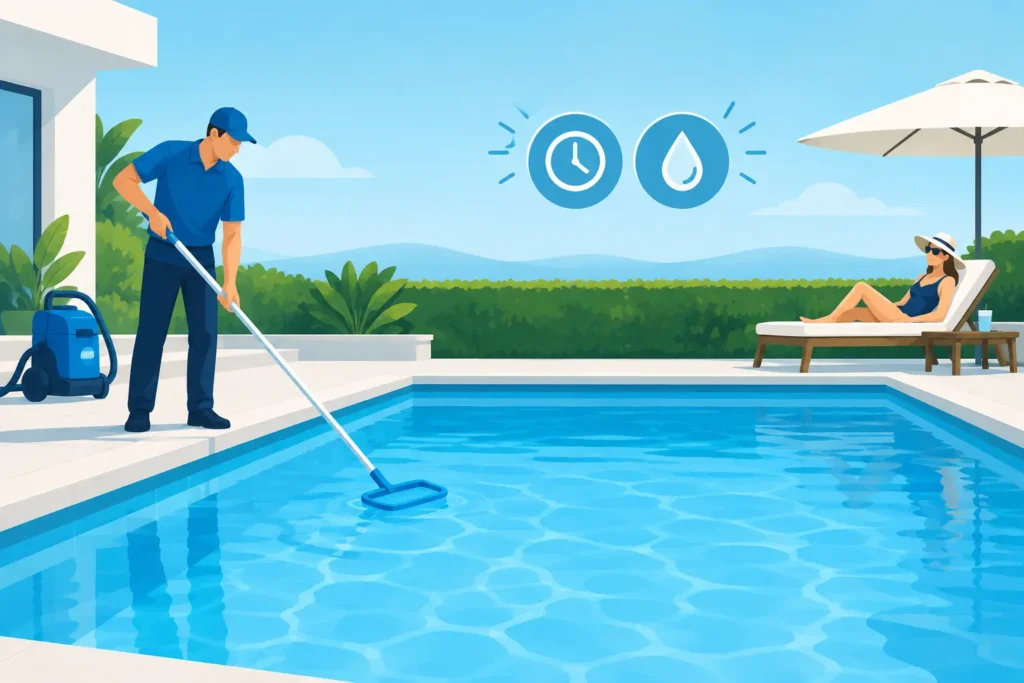
A pool can look clear on Monday and develop a water-quality problem by the weekend, especially during a hot Santa Clarita Valley or San Fernando Valley summer. Consistent pool cleaning is not simply about making the surface look presentable. It is the routine work that protects swimmers, preserves expensive equipment, and gives homeowners and property managers confidence that the pool is ready to use.
For a private backyard pool, missed service may mean a green pool, staining, or a pump that runs harder than it should. For an HOA, apartment community, or commercial property, the stakes are higher. A closed or poorly maintained shared pool creates complaints, interrupts amenities, and can require more time and expense to correct than regular care ever would.
What Professional Pool Cleaning Should Cover
Reliable weekly service follows a process, not a quick skim-and-go visit. Every pool has different demands based on bather load, landscaping, sun exposure, equipment condition, and the type of surface, but the goal remains the same: balanced water, clean circulation, and early detection of problems.
A proper visit typically begins with removing leaves, debris, and sediment from the surface, skimmer baskets, pump basket, steps, and other areas where buildup collects. Brushing the walls, tile line, steps, and corners matters because algae often begins where circulation is weakest. Vacuuming removes debris that has settled before it can break down and affect water quality.
Water testing is just as essential as visible cleaning. A technician should check and adjust the chemistry needed to keep water comfortable, clear, and sanitary. Chlorine or another approved sanitizer needs to work in balance with pH, alkalinity, stabilizer, calcium hardness, and other conditions specific to the pool. Adding chemicals without testing can create a different problem, from cloudy water and scaling to corrosion and swimmer discomfort.
The service visit should also include a basic equipment check. Pumps, filters, heaters, lights, valves, timers, and automatic cleaners do not need major repair every week, but they do need attention. A small leak, an air bubble in the pump lid, a weak return flow, or an unusual equipment sound can be an early warning. Finding it early can prevent a service interruption or a larger repair bill.
Why Weekly Pool Cleaning Saves Money
Pool care is one of those services where consistency is usually less expensive than recovery. When debris sits in the pool, it consumes sanitizer and contributes to staining. When filters are neglected, water circulation suffers and the pump may work under unnecessary strain. When chemistry stays out of range, it can damage plaster, tile, grout, metal components, heaters, and internal equipment parts.
There is a trade-off to consider. Some homeowners prefer to handle routine care themselves, and that can work when they have the time, the right test equipment, and a good understanding of their pool’s needs. But summer heat, wind, parties, pets, nearby trees, and changing water conditions can turn a simple routine into a time-consuming task. Professional service brings a trained set of eyes to the pool every week and creates a clear path when repair work is needed.
For HOAs and commercial properties, scheduled service also supports operational continuity. A pool vendor should understand that an issue with a shared pool affects many residents or guests at once. Prompt communication, documented observations, and authorization before additional work help boards and managers make informed decisions without surprises.
Clear Water Is Not Always Balanced Water
A pool can appear clean while its chemistry is moving in the wrong direction. Water may be clear but too acidic, too alkaline, low in sanitizer, or carrying a buildup that will soon affect surfaces and equipment. On the other hand, water can become cloudy even when sanitizer readings seem acceptable because filtration, circulation, or fine debris removal needs attention.
That is why a dependable service program looks beyond appearance. The technician should evaluate the complete system: water condition, debris level, circulation, filter performance, and any signs of equipment wear. There is no one chemical recipe for every pool. A shaded backyard pool with light use will behave differently from a heavily used community pool in full sun.
Pool Cleaning for HOAs and Commercial Properties
Community and commercial pools require a service partner who respects the property and understands the accountability involved. Residents and guests expect a clean, usable amenity. Board members and property managers need timely arrivals, professional communication, and a contractor who can recognize when routine maintenance has become a repair, renovation, or compliance concern.
The frequency and scope of service depend on the facility. A small, lightly used HOA pool may have different needs than an apartment complex, hotel, fitness facility, or high-traffic community pool. Heavy use increases debris, body oils, sunscreen residue, and sanitizer demand. Warm weather and frequent wind can further increase the need for attentive cleaning and chemical monitoring.
A qualified pool professional can help establish a schedule that matches actual use rather than relying on a one-size-fits-all plan. The right approach may include more frequent visits during peak season, closer filter attention, or prompt follow-up when water conditions change. The objective is simple: keep the pool attractive, functional, and ready for the people who rely on it.
Signs Your Pool Needs More Than Routine Service
Weekly maintenance prevents many issues, but it cannot eliminate normal wear or equipment failure. If the pool is losing water faster than expected, making new noises, blowing weak return flow, tripping breakers, or turning cloudy shortly after treatment, the problem may require diagnosis rather than extra chemicals.
Watch for stains that return after brushing, persistent algae, a damaged tile line, loose coping, rough plaster, or a heater that fails to maintain temperature. These conditions may point to a repair or remodeling need. Waiting can make the work more complicated, particularly when water is reaching electrical components, equipment pads, or structural finishes.
Good communication is critical here. A service provider should explain what was found, what may be causing it, and what options are available before moving forward with non-routine work. Homeowners and property managers deserve clear recommendations, not vague warnings or unexpected charges.
Seasonal Changes Need a Different Approach
Pool cleaning does not stop when temperatures drop. Fall can bring leaves and windblown debris. Winter rain can dilute chemistry, overflow pools, and carry dirt into the water. Spring is often when dormant algae growth and equipment problems become visible. Summer demands the most frequent attention because heat and swimmer use place the greatest load on the water.
Seasonal service should respond to those conditions. That may mean checking drainage after rain, emptying baskets more often during leaf season, or increasing chemical monitoring during periods of heavy use. The best schedule is one that reflects what is happening at the property, not just the date on the calendar.
Choosing a Pool Service Company You Can Rely On
Trust is earned through consistent work. Look for a company that arrives as scheduled, communicates clearly, treats the property with care, and has the credentials appropriate for the work. Maintenance, repairs, remodeling, and construction often overlap, so it helps to work with a team that can see the full picture rather than treating each concern as an isolated task.
Adrian’s Pro Pools brings licensed, bonded, and insured pool service to homeowners, HOAs, and commercial properties throughout the Santa Clarita Valley and San Fernando Valley. With experience across maintenance, equipment repairs, renovations, and new pool construction, the team can address the routine details while recognizing when a pool needs a larger solution.
The most useful next step is often a simple one: pay attention to how your pool looks, feels, and runs between service visits. If something changes, reporting it early gives your pool professional the best chance to correct a small issue before it takes time away from the people meant to enjoy the water.