
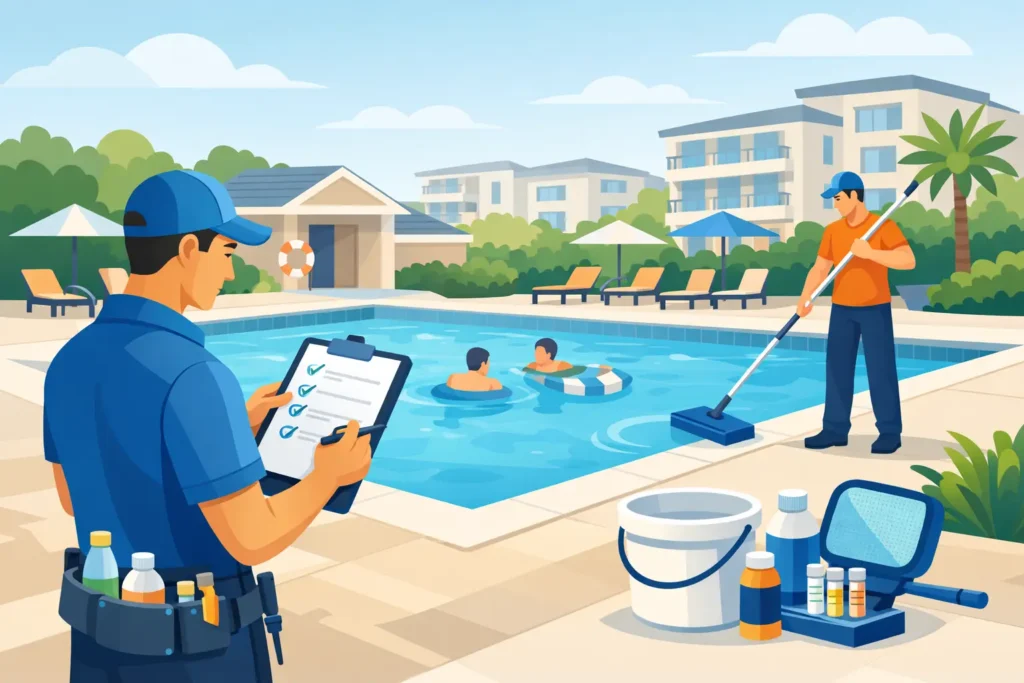
A shared pool can look clear at 9 a.m. and still create a problem by noon. Heavy use, sunscreen, windblown debris, equipment failures, and a missed chemical adjustment can quickly affect water quality and resident confidence. A consistent commercial pool maintenance checklist gives HOA boards, apartment managers, and commercial property teams a practical way to protect swimmers, document service, and catch small issues before they lead to a closure or costly repair.
For regulated pools in the Santa Clarita Valley and San Fernando Valley, maintenance is more than skimming leaves. It requires dependable service, accurate testing, working safety equipment, and attention to the pool area as a whole. The right schedule will vary by bather load, weather, pool size, and local health requirements, but the following framework covers the work that should never be left to chance.
Daily Commercial Pool Maintenance Checklist
Daily checks are the foundation of a clean, safe facility. They are especially important at HOA communities, apartment complexes, hotels, fitness centers, and other pools where multiple people use the water throughout the day.
Inspect water condition and circulation
Start with what a resident or health inspector will notice immediately: water clarity, surface condition, and circulation. The main drain should be visible from the deck when conditions allow. Cloudiness, algae, foam, unusual color, or a strong chemical odor should be investigated, not covered up with a quick chemical addition.
Check that the pump is running on schedule and that water is moving through the skimmers and returns. Low water level can cause a pump to pull air, while high water can reduce skimming performance. Listen for unusual pump noise, look for leaks around equipment, and note pressure readings that are outside the normal operating range for that system.
Test and record water chemistry
Commercial pools need documented chemical readings, not assumptions based on appearance. Test frequency and required ranges depend on the facility and local rules, so managers should follow Los Angeles County Department of Public Health requirements and the pool’s operating permit conditions.
At minimum, the service record should capture sanitizer level, pH, water temperature, and any other readings required for the facility. Calcium hardness, total alkalinity, cyanuric acid, and salt level also need routine attention because they affect sanitizer performance, swimmer comfort, and equipment life.
Do not make large chemical corrections without understanding the cause. For example, repeatedly adding chlorine to a pool with poor circulation, heavy debris, or an unbalanced pH may not solve the underlying issue. Chemical products must be stored securely, labeled correctly, and kept away from incompatible materials.
Clean the pool and deck area
Skim the water surface, empty skimmer and pump baskets as needed, and remove visible debris from the pool floor. Vacuuming may be needed daily during windy conditions, high use periods, or landscaping work nearby. Brushing walls, steps, tile lines, and corners helps prevent algae from gaining a foothold, even when the water still appears clear.
The deck deserves the same level of attention. Remove trip hazards, standing water, glass, loose furniture, and debris. Check that drain covers are clear and that gates close and latch properly. A clean deck tells residents the property is cared for, but it also reduces slips and helps staff spot developing maintenance issues.
Confirm safety and access equipment is ready
A commercial pool should not open if critical safety equipment is missing, damaged, or inaccessible. Each daily walk-through should confirm that required signs are visible, life rings and reaching poles are in place, gates and self-closing hardware work properly, and emergency access is not blocked.
Also inspect handrails, ladders, steps, depth markers, drain covers, pool lighting, and fencing. Loose rails, damaged coping, broken tile, exposed electrical components, or a noncompliant barrier should be reported and addressed promptly. If an issue creates an immediate hazard, restrict access until it is corrected.
Weekly Pool Service Tasks That Prevent Problems
Weekly service is where preventative maintenance protects the property budget. A trained technician can identify trends that may be invisible during a quick daily inspection, such as rising filter pressure, declining circulation, recurring algae, or a slow leak at a valve.
A thorough weekly commercial pool service visit should include these core tasks:
- Brush the pool walls, steps, tile line, and hard-to-reach corners.
- Vacuum or use the pool cleaner to remove settled debris and fine material.
- Inspect, clean, or backwash the filter according to pressure readings and manufacturer guidance.
- Empty baskets, inspect pump lids and O-rings, and look for leaks or air entering the system.
- Test full water chemistry and make measured adjustments.
- Inspect heaters, automation controls, chlorinators, salt systems, timers, and visible plumbing connections.
The work should be documented in a service log, including readings, chemicals added, equipment observations, and any repair recommendation. For HOA and commercial managers, that record creates accountability. It also makes authorization decisions easier because the contractor can show what changed, when it changed, and why a repair is recommended.
Monthly and Seasonal Commercial Pool Checks
Some items do not need daily attention, but they should never be forgotten. Monthly inspections are a good time to review equipment condition more closely and confirm the facility is prepared for changing weather and use patterns.
Inspect filter media or cartridges, pump seals, valves, electrical connections, heater operation, chemical feeders, and automatic controllers. Verify timer settings as daylight hours change. Review the condition of pool plaster, grout, tile, coping, expansion joints, deck surfaces, and drainage. Minor cracks or loose tile can become a larger repair when water reaches areas it should not.
Before peak summer use, plan for higher bather loads and hotter water. Increased use often means more frequent testing, more debris removal, and closer monitoring of sanitizer demand. After storms, high winds, nearby construction, or landscape trimming, the pool may need an extra visit rather than waiting for the next scheduled service.
California’s cooler months can also expose equipment issues. Freeze protection, heater settings, rainwater dilution, and extended run times may need attention. The best schedule is not a one-size-fits-all calendar. It is a routine adjusted to the property, equipment age, resident use, and weather conditions.
When to Close the Pool and Call a Professional
Property managers understandably want to avoid disrupting residents, but keeping a pool open with a serious water-quality or safety issue creates a bigger risk. Close or restrict access when the water is too cloudy to clearly see the main drain, sanitizer levels cannot be maintained, electrical equipment appears unsafe, a drain cover is damaged, or a barrier and gate no longer secure the area.
A closure is also appropriate when there is a contamination event, a major circulation failure, broken glass in or near the pool, or a chemical spill. Follow the facility’s emergency procedures and applicable health department requirements. Do not rely on a maintenance worker or resident volunteer to diagnose electrical, plumbing, heater, or chemical-feed problems.
This is where a qualified commercial pool provider matters. Adrian’s Pro Pools brings licensed contractor experience and Department of Public Health pool technician credentials to recurring service, repair coordination, and the clear communication commercial properties need. The goal is not simply to get the pool open again. It is to correct the cause, document the work, and help prevent the same interruption from returning.
Make the Checklist Part of Property Operations
A checklist only works when responsibilities are clear. Assign daily opening observations to an on-site team member or pool attendant, while reserving chemical adjustments, equipment diagnosis, and scheduled service for trained professionals. Keep logs in one location where the board, manager, and service provider can review them when questions arise.
It also helps to establish a simple reporting process. Staff should know who to call if they see cloudy water, a leaking pump, damaged fencing, broken furniture, or a missing safety item. Managers should know which repairs require approval and which urgent conditions require immediate action. Clear authorization prevents delays without creating surprise costs.
A well-run commercial pool should feel effortless to residents because the work behind it is disciplined. Consistent inspections, accurate records, and prompt repairs protect the property, the people using it, and the reputation of the community. If your current service plan leaves gaps in any of those areas, it is time to build a schedule that gives your team real peace of mind.