
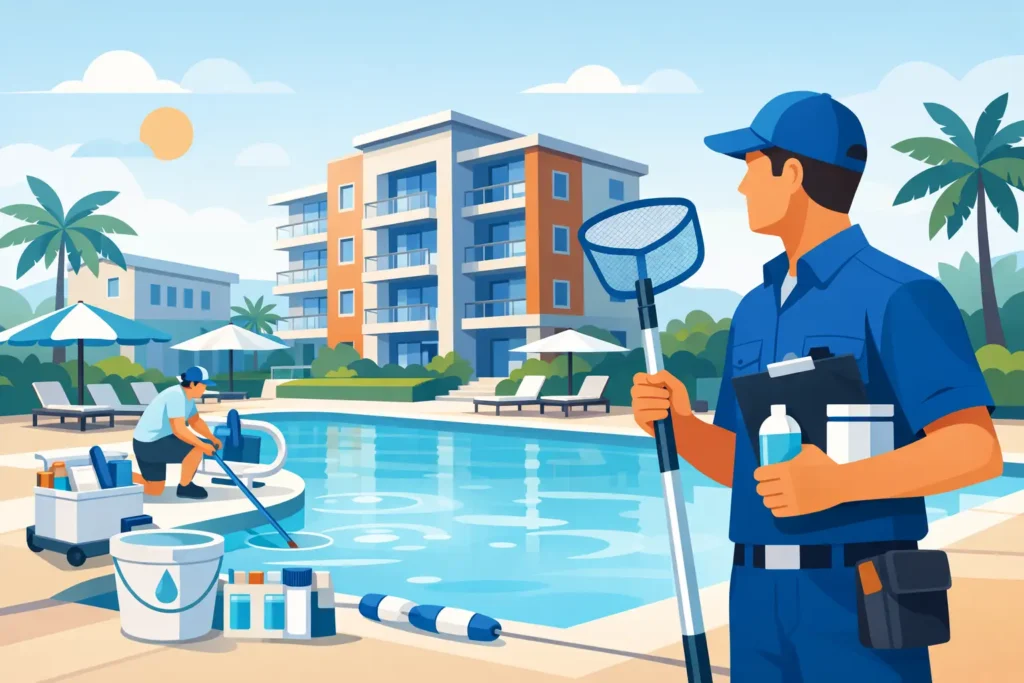
A pool can be one of the most valued amenities at an apartment community – until cloudy water, a closed gate, or a broken heater turns it into a stream of resident complaints. The right apartment pool maintenance company keeps that from happening through consistent service, prompt communication, and a clear understanding of what shared-use pools require.
For apartment owners and property managers in the Santa Clarita Valley and San Fernando Valley, pool care is not simply a weekly chemical visit. It is an ongoing responsibility for water quality, equipment condition, resident safety, property appearance, and operational continuity. Choosing a qualified contractor protects the amenity your residents expect and helps your team avoid preventable disruptions.
Why Apartment Pools Need a Higher Level of Care
A residential backyard pool may serve one household. An apartment pool can serve dozens or hundreds of residents and guests throughout the week. Higher use means more contaminants in the water, faster chemical demand, greater wear on pumps and filters, and more frequent opportunities for equipment or safety issues to affect the property.
The visible condition of the pool matters, but it is only part of the job. A clean deck and clear water create a good first impression. Behind the scenes, the service provider must monitor circulation, filtration, sanitizer levels, water balance, skimmer and pump performance, and signs of equipment trouble before a small issue becomes a costly repair.
For a managed property, dependable documentation and communication matter just as much. Managers need to know when service was completed, what was found, whether a repair is recommended, and what authorization is required before extra work begins. A contractor who arrives on time and communicates clearly makes pool oversight far easier for an already busy management team.
What an Apartment Pool Maintenance Company Should Handle
The exact service scope depends on the size of the pool, the number of residents, the equipment installed, and the property’s operating schedule. Still, a professional recurring service plan should cover the essentials every visit: testing and adjusting water chemistry, removing debris, brushing surfaces as needed, vacuuming, emptying baskets, inspecting equipment, and checking that circulation is functioning properly.
A reliable technician also pays attention to what is changing. A pump that sounds louder than normal, a filter pressure reading that rises too quickly, a heater that fails to hold temperature, or water that repeatedly falls out of balance can signal a developing problem. Catching those signs early can reduce downtime and help avoid damage to expensive equipment.
Apartment managers should also expect the contractor to recognize when routine maintenance is no longer enough. A leaking pipe, malfunctioning controller, failing pump motor, damaged pool light, or deteriorating plaster requires repair expertise, not a temporary workaround. Selecting a company that can maintain, diagnose, and repair the pool gives the property one accountable point of contact instead of a chain of separate vendors.
Water Quality Is a Resident Experience Issue
Residents may not know the difference between pH, alkalinity, and sanitizer residual, but they notice when the water looks dull, smells harsh, irritates skin, or leaves debris floating at the surface. Those conditions affect how residents view the entire property.
Proper chemical balance is not about adding more products. It requires regular testing, appropriate adjustments, good circulation, and clean filtration. Overcorrecting can create its own problems, while inconsistent service can allow water conditions to decline quickly during warm weather or periods of heavy use.
Equipment Checks Protect the Budget
Pool equipment works hard, especially in a commercial or multifamily setting. Pumps, filters, heaters, automation controls, valves, and chemical feeders need routine attention to operate efficiently. When equipment is neglected, the property may face higher utility costs, poor water circulation, emergency repairs, or a pool closure at the worst possible time.
A good maintenance company explains repair needs in plain language. Property managers should receive an honest assessment of the issue, available options when they exist, and a clear estimate before major work moves forward. That transparency helps boards, owners, and managers make informed decisions without surprises.
How to Evaluate a Pool Service Provider
Price matters, but the lowest monthly quote is rarely the full picture. A service plan that skips important checks or sends an inconsistent technician can lead to repeated water problems, equipment failures, and extra management time. Look at the provider’s qualifications, process, responsiveness, and ability to support the property when something goes wrong.
Start by confirming that the company is properly licensed, bonded, and insured for the work it performs. For California shared-use pools, experience with regulated facilities is particularly valuable. The provider should understand the difference between servicing a private backyard pool and maintaining an amenity that must remain safe, presentable, and ready for resident use.
Ask how often the pool will be serviced and what each visit includes. Once-weekly care may be appropriate for some properties, while larger or heavily used pools may need additional attention. There is no one schedule that fits every apartment community. The right frequency depends on bather load, weather, landscaping debris, pool size, equipment condition, and local requirements.
It is also worth asking who will perform the work. A company that assigns trained technicians and maintains consistent service records provides more confidence than one that cannot explain its process. You want a team that respects the property, secures the pool area when finished, and reports concerns promptly rather than leaving the manager to discover them later.
Questions to Ask Before Signing a Service Agreement
A direct conversation can reveal whether a provider is prepared to support your property for the long term. Ask how they handle urgent equipment problems, whether they provide service reports, how repair approvals are managed, and what communication you can expect after each visit.
You should also ask whether the company has experience with HOA, apartment, and commercial pools; whether it can coordinate repairs and equipment replacements; and how it approaches health-related pool requirements. Clear answers matter. A contractor who is vague about service scope or slow to return calls may create the same frustration after the agreement begins.
For communities with spas, make sure the proposal addresses them separately. Spas often require closer attention because their smaller water volume and higher temperatures can change chemical conditions quickly. Treating a spa as an afterthought can lead to recurring water-quality concerns and resident dissatisfaction.
The Value of One Accountable Pool Partner
Apartment properties benefit from a provider that can do more than clean the pool. When maintenance, repair, equipment service, remodeling, and renovation capabilities are available through one experienced contractor, the property has a clearer path from routine care to larger improvements.
For example, recurring service may identify a filter system that no longer meets the pool’s needs, outdated equipment that wastes energy, or aging finishes that make the pool harder to maintain. An experienced contractor can help the manager understand whether a targeted repair will solve the problem or whether a planned upgrade is the smarter long-term investment.
Adrian’s Pro Pools brings more than 20 years of hands-on experience to residential, HOA, and commercial pool care in the Santa Clarita Valley and San Fernando Valley. As a licensed, bonded, and insured C53 swimming pool contractor with a Los Angeles County Department of Public Health pool service technician credential, the team is prepared to support both routine maintenance and the issues that require qualified repair or project management.
Set Clear Expectations From Day One
The strongest service relationships begin with a clear understanding of the property’s needs. Share recurring concerns, resident use patterns, prior repair history, equipment information, access instructions, and communication preferences before service begins. This gives the technician useful context and helps the company build a plan that fits the community rather than applying a generic checklist.
After that, pay attention to consistency. Are visits completed as scheduled? Is the pool clean and ready for use? Are concerns reported quickly? Does the contractor follow through on approved repairs? Reliable answers to those questions are worth far more than a low quote that leaves your staff chasing updates.
A well-maintained apartment pool should feel simple for residents and manageable for your team. Choose a company that treats every service visit as a chance to protect the property, prevent problems, and keep one of your community’s most visible amenities ready for the people who call it home.