
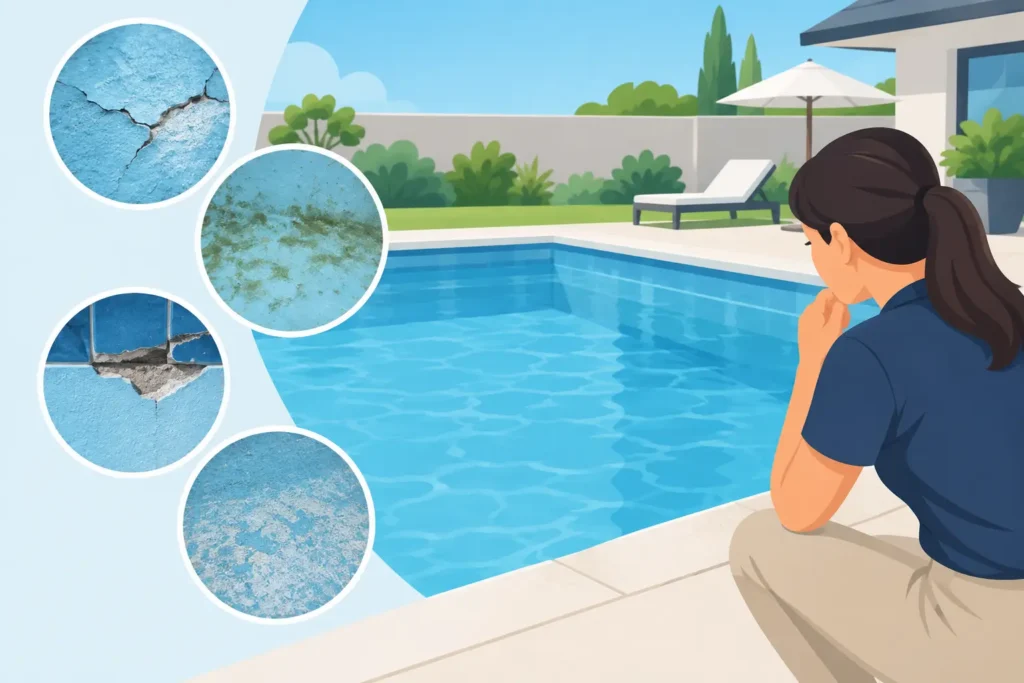
A pool surface rarely fails overnight. It usually gives property owners plenty of clues first: a finish that feels rough underfoot, staining that returns after professional cleaning, small cracks spreading across the plaster, or water chemistry that suddenly becomes harder to manage. Recognizing these resurfacing warning signs early can help homeowners, HOAs, and commercial property managers plan the right repair before a worn finish turns into a larger, more expensive problem.
For pools in the Santa Clarita Valley and San Fernando Valley, sun exposure, heat, frequent use, and water chemistry all affect how long plaster, pebble, quartz, or other interior finishes will last. There is no single timetable that applies to every pool. A surface may need attention because of its age, but its condition matters more than the calendar.
When a Pool Finish Is More Than Just Worn
A pool’s interior finish is not only about appearance. It creates the protective layer between the pool water and the shell beneath it. When that layer begins breaking down, it can affect comfort, cleaning, water balance, and eventually the structure itself.
Normal aging may include a little loss of shine or subtle color variation. That does not always mean resurfacing is immediately necessary. The concern starts when the finish is deteriorating, becoming difficult to maintain, or exposing material below the surface.
A qualified pool contractor can help distinguish cosmetic issues from conditions that call for a full resurfacing project. That assessment is especially valuable for HOA and commercial pools, where resident safety, facility appearance, and operational continuity all need to be considered.
7 Pool Resurfacing Warning Signs to Watch For
1. Rough, sharp, or sandpaper-like plaster
If swimmers complain that the pool floor feels rough, or you notice scrapes on feet, swimsuits, or cleaning equipment, the finish may be etched or worn down. As plaster ages, the smooth cement surface can erode and expose rough aggregate beneath it.
Roughness can also be caused by chemical imbalance, particularly water that has been consistently aggressive over time. Brushing may remove minor surface residue, but it will not restore a finish that has physically worn away. Once the pool is uncomfortable to use, resurfacing is often the practical long-term solution.
2. Persistent stains that return after cleaning
A few isolated stains do not automatically mean the surface has failed. Organic debris, metals, calcium, and algae can all leave marks, and many can be professionally treated. The warning sign is staining that repeatedly returns, covers broad areas, or remains after appropriate cleaning attempts.
Older, porous plaster absorbs contaminants more easily than a sound finish. That makes every leaf, mineral deposit, and chemistry issue harder to correct. Repeated acid washing may brighten a pool temporarily, but it also removes a thin layer of plaster. For a surface that is already thin or porous, acid washing can shorten the remaining service life rather than solve the underlying issue.
3. Cracks, chips, and areas of delamination
Small surface checks can sometimes be limited to the finish, but any crack deserves a closer look. Cracks may result from normal curing, movement, age, poor prior repairs, or structural concerns. Chips and hollow-sounding areas can indicate delamination, where the finish is no longer properly bonded to the substrate.
Do not assume every crack requires a complete renovation, but do not simply cover it with a quick patch either. A contractor should determine whether the issue is cosmetic, localized, or connected to movement in the pool shell. The correct repair depends on that diagnosis.
4. Plaster dust, flaking, or exposed aggregate
White dust collecting in corners, on steps, or in the skimmer can be a sign of deteriorating plaster. Flaking, peeling, and visible aggregate are more advanced signs that the surface is losing material.
This condition can make water cloudy and create rough areas that continue to worsen. Once the finish is actively shedding, routine maintenance cannot stop the deterioration. Resurfacing allows the damaged material to be properly removed or prepared before a new finish is applied.
5. Frequent difficulty balancing water chemistry
A worn pool surface can make chemistry harder to stabilize. As plaster becomes porous and etched, it interacts with the water differently and can contribute to recurring pH, alkalinity, or calcium-related issues. This does not mean surface damage is always the cause of chemical problems. Equipment issues, source water, bather load, and service practices also matter.
Still, if a pool that was previously easy to maintain now requires constant correction, it is worth inspecting the finish along with the circulation system and equipment. For shared-use pools, consistent chemistry is essential for both swimmer comfort and health-related standards.
6. Calcium scale that keeps building back
Calcium deposits often appear as white or gray buildup along the waterline, on tile, and across the interior finish. In some cases, professional treatment and balanced water can manage the issue. In others, heavy scale becomes embedded in an aging or porous surface and returns quickly.
Aggressive removal methods can damage already weakened plaster. If scale is widespread and paired with roughness or discoloration, resurfacing may provide a cleaner and more durable reset than repeated spot treatment.
7. Fading, mottling, or an outdated appearance
Appearance alone can be a valid reason to resurface, particularly when a pool is part of a backyard remodel or a community amenity that influences resident satisfaction. Faded plaster, uneven color, and an old-fashioned finish can make an otherwise well-maintained property feel neglected.
Cosmetic resurfacing is a different decision from emergency repair. It gives owners the opportunity to choose a finish that fits their goals, whether that means a classic light plaster look, a more durable quartz finish, or a premium pebble surface. The best choice depends on budget, desired appearance, expected use, and maintenance expectations.
Why Waiting Can Raise the Cost
Putting off resurfacing may seem reasonable when the pool is still holding water and the equipment is working. However, a deteriorating finish can create more than an appearance problem. Rough surfaces hold algae and debris more easily. Loose material can affect filtration. Cracks and bond failures may allow water to reach areas it should not.
For homeowners, the cost of delay can include more cleaning, more chemical use, and a less enjoyable pool. For HOA boards and commercial managers, a poor pool surface can lead to resident complaints, swimmer discomfort, avoidable closures, and difficulty maintaining a clean, professional-looking facility.
Planning ahead also gives you more control. Instead of scheduling work after a major failure, you can choose a project window that minimizes disruption and allows time to review finish options, tile repairs, coping work, lighting upgrades, or equipment improvements that make sense to complete at the same time.
What to Expect From a Professional Resurfacing Assessment
A proper assessment should start with the pool’s actual condition, not a one-size-fits-all recommendation. The contractor should inspect the interior finish, identify cracks and hollow areas, review waterline tile and coping, and consider whether water chemistry or equipment conditions may be contributing to the problem.
You should also receive clear communication about what is included. A resurfacing project may involve draining the pool, removing or preparing the existing finish, making substrate repairs, applying the selected material, refilling, and managing the startup process. Tile, coping, skimmer repairs, plumbing work, and equipment upgrades may be separate items depending on the scope.
For HOAs and commercial properties, confirm the contractor understands access requirements, resident communication, safety procedures, scheduling, and the need to keep project authorization clear. The lowest initial estimate is not always the best value if it leaves out necessary preparation, cleanup, or responsible project management.
Choose the Right Time to Act
A pool does not need to look perfect to remain serviceable, but it should be safe, comfortable, cleanable, and structurally protected. If you are seeing several resurfacing warning signs at once, especially rough plaster, recurring stains, material loss, or cracking, it is time to schedule a professional evaluation.
Adrian’s Pro Pools helps homeowners, HOAs, and commercial property managers evaluate pool finish concerns with honest communication and quality workmanship. Addressing surface wear before it becomes a bigger repair can protect your investment and help keep your pool ready for the people who count on it.