
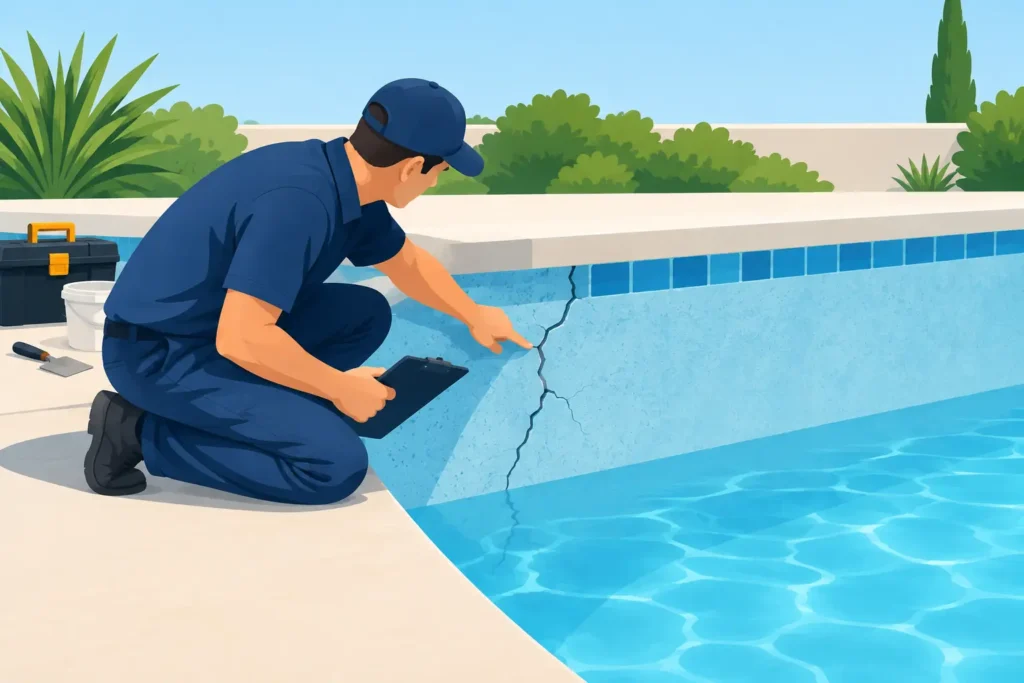
A thin line on the pool wall can look minor until it grows, stains, catches bare feet, or starts appearing in several areas. Pool plaster cracks are common in Southern California, but they are not all the same. Some are surface-level finish issues, while others point to movement in the pool shell or problems that deserve prompt professional attention.
For homeowners, HOA boards, and property managers, the right response starts with an accurate diagnosis. Patching a crack that is only cosmetic may be reasonable. Patching over active structural movement, however, can lead to repeat repairs, water loss, and a larger renovation later.
What Pool Plaster Cracks Can Tell You
Pool plaster is the waterproof finish applied over a concrete pool shell. Over time, it is exposed to sun, pool chemicals, changing water temperatures, settling soils, and regular use. Even a well-built pool will eventually show age in its finish.
Hairline cracks are often called craze cracking or checking. They usually form a fine web across the surface and may be most visible when the pool is drained or when sunlight hits the plaster at an angle. These cracks are often limited to the finish coat. They can affect appearance and may allow staining or algae to settle into the surface, but they do not automatically mean the pool structure is failing.
A wider, longer, or isolated crack deserves more caution. Cracks that run across the floor, travel from a wall toward a step, appear near a skimmer or return fitting, or continue through coping and deck areas may indicate movement below the plaster. If the crack is sharp, deep, or has separated edges, it should be inspected before any cosmetic repair is approved.
Common Causes of Pool Plaster Cracks
The cause matters as much as the crack itself. A reliable repair plan should address why the damage happened, not simply cover what is visible.
Normal aging is one of the most common reasons for plaster cracking. Traditional white plaster can last for many years with proper water chemistry and maintenance, but it eventually becomes less smooth and more vulnerable to surface wear. Pools with older plaster may develop widespread crazing, roughness, discoloration, and small cracks at the same time.
Water chemistry can also contribute. Consistently aggressive water can etch the plaster surface and make it rough. Excessive calcium buildup can create scale that hides surface issues and then pulls away in spots. Poorly balanced water does not usually cause a major structural crack by itself, but it can shorten the life of the finish and make minor cracks more noticeable.
Southern California soil conditions are another factor. Seasonal soil movement, settlement, drainage problems, nearby construction, and tree roots can all affect a pool shell, deck, or surrounding hardscape. In Santa Clarita Valley and San Fernando Valley properties, dry conditions followed by heavy rain can make drainage and soil movement especially relevant.
Installation quality also plays a role. Plaster needs proper surface preparation, application, curing, and startup care. If a finish was applied over an improperly prepared surface or cured under poor conditions, it may crack or delaminate earlier than expected. That does not mean every early crack is an installation defect, but it is one reason an experienced pool contractor should evaluate the full condition of the pool.
Signs a Crack May Need Prompt Attention
A single hairline crack is not always an emergency. Still, property owners should avoid waiting when a crack changes or is accompanied by other warning signs. Pay attention if you notice a dropping water level beyond normal evaporation, damp soil around the pool, new staining around the crack, loose plaster, tile movement, or damage in the deck near the same area.
Commercial and HOA pools require an even more careful response. A rough or broken plaster surface can become a swimmer comfort and safety concern. Loose material, sharp edges, or a developing leak can also disrupt operations and create avoidable maintenance costs. Document the condition, keep swimmers away from any hazardous area, and arrange an inspection quickly.
It is also wise to watch a suspect crack over time. Clear photos from the same angle, taken several weeks apart, can help show whether it is stable or progressing. Do not rely on photos alone, though. A hands-on inspection can reveal hollow-sounding plaster, weakened areas around fittings, or related damage that is not visible at the surface.
Repairing Pool Plaster Cracks vs. Replastering
The best option depends on the type of crack, the age of the finish, and the condition of the rest of the pool.
For a small, stable surface crack in otherwise healthy plaster, a targeted repair may make sense. The damaged area is prepared, repaired with compatible material, and blended as closely as possible with the existing finish. A spot repair can extend the usable life of the plaster, particularly when the pool is not yet ready for a full renovation.
There is a trade-off: even a quality patch may not match aged plaster perfectly. White plaster changes color over time, and exposed aggregate or colored finishes can be especially difficult to blend invisibly. A repair should be judged by soundness and service life first, with realistic expectations about appearance.
When cracks are widespread or the plaster is rough, etched, stained, or near the end of its service life, replastering is often the better long-term value. A full replastering project allows the contractor to remove or prepare failed material, inspect the substrate, make necessary repairs, and install a consistent new finish. It is also an opportunity to update waterline tile, coping, lighting, drains, or equipment if those components are due for attention.
If structural movement is suspected, the work may go beyond plaster. The underlying shell and surrounding conditions should be evaluated before a new finish is installed. Replastering over an unresolved structural issue can make a pool look better temporarily without solving the reason it cracked in the first place.
Why Professional Evaluation Matters
Pool crack repairs are not a place for a one-size-fits-all solution. Draining a pool, selecting repair materials, and handling surface preparation all require careful planning. In some conditions, an empty pool can be vulnerable to groundwater pressure. Improper draining, rushed patching, or incorrect startup chemistry can create more damage than the original crack.
A qualified pool contractor can inspect the plaster, shell, tile line, coping, deck, plumbing, and equipment area as part of the evaluation. That wider view helps determine whether the issue is a finish repair, a leak concern, a remodeling project, or a condition that needs further investigation.
For HOA and commercial properties, professional assessment also supports clearer communication with boards, managers, and residents. A written scope of work can separate immediate safety repairs from recommended future improvements, helping decision-makers plan budgets without guessing.
Adrian’s Pro Pools brings licensed, insured pool service and remodeling experience to residential, HOA, and commercial properties throughout the Santa Clarita Valley and San Fernando Valley. The goal is straightforward: identify the real condition of the pool, explain the available options clearly, and complete authorized work with care for the property and the people who use it.
Protecting New or Repaired Plaster
Once repairs or replastering are complete, consistent care helps protect the investment. Proper water balance is essential, especially during a new-plaster startup period. Brushing, circulation, and carefully managed chemistry help the finish cure evenly and reduce the risk of staining, scaling, and surface deterioration.
Regular service also gives a technician the chance to spot small issues before they become expensive ones. A changing crack, recurring stain line, loose tile, or unexplained water loss is much easier to address early than after it affects the pool shell or surrounding deck.
If you are seeing pool plaster cracks, do not assume the problem is only cosmetic or assume the entire pool must be rebuilt. A timely, professional inspection can give you a clear path forward and the peace of mind that comes from making the repair decision based on the pool’s actual condition.