
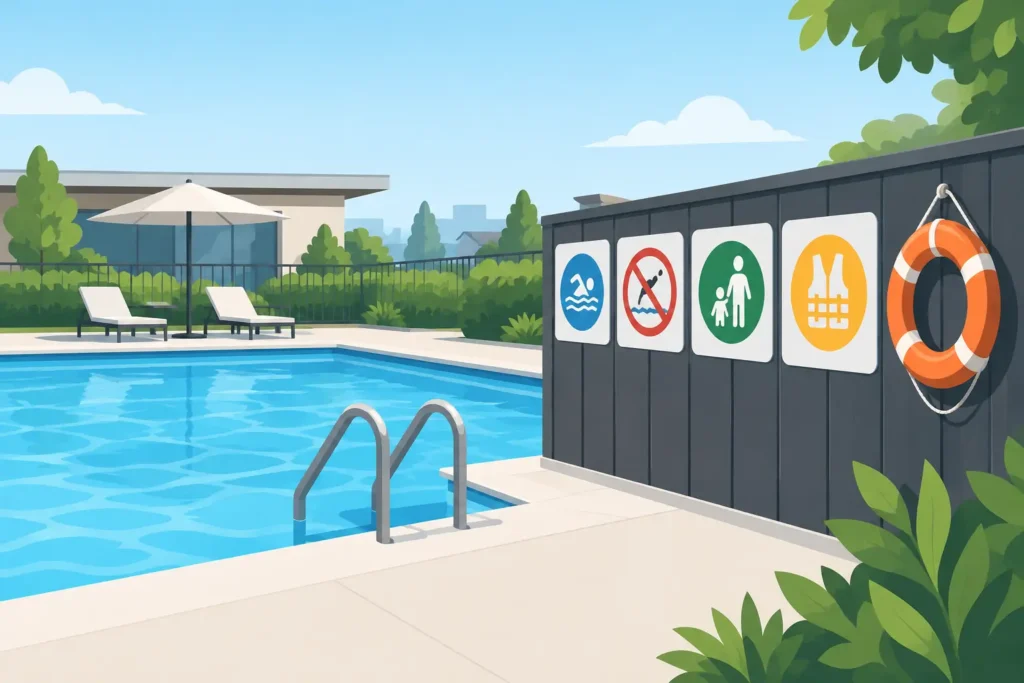
A faded “No Diving” placard tucked behind a gate does not do much when a resident, guest, or service vendor needs clear direction. The best pool signage is easy to see, easy to understand, and placed where people make decisions: before entering the pool area, at the water’s edge, and near equipment or amenities that require extra care. For HOA boards, apartment managers, and commercial property owners, good signage is part of keeping a shared pool orderly, safer, and easier to manage.
Signage is not a substitute for proper maintenance, supervision, secure gates, or compliant equipment. It does, however, set expectations before a small issue becomes an incident, complaint, or avoidable service call.
What Makes the Best Pool Signage Work
Effective pool signs balance three priorities: visibility, useful instructions, and a professional appearance. A sign may contain the right language, but it cannot do its job if it is sun-bleached, blocked by landscaping, written in tiny type, or posted after the point where a swimmer needs the information.
For shared-use pools, the strongest approach is usually a coordinated sign package rather than a collection of unrelated notices. Entry rules should be grouped at the gate. Safety warnings should be near the pool and spa. Equipment warnings should remain with the equipment. This organization makes the facility feel cared for and helps residents and guests find answers without hunting for them.
Durability matters in Southern California. Constant sun, chlorine exposure, wind, and cleaning products can wear down inexpensive paper signs and thin decals quickly. UV-resistant, weather-rated materials with high-contrast lettering usually cost more upfront, but they hold their color and remain readable longer. That is a worthwhile trade-off for a busy HOA, apartment, or hotel-style amenity area.
Start With the Rules Your Pool Must Display
The signs a pool needs depend on how it is used. A private backyard pool has different needs than an HOA or multifamily pool open to residents and their guests. Public health requirements, local codes, accessibility requirements, insurance recommendations, and association rules can all affect what belongs on site.
For commercial and common-area facilities, do not assume a generic online sign kit covers every requirement. Required wording, lettering size, placement, emergency instructions, and capacity information may vary by jurisdiction and by the facility’s specific layout. A spa, wading pool, diving feature, accessible lift, or pool without a lifeguard can introduce additional signage needs.
Before ordering signs, confirm requirements with the applicable health department, building authority, or qualified pool professional. If your pool has been remodeled, reconfigured, or changed from seasonal to year-round operation, review signage again. A sign plan that made sense years ago may no longer match the facility or current rules.
Common signs for shared pool areas
Most HOA and commercial pool decks need clear notices covering pool rules, hours of operation, emergency contact information, occupancy or bather limits where required, and warnings about unsupervised swimming. Depending on the facility, signs may also address no diving, no glass containers, shower use, diaper requirements, prohibited conduct, spa temperature warnings, and accessibility equipment instructions.
A gate sign should also make it clear that the pool area is restricted to authorized users. This is particularly helpful when a community pool is close to a sidewalk, parking area, or neighboring homes. The message should be firm without sounding hostile: the goal is to prevent unauthorized access and give residents a clean, well-managed amenity they can enjoy.
Choose Wording People Will Actually Follow
Pool signs work best when their instructions are direct. “No Diving – Shallow Water” is faster to understand than a long paragraph about potential injuries. “Children Must Be Supervised by an Adult” is more useful than vague language asking patrons to use caution.
That does not mean every sign should be reduced to a few words. Entry-rule signs often need more detail, especially for an HOA or apartment community with guest policies, hours, and conduct standards. The key is hierarchy. Put the most urgent information first, use short lines, and avoid packing every rule into one dense block of text.
When residents speak more than one language, bilingual signage can improve safety and reduce misunderstandings. Consider the community you serve, while also confirming whether any required wording must appear in a particular format. Pictograms can help reinforce key rules, but they should support clear written instructions rather than replace them where regulations require text.
Avoid homemade notices for permanent safety rules. Temporary laminated messages can be useful during repairs or a short closure, but permanent signs should look intentional and remain readable after months of outdoor exposure. Consistent colors, fonts, and materials also give the pool area a more professional appearance.
Placement Is as Important as the Sign Itself
A well-written sign in the wrong location is easy to miss. Place entry rules where users can read them before opening the gate or immediately after entering. Keep emergency contact information visible from the deck, not hidden inside a clubhouse office. Put “No Diving” warnings at every location where someone might reasonably be tempted to dive, especially near shallow ends, steps, and benches.
Spa warnings belong near the spa, where guests can see temperature and use guidance before entering. Signs addressing pool closures, chemical treatments, broken equipment, or unsafe deck conditions should be posted at the access point, with physical access restricted when needed. A notice alone is not enough to secure a hazardous area.
Check sightlines from a child’s height and an adult’s height. Shrubs, pool furniture, umbrellas, stored equipment, and seasonal decorations can all hide a sign that was visible when first installed. For larger facilities, duplicate critical messages rather than expecting people to walk across the deck to read one small placard.
Match the Material to the Environment
The best material depends on location and expected wear. Rigid aluminum or heavy-duty composite signs are often a strong choice for gates, fences, and exposed walls. Vinyl decals can work well on smooth surfaces or equipment rooms, provided the surface is properly cleaned and the decal is rated for outdoor use.
Reflective signs can improve visibility around evening hours, though lighting should never be treated as optional at a shared pool. For facilities with a polished design standard, engraved plastic or metal signs may fit the property better. The priority is still legibility. Decorative finishes, script fonts, and low-contrast color combinations can make a sign look upscale while making it harder to read.
Use corrosion-resistant hardware when mounting signs near chlorinated water. Rusting screws, loose corners, and warped panels make a facility look neglected and can create sharp edges. During routine pool service, staff should be able to spot these issues early and report them before signs fail completely.
Include Signage in Your Pool Maintenance Routine
Pool signage should be inspected along with gates, self-closing latches, deck surfaces, life-saving equipment, lighting, and water quality. A simple monthly walkthrough can catch faded print, graffiti, damaged mounts, outdated phone numbers, and signs obscured by plants or furniture.
For HOA boards and property managers, keeping a basic record of inspections and replacements can be useful. It creates accountability, helps budget for upgrades, and shows that the association takes common-area safety seriously. If a rule changes, replace the old sign promptly rather than posting a temporary note over it for months.
It also helps to keep signage responsibilities clear. Property management may approve community rules, while a pool contractor may identify worn signs during service visits and recommend replacements. That communication prevents small maintenance details from falling through the cracks.
When to Reassess Your Pool Sign Plan
Review pool signage after any remodel, new construction project, equipment upgrade, incident, inspection finding, or change in community rules. New depth markers may be needed after resurfacing. A renovated spa may require updated warnings. An added gate, accessible lift, or redesigned pool deck may change where guests enter and how they move through the area.
Adrian’s Pro Pools works with HOA and commercial pool clients who need practical, well-maintained facilities, not just clean water. When a pool area is being repaired, renovated, or evaluated for ongoing service, signage should be part of the conversation alongside gates, drains, equipment, and deck conditions.
The right signs do not make a pool complicated. They make expectations visible, protect the appearance of the property, and give residents and guests more confidence in the space. Start with the rules that apply to your facility, install them where they can be seen, and keep them in the same dependable condition as the pool itself.