
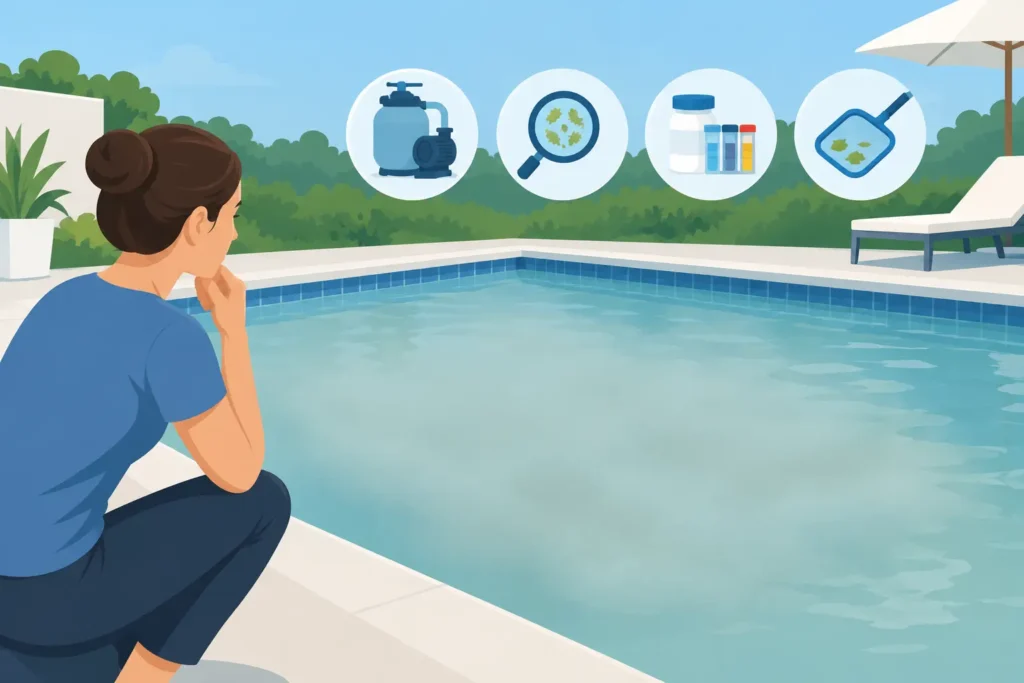
A pool can look almost clear from the patio yet turn milky when someone steps onto the first stair. That haze is more than a cosmetic issue. If you are asking, why is pool water cloudy, the answer usually comes down to water balance, filtration, circulation, or a contaminant the system is not removing fast enough. Until the water is clear enough to see the main drain, treat swimming as off-limits.
For homeowners, cloudy water can spoil a weekend. For HOA boards, apartment communities, and commercial property managers, it can create a safety concern, resident complaints, and an avoidable closure. The good news is that most cloudy-pool problems can be identified with a methodical check rather than guesswork.
Why Is Pool Water Cloudy? Start With What You Can See
Cloudiness happens when tiny particles remain suspended in the water instead of being captured by the filter or dissolved by properly balanced sanitizer. Those particles may be dirt, pollen, dead algae, body oils, calcium scale, chemical residue, or fine debris stirred up by swimmers and wind.
The appearance can offer useful clues. A dull white or gray haze often points to high calcium, high pH, or poor filtration. Greenish cloudiness may mean algae is beginning to grow, even if the water is not fully green yet. Cloudy water after a busy pool day can be caused by bather load, sunscreen, and insufficient sanitizer or circulation. In the Santa Clarita Valley and San Fernando Valley, heat, windblown debris, and hard water can make these issues show up quickly.
The cause is not always one thing. A pool with a dirty filter and high pH may stay cloudy even after chlorine is added. That is why a complete water and equipment check matters.
The Most Common Causes of Cloudy Pool Water
Unbalanced water chemistry
Sanitizer works best within a defined pH range. When pH climbs too high, chlorine becomes less effective and calcium can fall out of solution, creating a cloudy look. Low or high total alkalinity can make pH difficult to control. High calcium hardness can leave the water dull and can also contribute to scale on tile, heaters, and pool equipment.
A proper test should look beyond chlorine alone. Check free chlorine, combined chlorine, pH, total alkalinity, calcium hardness, cyanuric acid, and, when appropriate, phosphates and metals. For saltwater pools, also verify salt level and chlorine-generator output. Adding chemicals without test results can make the imbalance worse.
A filter that is dirty, undersized, or bypassed
The filter is responsible for catching the fine particles that make water look hazy. Cartridge filters need periodic cleaning and eventual replacement. Sand filters require proper backwashing and may need new media over time. DE filters need correct backwashing, fresh DE powder, and inspection for torn grids or internal damage.
A pressure gauge that rises well above its normal clean operating pressure is a common sign that the filter needs attention. However, a clean-looking filter is not automatically a functioning filter. A torn cartridge, damaged grid, worn valve, or incorrect plumbing setting can allow debris to return to the pool.
Inadequate circulation
Water that does not move cannot be filtered or sanitized evenly. A pump that runs too few hours, a blocked skimmer, a clogged pump basket, closed valves, or failing equipment can leave dead spots where debris and algae build up.
Run time depends on the pool size, pump speed, bather load, weather, and equipment design. Variable-speed pumps are efficient, but they still need enough daily flow to turn over the water and support the cleaner, skimmers, and sanitizer. During extreme heat, heavy use, storms, or an algae treatment, longer run times may be needed.
Early-stage algae
Algae does not always announce itself with bright green water. It can begin as a light haze on walls, steps, and shaded areas. If brushing creates a visible cloud, or if chlorine disappears quickly after being added, algae may be part of the problem.
Algae treatment requires the right sanitizer level for the pool’s stabilizer level, thorough brushing, continuous circulation, and filtration. A single shock treatment may not solve a significant bloom. The pool must be tested and maintained through the process so surviving algae does not return.
Environmental debris and heavy pool use
Wind, dust, pollen, wildfire ash, leaves, construction debris, and rain can all add fine particles to a pool. Sunscreen, lotions, cosmetics, and oils add another layer during busy swim days. Shared pools can experience abrupt changes in water quality after a weekend of high bather load.
Skimming and vacuuming help, but they do not replace balanced chemistry and effective filtration. In commercial and HOA settings, consistent service documentation and scheduled checks help catch these changes before they affect water clarity or operations.
How to Clear Cloudy Pool Water Safely
Start by keeping swimmers out until the bottom is plainly visible from the deck. This is a basic safety standard, especially in deeper water. Then remove leaves and large debris, empty skimmer and pump baskets, and make sure the water level is high enough for the skimmer to work properly.
Next, test the water with a reliable kit or professional analysis. Adjust chemistry in the right order, based on the results, rather than adding multiple products at once. Correct pH and alkalinity issues, restore the appropriate sanitizer level, and address calcium or stabilizer problems if testing shows they are outside the recommended range.
Brush the walls, floor, steps, and behind ladders to loosen material that is clinging to surfaces. Vacuum settled debris carefully. If algae or very fine debris is present, vacuuming to waste may be appropriate for some pools, but it lowers the water level and should be done with care. Not every system has that option.
Clean or backwash the filter according to its type and manufacturer guidance. Then allow the system to circulate long enough to capture the suspended particles. Watch filter pressure and clean it again if pressure rises significantly. Clarifiers or flocculants can help in certain situations, but they are not universal fixes. Used incorrectly, they can gum up filters, create more cleanup work, or mask the underlying cause.
When Cloudiness Points to an Equipment Problem
If water stays cloudy after chemistry is corrected, the pool may have an equipment issue rather than a chemical one. Weak returns, air bubbles in the pump basket, low filter pressure, a noisy pump, a heater error, or water leaking around the equipment pad all deserve attention.
A worn pump impeller can reduce circulation. A suction-side air leak can interfere with flow. A damaged filter component can send debris back into the pool. Automation settings may also be limiting run time without the owner realizing it. These are situations where a qualified pool technician can prevent a small repair from becoming a larger equipment failure.
For properties with shared pools, do not rely on appearance alone. Clear water, accurate testing, functioning circulation, and timely documentation all support a safer facility. If the main drain is not visible, if sanitizer readings are unstable, or if the same cloudiness keeps returning, the pool needs prompt professional evaluation.
Preventing Cloudy Water From Coming Back
The most dependable prevention is regular service that combines chemical testing with hands-on equipment inspection. Weekly skimming, brushing, vacuuming, basket cleaning, and water balancing keep small problems from building into cloudy water. Filter maintenance should follow actual pressure, condition, and usage, not just the calendar.
Homeowners should also be mindful of changes in season and use. A pool that stayed clear in spring may need more attention during a hot, dusty summer. HOA and commercial pools benefit from a maintenance plan built around their bather load, equipment condition, health requirements, and budget priorities.
Adrian’s Pro Pools approaches cloudy-water concerns by checking the full system, communicating what is found, and recommending only the work needed to restore dependable operation. Clear water is the visible result, but the real goal is a pool that stays clean, safe, and ready to use without constant surprises.