
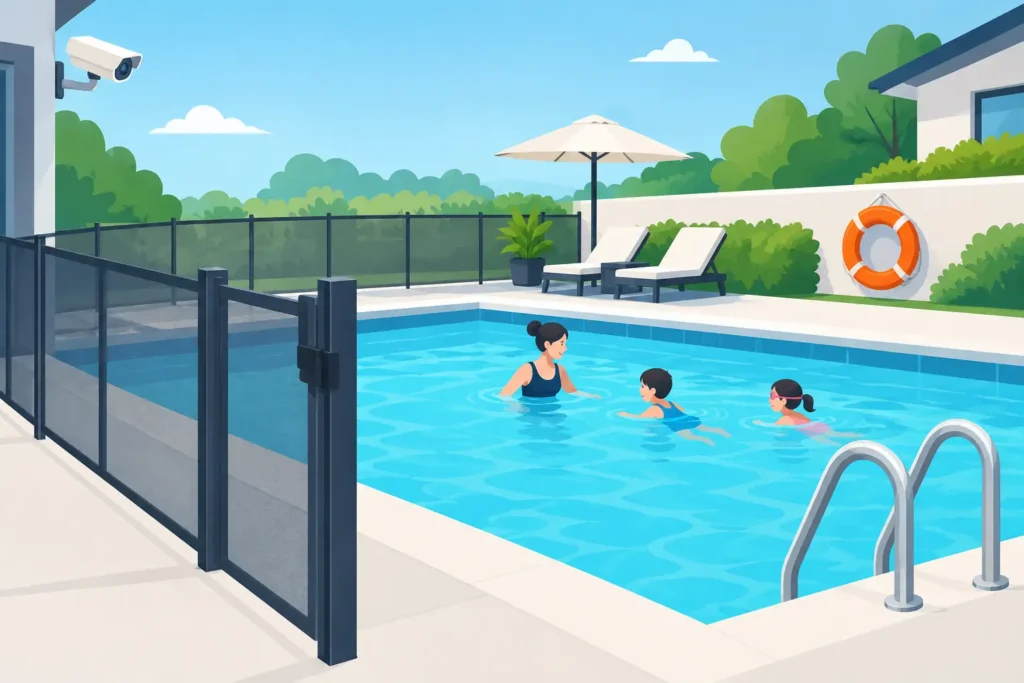
A pool can be the best part of a Southern California property, right up until a preventable safety issue turns it into a serious concern. Pool safety upgrades are not just about checking a box for an inspection. They help homeowners, HOA boards, and property managers create a space where children, guests, residents, and service teams can enjoy the water with fewer risks and more confidence.
The right priorities depend on the property. A family pool may need better child barriers and easier-to-use covers, while an apartment or HOA pool may need updated gates, compliant signage, improved lighting, and equipment that keeps water clear and circulation consistent. A professional assessment helps identify the improvements that will make the most practical difference first.
Start With a Safer Pool Perimeter
The pool barrier is the first line of protection, especially when young children live in or visit the property. A fence may look secure at a glance but still have gaps, loose posts, climbable features, or a gate that does not close and latch reliably.
A well-maintained barrier should fully separate the pool area from the home and surrounding yard where required, with a self-closing, self-latching gate that closes every time. Gate hardware deserves special attention. A latch that sticks, a closer that has lost tension, or a gate that drags across the deck can leave the pool accessible when no one realizes it.
For homeowners, removable mesh fencing can add another layer of protection inside an existing yard enclosure. It is not a replacement for supervision, but it can provide valuable separation between the patio, outdoor living areas, and the water. For shared-use pools, durable commercial-grade fencing and access controls are usually the better long-term choice because they stand up to frequent use.
Landscape changes can also affect barrier safety. Chairs, planters, storage boxes, grills, and decorative features should not create an easy climbing route over a fence. Keep the area around the barrier clear and check it after remodeling work, storms, or major landscape maintenance.
Upgrade Gates, Doors, and Pool Access Controls
Many pool incidents begin with unintended access, not a problem in the water itself. That is why gates, exterior doors, and access systems should be evaluated as part of any pool safety plan.
Homeowners with direct access from the house should consider door alarms and properly installed self-closing mechanisms where appropriate. An audible alarm can alert adults when a child opens a door leading toward the pool area. Window alarms may also be useful when low windows provide access to the yard.
For HOAs, apartment communities, and commercial properties, access control needs to balance safety with daily operation. Keypads, fobs, card access, and properly maintained gate systems can limit entry to authorized users. The system should be dependable, and the property team should have a clear process for replacing lost credentials and responding to a gate that will not latch or lock.
Emergency access should never be blocked. A pool area needs controlled entry, but first responders must be able to reach the water quickly when needed. That balance should be addressed during planning rather than after a problem occurs.
Make Drains and Suction Systems Safer
Drain and suction safety is less visible than a fence or gate, but it is equally important. Damaged, missing, or improperly fitted drain covers can create serious entrapment hazards. Covers are not permanent components. They have service lives, can crack from sun exposure or chemical conditions, and may no longer be suitable after equipment changes.
A qualified pool professional can inspect the drain covers, verify that they are secure, and evaluate whether the suction system needs an upgrade. Depending on the pool design, improvements may include approved anti-entrapment drain covers, secondary drain systems, safety vacuum release equipment, or adjustments to plumbing and pump operation.
This is not a do-it-yourself decision. Pool suction safety involves equipment compatibility, plumbing layout, and applicable requirements. For HOA and commercial facilities, documentation and inspection readiness matter as much as the hardware itself.
Improve Visibility Around the Water
Poor visibility raises risks quickly. A dim pool deck can hide a wet spot, a broken handrail, an uneven section of concrete, or a swimmer in distress. Lighting upgrades improve safety while also making the backyard or community pool more usable after sunset.
LED pool and spa lights are a common improvement because they provide clear illumination with lower energy use than older fixtures. Deck lighting, pathway lights, and lighting near steps, gates, and equipment areas can reduce trip hazards. The goal is not to make the space excessively bright. It is to eliminate dark transitions and make edges, depth changes, and access points easy to see.
Lighting work should be handled carefully. Pool electrical systems require the right equipment, grounding, bonding, and professional installation. If a fixture flickers, leaks, trips a breaker, or has a damaged lens, take it seriously and schedule service promptly.
Add Slip-Resistance Where It Counts
The deck is where many pool-area injuries happen. Smooth concrete, worn coatings, algae growth, standing water, and loose pavers can all create slip hazards. This is especially relevant at busy HOA pools, where heavy traffic and frequent splashing keep the deck wet for long periods.
A deck upgrade may involve repairing cracks and settlement, improving drainage, adding a slip-resistant coating, or selecting more suitable materials during a remodel. The best solution depends on the surface condition, sun exposure, expected foot traffic, and how the deck is used. A textured finish can improve footing, but it still needs to be comfortable for bare feet and simple to clean.
Handrails and grab rails should also be checked for stability. Steps, shallow entries, and spa access points are common locations for loss of balance, particularly for older adults and guests with limited mobility. Secure rails give swimmers a more predictable way to enter and exit the water.
Keep Water Clear With Reliable Equipment
Clear water is not only an appearance issue. It allows people to see the pool floor, drains, steps, and swimmers below the surface. Cloudy water can conceal hazards and often signals a problem with circulation, filtration, chemistry, or maintenance practices.
An equipment review may reveal that the pump is underperforming, the filter needs service, the plumbing has a leak, or automation is not running the pool consistently. Variable-speed pumps, modern controls, properly sized filters, and dependable sanitation equipment can improve performance while making routine management easier.
For shared pools, dependable circulation is central to safe operation and resident confidence. Property managers need a service partner who arrives on schedule, communicates clearly about repairs, and documents work that requires approval. Delaying an equipment issue can turn a manageable repair into a closure, an unhappy resident complaint, or a more costly project.
Do Not Overlook Signs, Emergency Equipment, and Rules
Safety signs work best when they are clear, visible, and maintained. Shared-use pools often need posted rules, depth markers, emergency information, and occupancy or health-related notices. Faded signs, missing depth markers, or outdated emergency instructions should be replaced before they become a compliance issue.
Emergency equipment should be easy to locate and kept in working condition. That can include a first-aid kit, reaching equipment, a flotation device, and a properly accessible phone or emergency communication method, depending on the property. Staff and responsible adults should know where these items are located and what to do if an incident occurs.
For homeowners, simple house rules can be just as valuable: no swimming alone, no running on the deck, no diving in shallow water, and no children in the pool without active adult supervision. Safety equipment supports good decisions, but it cannot replace attentive supervision.
Plan Pool Safety Upgrades in the Right Order
Not every improvement needs to happen at once. Start with conditions that create immediate exposure: a gate that will not latch, a damaged drain cover, a loose rail, an electrical concern, or water that is too cloudy to see through. Next, address upgrades that reduce daily risk, such as improved lighting, safer deck surfaces, alarms, and equipment reliability.
A remodel is often the right time to combine safety improvements with appearance and comfort upgrades. New coping, resurfacing, tile, decking, lighting, and automation can be planned together so the finished pool looks better and functions more safely. For older pools, this approach can avoid repeated patchwork repairs.
Adrian’s Pro Pools helps homeowners and property managers evaluate pool conditions, complete needed repairs, and plan upgrades that fit the property and budget. The most useful safety plan is one that gets maintained, inspected, and used every day – not one that only looks good on a project checklist.