
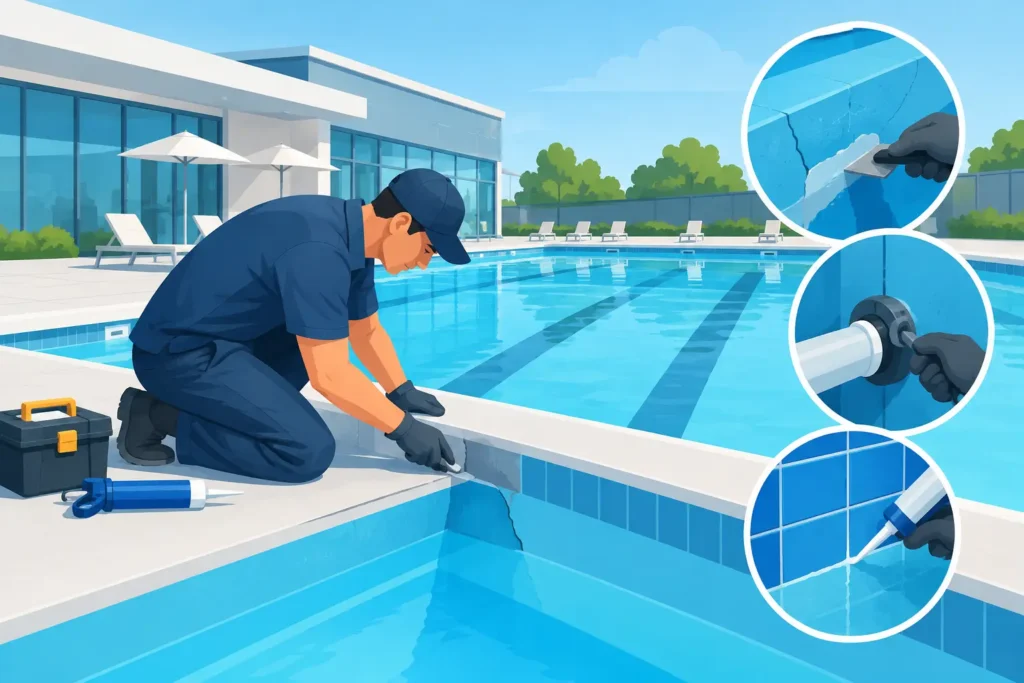
A shared pool can lose more than water when a leak goes unresolved. It can damage decking, raise utility costs, interrupt resident use, and create a difficult conversation for an HOA board or property manager. These commercial pool leak repair examples show why finding the actual source matters before anyone approves a repair.
For apartment communities, HOAs, hotels, fitness facilities, and other regulated pools, a leak is rarely a simple cosmetic concern. The right repair depends on where water is escaping, how the pool is built, whether the leak occurs only while equipment is running, and what surrounding structures may already be affected.
Why Commercial Pool Leaks Need a Methodical Response
Commercial pools receive more daily use than most backyard pools. They also have more operational demands: circulation requirements, automated equipment, shared plumbing, bathrooms or mechanical rooms nearby, and a responsibility to keep the facility clean and safe for users.
A falling water level does not automatically mean there is a structural leak. Heat, wind, splash-out, and evaporation can all contribute. But when water loss is persistent or noticeably worse than normal, guessing can waste time and money. Adding water every day may keep the pool open temporarily, but it does not protect the deck, soil, equipment, or operating budget.
A qualified technician starts by separating evaporation from true water loss, then narrows the issue through inspection and testing. Depending on the situation, that can include pressure testing plumbing lines, inspecting fittings and skimmers, evaluating equipment pads, checking the pool shell, and using leak-detection methods suited to the construction type.
Commercial Pool Leak Repair Examples
A cracked skimmer at an HOA pool
A community pool may appear to lose water slowly even though the plaster looks sound and the equipment seems to run normally. In one common scenario, the issue is a crack in or around the skimmer body. Because the skimmer sits at the waterline, the pool may stop losing water once the level drops below the crack. That pattern is a useful clue, but it is not proof by itself.
Repair may involve exposing the area around the skimmer, removing failed material, repairing or replacing the damaged component, and restoring the surrounding deck or finish as needed. The trade-off is clear: a small targeted repair is less disruptive when the problem is caught early, while delayed action can allow water to undermine nearby concrete and turn a localized repair into a larger project.
A leaking underground return line
An apartment complex pool can lose water most noticeably while the circulation system is operating. When the pump shuts off, the rate of loss may slow. This often points toward pressure-side plumbing, such as a return line carrying water back to the pool after filtration.
Underground line leaks require careful confirmation before excavation. Pressure testing can help identify whether a particular line is holding pressure. Once the affected section is known, the repair may be a focused deck cut and pipe replacement rather than an unnecessary demolition of the entire pool deck.
Access is often the biggest variable. A line under open deck space is generally easier to reach than a line beneath a planter, equipment enclosure, or heavily used pool entrance. A property manager should expect a clear explanation of the suspected line, the test results, the planned access point, and what surface restoration will be required after the plumbing repair.
A suction-side leak causing air in the system
Not every leak leaves wet soil or a visible drop in the pool water level. A suction-side plumbing leak can draw air into the system while the pump is running. Staff may notice bubbles returning to the pool, a pump basket that does not stay full, reduced circulation, or equipment that struggles to prime.
In this case, the repair might be as straightforward as replacing a failed pump lid O-ring, valve gasket, fitting, or a damaged section of suction plumbing. It can also involve a hidden underground line. The key is not to assume that every air issue is minor. Poor circulation affects water quality, creates extra strain on equipment, and can become a compliance concern at a shared-use facility.
A failed light niche conduit or fitting
Pool lights are another potential leak point, especially in older commercial pools. Water can travel through a compromised conduit or around a deteriorated fitting behind the light. The pool may lose water only down to the level of the light, which makes the location easier to suspect but still requires proper testing.
Repairs must account for electrical safety as well as water loss. Power should be properly isolated, and work should be completed by qualified professionals following applicable requirements. Depending on the cause, the fix may involve sealing a conduit, repairing the niche, replacing a gasket, or addressing a connection behind the pool wall.
A structural crack in plaster or the pool shell
A visible crack does not always mean the pool is actively leaking. Some surface cracks are cosmetic, while others extend through plaster or a structural shell and allow water to escape. Movement, age, drainage issues, and previous construction conditions can all influence the severity.
A responsible repair begins with evaluating the crack instead of simply coating over it. If the crack is active or tied to a larger structural issue, a quick patch may not last. Repairs can range from targeted crack treatment and finish restoration to more extensive renovation work when the pool surface has reached the end of its service life.
For boards and owners, the decision often comes down to scope. If one isolated crack is the only issue, a focused repair may be appropriate. If plaster is worn, multiple cracks are developing, tile is failing, and fittings are aging, coordinating repairs with a remodel can reduce repeated closures and surface disruption later.
Signs That Call for Leak Detection
Pool operators know their facilities best. A sudden increase in water use, an automatic fill system that runs more often, soft or wet areas near the deck, unexplained settling, or a chemical balance that becomes difficult to maintain all deserve attention.
Other warning signs include recurring air in the pump, a lower-than-normal waterline, water in an equipment-area location that should be dry, and stains or deterioration around fittings. None of these signs identifies the exact cause alone. Together, they help a technician narrow the investigation and avoid replacing parts that are not actually failing.
Documenting when the loss occurs can help. Note whether it changes with the pump on or off, whether the water stops dropping at a specific level, and whether weather or heavy pool use has been unusually different. This information gives the repair team a better starting point and helps keep authorization decisions grounded in evidence.
What a Good Commercial Leak Repair Process Looks Like
The best outcome is not simply finding a leak. It is finding it with as little unnecessary disruption as possible, explaining the repair clearly, and restoring reliable pool operation.
At Adrian’s Pro Pools, that means treating the pool as part of a larger property operation. HOA and commercial clients need practical scheduling, straightforward communication, respect for common areas, and repair recommendations that reflect the condition of the facility rather than a one-size-fits-all answer.
Before approving work, ask for the likely source of the leak, the testing used to support that finding, the repair scope, expected downtime, and any surface or landscaping restoration that may follow. For larger repairs, it is also reasonable to ask whether temporary operating measures are appropriate or whether the pool should remain closed until repairs are complete.
Preventing the Next Leak From Becoming a Major Repair
Routine service does not prevent every leak, but consistent inspections can catch smaller problems before they spread. Skimmer throats, return fittings, valves, pump lids, seals, exposed plumbing, and equipment connections deserve regular attention. So do deck cracks and drainage conditions around the pool.
A commercial pool is a long-term asset, and water where it does not belong can affect far more than the vessel itself. When water loss seems unusual, prompt leak detection and a properly scoped repair protect the pool, the property, and the people responsible for keeping the facility ready for use.