
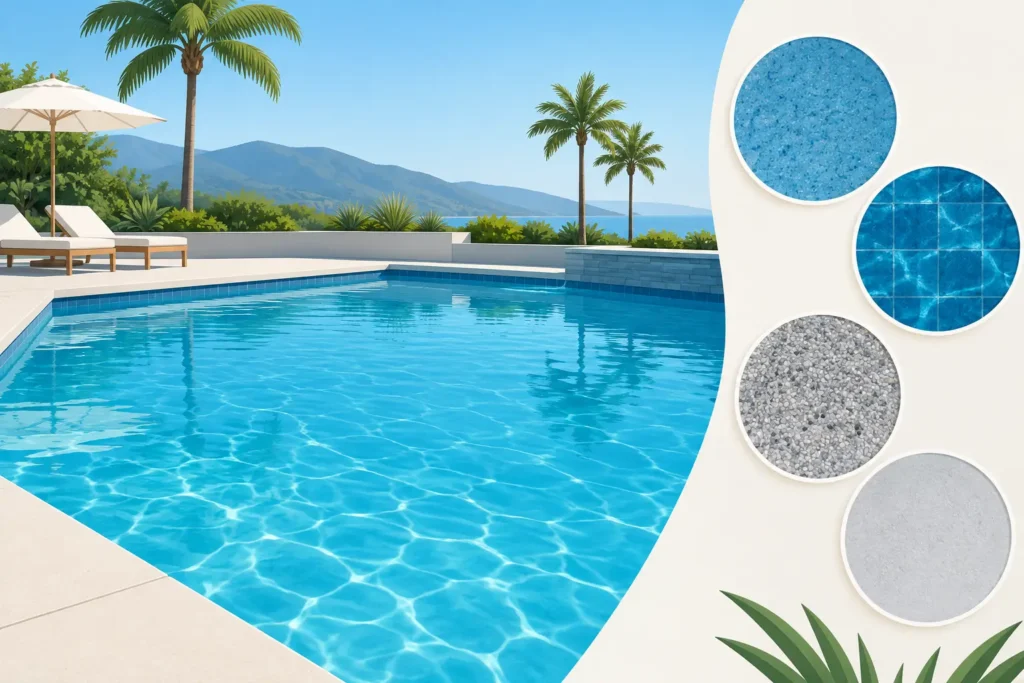
A pool finish has a bigger job than making the water look blue. It is the waterproof interior surface that must stand up to sun, chlorine, water chemistry, swimmer traffic, and years of regular cleaning. For homeowners, HOAs, and property managers comparing the best durable pool finishes, the right answer is rarely the same for every pool. Budget, desired appearance, bathers’ comfort, maintenance practices, and the condition of the existing shell all matter.
In the Santa Clarita Valley and San Fernando Valley, hot summers and mineral-heavy water can be especially hard on a neglected surface. A finish that looks great on installation day may age poorly if water chemistry is not kept in range or if a remodel skips necessary surface preparation. Choosing well starts with understanding what each material can realistically deliver.
What Makes a Pool Finish Durable?
Durability is more than a manufacturer’s stated lifespan. A dependable pool finish should resist staining, etching, roughness, mottling, and premature delamination while remaining comfortable enough for the people using the pool. The finish also needs to fit how the pool operates. A quiet backyard pool has different demands than a busy HOA, apartment, or commercial pool.
Four factors have the greatest effect on service life:
- Surface material and installation quality: The right aggregate blend or tile is only as dependable as the preparation, bonding, application, and curing behind it.
- Water balance: Low calcium, aggressive water, excess chlorine, and prolonged low pH can etch cement-based finishes. High calcium and high pH can create scale.
- Daily use and cleaning: Heavy swimmer traffic, frequent vacuuming, and abrasive brushing can expose wear sooner, particularly on softer finishes.
- Startup and ongoing service: The first several weeks after plastering or resurfacing are critical. Proper brushing and chemistry management allow the surface to cure evenly.
This is why the lowest initial quote is not always the lowest long-term cost. A finish that needs replacement years earlier, or requires repeated stain treatment and repairs, can quickly become the more expensive choice.
Best Durable Pool Finishes: How the Main Options Compare
Standard white plaster
Traditional plaster is a cement-based finish, usually made with white cement, marble dust, and water. It remains a practical choice when the goal is a clean, classic appearance at the lowest initial material cost. White plaster can create bright, inviting water color, especially in smaller residential pools.
The trade-off is its shorter expected life compared with aggregate finishes. With good installation and consistent chemical maintenance, plaster often serves a pool well for roughly 7 to 12 years. It may show staining, etching, discoloration, or rough spots sooner when water is poorly balanced. It is a sensible option for budget-focused remodels, but it demands attentive service from day one.
Quartz aggregate finishes
Quartz finishes combine plaster materials with colored quartz aggregate. This creates a harder surface than standard plaster and opens up more color options, from soft blue-gray to deeper lagoon tones. For many homeowners, quartz provides the most balanced middle ground between initial cost, appearance, and durability.
A professionally installed quartz finish commonly lasts about 10 to 15 years, sometimes longer with proper care. It is more resistant to staining and chemical wear than basic plaster, though it is still cement-based and not immune to poor chemistry. For a family pool that receives regular use but does not need the premium texture of a pebble surface, quartz is often an excellent value.
Exposed pebble finishes
Exposed pebble is one of the strongest choices for owners prioritizing long-term performance. Small natural pebbles are embedded in the cement matrix, then the top layer of cement is removed to reveal the aggregate. The result is a textured, natural-looking surface with strong resistance to staining, fading, and everyday wear.
A quality pebble finish can often last 15 to 25 years when cared for correctly. It also holds color well and works beautifully with the deeper water tones popular in modern backyard remodels. The main consideration is feel. Standard exposed pebble can be more textured under bare feet than plaster or quartz, especially on steps, benches, and shallow lounging areas. Some clients prefer a smaller or polished aggregate for a smoother experience.
Polished aggregate finishes
Polished aggregate finishes use finer pebbles, glass beads, or other decorative materials that are exposed and then polished for a smoother feel. They offer much of the durability of pebble while giving the pool a more refined, upscale appearance. These finishes can produce striking water color and a subtle shimmer in sunlight.
They are usually more expensive than standard pebble, but they can be a strong fit for custom pool construction or a high-end renovation where comfort and design detail both matter. Like other cement-based finishes, their performance still depends on correct application and balanced water. They are not a substitute for professional maintenance.
Tile finishes
Porcelain, ceramic, and glass tile are the premium end of pool interiors. When installed on a properly prepared shell with appropriate setting materials, tile can last decades and offers the broadest design flexibility. It is highly resistant to fading and chemical damage, and it is often the most practical option for waterlines, spas, and detailed accent areas.
A fully tiled pool carries a much higher upfront investment. Installation is labor-intensive, and damaged grout or individual tiles should be repaired promptly to prevent water intrusion behind the finish. For luxury pools, high-visibility commercial spaces, and clients who want a custom design with exceptional longevity, tile can make sense. It is generally not necessary for every residential remodel.
Match the Finish to How Your Pool Is Used
For most residential pools, the best decision comes down to how long the owner plans to keep the property, how much texture they are comfortable with, and how consistently the pool will be maintained. Standard plaster can be appropriate for a straightforward refresh. Quartz is a dependable upgrade for owners seeking more color and wear resistance. Pebble and polished aggregate are strong choices when longevity is a priority.
For HOA and commercial pools, the conversation should include more than appearance. High bather load, frequent chemical adjustments, scheduled cleanings, safety considerations, and downtime all affect the decision. A durable aggregate finish can reduce the frequency of major resurfacing work, but the surface texture must be appropriate for steps, entries, and regularly used shallow areas. A contractor should also inspect cracks, hollow areas, coping, tile, and plumbing concerns before scheduling the finish work. Resurfacing over unresolved issues only delays the real repair.
Do Not Overlook Color and Water Appearance
The pool finish color affects how the water looks, but sunlight, depth, landscaping, and surrounding hardscape also change the final result. Light finishes tend to produce bright blue water and make debris easier to see. Medium blue and gray finishes add depth without becoming too dark. Dark finishes can create a dramatic, reflective look, but they absorb more heat and may make small surface imperfections or calcium scale more noticeable.
Ask to see real installed examples in daylight when possible. A small showroom sample does not always show how a color will read across an entire pool. This is particularly important with multitone pebble blends and glass-enhanced finishes.
Installation and Care Protect Your Investment
Even the best durable pool finishes can fail early if the pool is not properly prepared or the new surface is not started up correctly. Before resurfacing, a qualified pool contractor should assess the substrate, repair structural or bond-beam issues as needed, address hollow or loose areas, and verify that drains and fittings are in good condition. The surface preparation work is not glamorous, but it is where long-term performance begins.
After the finish is applied, follow the startup instructions closely. New plaster and aggregate surfaces typically require frequent brushing, controlled filtration, and careful chemical adjustments during the curing period. Avoid assuming that a new surface needs no attention. The first month is when many preventable staining and scaling issues begin.
Once the pool is in regular operation, maintain appropriate pH, alkalinity, calcium hardness, sanitizer, and stabilizer levels. Regular service also catches early signs of scale, metal staining, or equipment problems before they affect the finish. For shared pools, documented maintenance and timely repairs help protect both the facility and its operating budget.
A pool renovation should leave you with a surface that looks right, feels right, and performs reliably year after year. Adrian’s Pro Pools can help local homeowners, HOA boards, and property managers evaluate the existing pool, understand the finish options, and plan a remodel with clear communication from preparation through startup. A careful on-site evaluation is the best place to begin, because the most durable finish is the one chosen for your pool and installed with no shortcuts.