
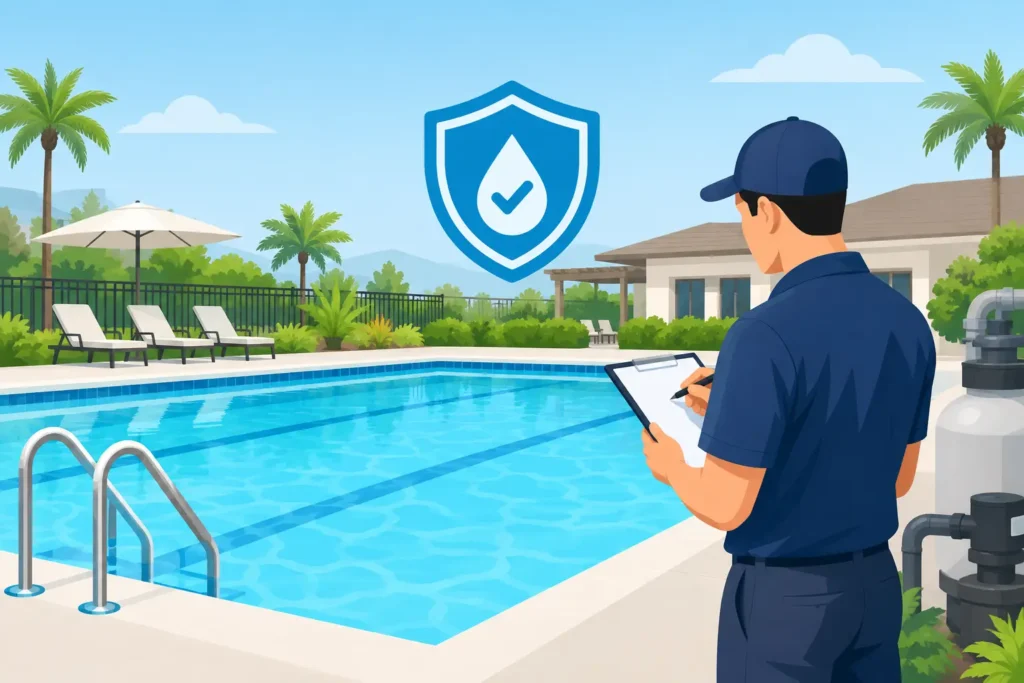
A green pool, a broken gate, or missing chlorine records can turn a community amenity into an urgent management problem. So, are HOA pools health inspected? In most California communities, yes. HOA pools are commonly regulated as public swimming pools because they serve multiple households, even though access is limited to residents and their guests.
For HOA boards and property managers in Santa Clarita Valley and San Fernando Valley, that means pool care goes beyond keeping the water attractive. The pool must be operated safely, monitored consistently, and ready for review by the local health authority. Understanding who inspects the pool, what they review, and where responsibility falls helps prevent avoidable closures and last-minute repair costs.
Are HOA Pools Health Inspected by the County?
In California, a shared-use HOA pool will generally fall under public pool regulations and be subject to oversight by the local environmental health department. In Los Angeles County, that oversight is typically handled through the Department of Public Health. Requirements can also be affected by the pool’s location, its permit status, and how the association controls access.
The key distinction is not whether residents pay HOA dues or hold a key card. It is whether the pool serves a group of people beyond a single private household. A pool used by an apartment community, condominium association, townhome development, or planned community is usually treated differently from the backyard pool at one single-family home.
There can be exceptions and classification questions, especially in smaller developments or properties with unusual ownership arrangements. The county health department makes the final determination. Boards should not assume that a pool is exempt simply because it is behind a gate or reserved for members.
What a Health Inspector Looks For
A health inspection is not just a quick visual check of whether the water looks clear. Inspectors evaluate the conditions that protect bathers from illness, injury, and unsafe access. They may inspect without much advance notice, so an HOA pool should be maintained as if an inspection could occur during any normal operating period.
Water chemistry is a major part of the review. Inspectors may verify sanitizer levels, pH, water clarity, and the condition of the circulation and filtration system. Clear water alone does not prove the water is balanced or adequately disinfected. A pool can look fine one day and develop a chemical or circulation issue quickly when equipment fails, bather load increases, or temperatures rise.
The inspection also commonly includes required safety features. That can include compliant fencing and self-closing gates, properly operating latches, visible depth markers, life-saving equipment, warning signs, and covers or drain protections where required. Pool decks, handrails, ladders, lighting, and equipment enclosures also matter because they affect everyday safety.
Inspectors may review operational records as well. Regular chemistry logs, service documentation, incident records, and required permits show that the association has an active operating process rather than reacting only when something goes wrong. If records are incomplete, a board may have a harder time demonstrating that the pool has been monitored appropriately.
Inspections Do Not Replace Daily Pool Care
One common misunderstanding is that a county inspection is the same as ongoing pool management. It is not. An inspection provides an official review of the facility at a point in time. The HOA and its pool service provider are responsible for the conditions of the pool every day it is open.
That includes testing and adjusting water chemistry, emptying baskets, checking circulation, cleaning the pool and deck area, verifying safety equipment, and identifying repairs before they become failures. A clogged filter, leaking pump seal, malfunctioning heater, or damaged gate closer can create a compliance concern between inspections.
For a busy association manager, the most reliable approach is a consistent service schedule paired with clear communication. The service technician should document what was tested, what was adjusted, what needs attention, and whether any repair requires board approval. This creates accountability and gives the manager useful information when owners ask questions about pool conditions or expenses.
Why HOA Pools Can Be Closed
A health department can require a pool to close when conditions create a significant health or safety risk. Serious water-quality problems, missing or inoperative safety barriers, unsafe suction outlets, failed circulation equipment, or improper chemical storage can all lead to a closure order.
A closure can be frustrating for residents, but it is often more disruptive for the board. Managers may need to notify homeowners, coordinate emergency repairs, handle complaints, and schedule reinspections. If the issue is tied to deferred maintenance, the repair may cost more than it would have during a planned service visit.
Not every inspection issue results in an immediate closure. Some deficiencies may receive a correction deadline, depending on their severity and local policy. Still, treating a notice as a minor inconvenience is risky. Small items such as faded signs, weak gate latches, or incomplete records can point to larger operational gaps if they are allowed to accumulate.
How to Prepare for an HOA Pool Health Inspection
Preparation should be part of normal operations, not a scramble before an inspection. A well-managed pool has current records, clean equipment areas, properly balanced water, and a plan for addressing repairs quickly.
HOA boards and managers should make sure the operating permit is current and displayed when required. Chemistry and service logs should be complete, legible, and available for review. The pool room should be secured and organized, with chemicals stored safely and equipment accessible for service.
It also helps to routinely walk the property from a resident’s perspective. Check that gates close and latch from every position, safety signage remains visible, depth markers are readable, and rescue equipment is present and in usable condition. Look at the deck for trip hazards, damaged furniture, broken glass, standing water, and loose handrails.
Equipment deserves the same attention. A pump that sounds unusual, a filter pressure reading that keeps climbing, or a heater that shuts down intermittently should be evaluated early. These issues may not seem related to an inspection, but circulation and equipment reliability directly affect water quality and the pool’s ability to stay open.
The Value of a Qualified Commercial Pool Service Provider
HOA pools have different demands than most residential pools. They typically have more swimmers, longer operating hours, more complex equipment, stricter documentation needs, and greater liability exposure. A provider who understands commercial and HOA service can help the board address both the daily details and the larger compliance picture.
That does not mean every repair must be expensive or every recommendation requires immediate replacement. Good pool service involves explaining the issue clearly, identifying the urgency, and presenting practical options. A failing pump may need prompt repair to protect water circulation, while an aging but functional piece of equipment may be better scheduled in the next reserve-funded project.
Adrian’s Pro Pools provides HOA and commercial pool maintenance, repair, remodeling, and equipment service with the practical experience these shared facilities require. For boards and managers, dependable service means more than a clean pool on service day. It means punctual visits, documented work, honest communication about repairs, and a qualified team that respects the community’s property and budget.
Questions HOA Boards Should Ask
Before selecting or reviewing a pool service provider, boards should ask how often the pool will be serviced, how water readings are documented, and who responds when equipment fails. They should also ask whether the provider has experience with regulated shared-use pools and whether technicians understand local health department expectations.
Communication matters just as much as technical skill. The board should know how urgent problems are reported, who can authorize repairs, and what happens if the pool needs to be closed for safety. A clear approval process prevents confusion when a technician finds a serious issue during a routine visit.
Finally, keep responsibility clear. The association owns the duty to operate the amenity safely, while the service provider performs the agreed maintenance and reports deficiencies. When both sides communicate promptly and keep good records, the pool is easier to manage, residents have more confidence, and inspections become far less stressful.
A healthy HOA pool is not maintained for inspection day alone. It is maintained so residents can use a clean, safe community space with confidence, while the board has fewer surprises waiting behind the equipment-room door.