
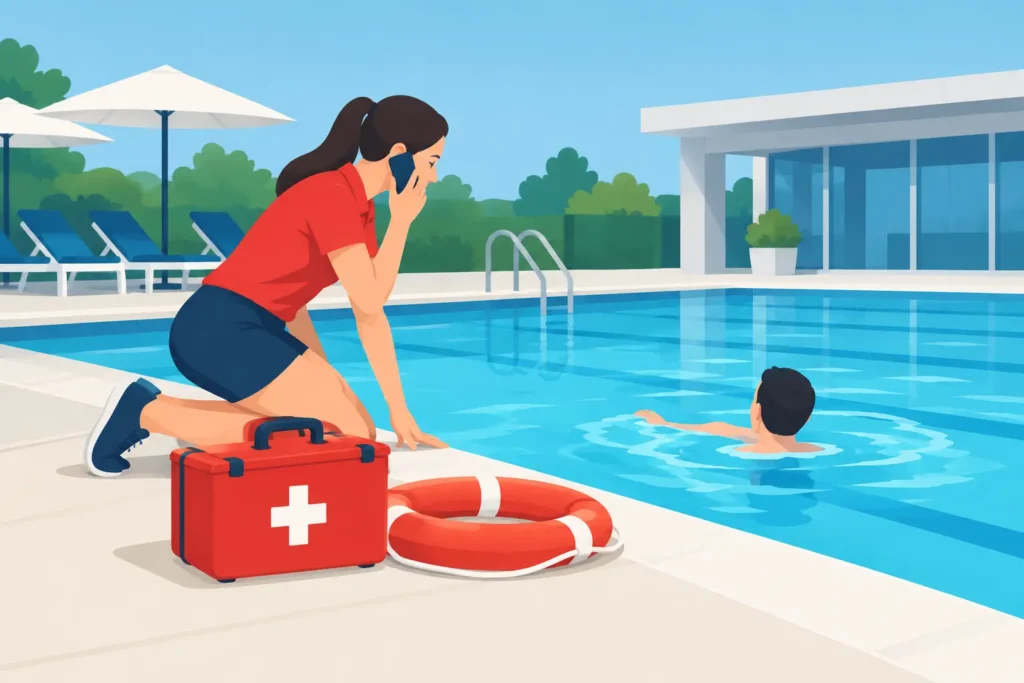
A pool can look fine at opening and become a serious liability before lunch. A child reports a loose drain cover, a pump room floods, or the water suddenly turns cloudy after a chemical feeder issue. Commercial pool emergencies demand a calm, immediate response because guest safety, equipment protection, and local health requirements are all at stake.
For HOA boards, apartment communities, hotels, fitness centers, and other shared-use facilities, the priority is not to troubleshoot around swimmers or hope a problem clears on its own. The priority is to secure the area, document what happened, and bring in qualified pool service help when the issue involves circulation, electrical equipment, water chemistry, or required closures.
Start With Safety, Not a Quick Fix
The first decision is simple: can people safely remain in or around the pool? If there is any doubt, clear the water and restrict access. Post a visible closure notice, secure gates where possible, and notify onsite staff or management. Keeping a pool open while investigating a potentially unsafe condition can turn a manageable repair into an injury claim or a health department violation.
Call 911 first for an active medical emergency, suspected drowning, electrocution, fire, or a strong chemical exposure. Follow your property’s emergency procedures and provide first aid only within the training of the people present. Pool contractors handle pool systems and repairs, but emergency medical and fire response always comes first.
For an equipment or water-quality concern without an immediate medical emergency, avoid asking maintenance staff to improvise. Electrical panels, pump motors, chemical controllers, heaters, and automated valves can create additional hazards when handled incorrectly. Shut down equipment only if it can be done safely and according to your facility’s established procedures.
Common Commercial Pool Emergencies That Require Closure
Not every service call requires closing a pool, but several conditions usually do. Managers should know the difference so they can make a prompt, defensible decision rather than waiting for a weekly service visit.
Chemical Incidents and Unsafe Water
A strong chlorine smell does not necessarily mean the water is clean. It may indicate chloramines, which can cause eye and respiratory irritation. Cloudy water, an inability to see the main drain clearly, failed chemical readings, or a chemical spill should be treated seriously.
Close the pool when disinfectant or pH readings are outside safe operating ranges, when water clarity is poor, or when a chemical feeder appears to be malfunctioning. Keep people away from a chemical spill or fumes, ventilate the area only when it is safe to do so, and contact emergency responders if exposure is significant. Do not mix chemicals, add products blindly, or send untrained staff into a confined equipment room.
A qualified pool technician can test the water, inspect the feed system, identify the cause, and document corrective work. Depending on the event, reopening may require balanced water, proper circulation, records, and clearance consistent with applicable health requirements.
Circulation, Suction, and Drain Problems
A pool with no circulation can lose water quality quickly, especially during warm Southern California weather and heavy bather use. A failed pump, tripped equipment, broken pipe, major leak, or clogged filter may stop proper turnover and sanitation.
Drain covers deserve immediate attention. A damaged, missing, loose, or improperly secured cover can create a dangerous entrapment risk. Close the pool at once, prevent access, and arrange repair by a qualified professional. Do not use makeshift fasteners or attempt to modify a drain assembly without the correct parts and expertise.
Electrical and Equipment Room Hazards
Water around electrical equipment, a burning odor, repeated breaker trips, sparking, or unusual motor noise are not routine maintenance items. Shut the pool down and keep unauthorized people out of the equipment area. Electrical work may require a properly qualified electrician in addition to pool service support.
A heater gas smell, visible smoke, or fire also requires immediate escalation. Call emergency services when appropriate, do not restart the equipment, and preserve the area for inspection. The fastest path back to normal operation is a safe diagnosis, not repeated reset attempts.
Contamination Events
Fecal, vomit, blood, or other body-fluid contamination requires a defined response. Clear swimmers from the water, close the pool, and follow your written contamination procedure and local health guidance. The correct response depends on the type of contamination and may involve specific disinfection, filtration, and documentation steps.
This is one area where guessing can create a larger problem. A property manager should record the time of the incident, what was observed, actions taken, chemical readings, and when the pool was cleared to reopen. Accurate records show responsible management and help a service professional confirm that the recovery process was completed correctly.
A Response Plan for Commercial Pool Emergencies
The best time to create a response plan is before an incident occurs. Every commercial or HOA pool should have current emergency contacts, equipment information, chemical safety documents, and clear authority for closing the pool and approving urgent work.
A practical response follows five steps:
- Protect people. Clear the pool, restrict access, and call emergency services for medical, fire, gas, or serious chemical incidents.
- Stabilize the site. Shut down equipment only when it is safe and authorized. Keep staff and residents away from chemicals, electricity, standing water, and damaged equipment.
- Document the facts. Note the date, time, weather conditions if relevant, witness reports, water-test readings, equipment status, photos, and actions taken.
- Notify the right parties. Inform management, the board or owner representative, onsite staff, and the pool service provider. Report to the local health authority when the incident or closure requires it.
- Verify before reopening. Do not reopen because the water looks better or the equipment starts again. Confirm that the repair, water balance, circulation, safety hardware, and required records are in order.
The exact sequence can vary by property. A hotel with staff on duty may have a different chain of command than a small HOA, while a facility with automated chemical controls may need a more detailed equipment protocol. What should not vary is the commitment to closing first when safety is uncertain.
Why Documentation Protects the Property
After the immediate issue is handled, documentation becomes part of the recovery. It gives the board, manager, insurer, and service provider a clear timeline. It also prevents confusion when different people are answering resident questions or approving repair work.
Keep service reports, invoices, chemical logs, incident reports, photos, inspection notes, and notices related to the closure in one accessible location. For recurring problems, these records can reveal a pattern, such as a pump losing prime, an aging heater failing intermittently, or chemical demand increasing after high-use weekends.
Honest communication matters here. Residents and guests do not need technical details that cause unnecessary alarm, but they should receive a straightforward notice when a pool is closed and a realistic update when it is expected to reopen. Avoid promising a reopening time until the repair and water conditions have been verified.
Reduce the Chances of a Repeat Emergency
Most pool emergencies are not completely predictable, but many give warning signs. Declining water clarity, air bubbles at returns, recurring breaker trips, rising chemical use, leaking valves, damaged handrails, and unusual pump sounds deserve attention before they become closures.
Consistent commercial maintenance helps catch those issues early. That means regular water testing and treatment, equipment inspection, filter care, drain-cover checks, recordkeeping, and prompt repair recommendations. It also means authorizing necessary work before a small leak, worn seal, or failing controller becomes an after-hours emergency.
Adrian’s Pro Pools supports HOA and commercial properties throughout the Santa Clarita Valley and San Fernando Valley with dependable maintenance, repair, and equipment service. As a licensed, bonded, and insured pool contractor, the team understands that a shared-use pool must be clean, safe, operational, and properly managed – not simply running when someone walks by.
A well-prepared manager does not need to have every answer during a pool incident. They need a clear plan, reliable service support, and the judgment to close the pool when safety is in question. That approach protects the people using the facility and gives the property its best chance of reopening safely and confidently.
Pingback: HOA Pool Budgeting That Prevents Costly Surprises - Adrian's Pro Pools